1 hour ago
2
1 hour ago
2

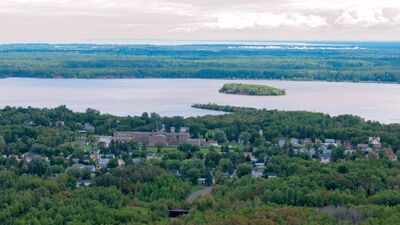
For over a century, the industrial engines of Minnesota’s Iron Range drove the economy of Duluth. Raw iron ore moved down through the St. Louis River basin, feeding massive manufacturing plants along the shore.
But that industrial output came with a long-term environmental tax. At Spirit Lake, which is a broad stretch of the river just upstream from Lake Superior, decades of heavy manufacturing left a quiet disaster resting on the riverbed. What looked like open water from the shore was actually a repository for toxic waste, trapping dangerous chemicals beneath the surface and cutting off local residents from an ecosystem that should have been a community sanctuary. But in 2020, a transformative effort began. According to the United States Environmental Protection Agency (EPA), a $186 million cleanup and habitat restoration project was launched under the Great Lakes Legacy Act. This made it one of the most significant environmental recoveries in the region. Four years later, the results speak for themselves: 1.3 million cubic yards of contaminated material remediated, protective caps placed over 96 acres of aquatic habitat, and a new 14-acre shallow sheltered bay created to support fish spawning. This is a story of renewal, partnership and hope for the future of the Great Lakes. Read on to know more:The legacy of contaminationThe primary source of the damage was the former U.S. Steel Duluth Works plant, which operated for decades along the western shore.
Over its operating lifespan, the facility released high concentrations of polycyclic aromatic hydrocarbons (PAHs), toxic organic compounds produced by industrial heating processes, along with heavy metals like lead, zinc, and copper.These pollutants didn't simply wash downstream into Lake Superior. Instead, they settled directly into the soft, silty lakebed. Over generations, this contaminated sediment created an invisible barrier to life.
Bottom-feeding organisms absorbed the chemicals, passing them up the food chain to game fish, local wildlife, and eventually humans. Warning signs became a permanent feature on the shoreline, advising residents against swimming, wading, or eating local catch.
Spirit Lake earned a spot within the St. Louis River Area of Concern, a federal designation reserved for the most severely degraded aquatic habitats in the Great Lakes basin.A $186 million turnaroundReversing a century of industrial pollution required far more than basic cleanup efforts; it demanded engineering on an ambitious scale. In October 2020, a major $186 million restoration initiative officially got underway under the Great Lakes Legacy Act.The project relied on a cost-sharing model between the public sector and private industry, pairing the Environmental Protection Agency with U.S.
Steel. The EPA committed $92 million to the effort, drawing critical resources from the Bipartisan Infrastructure Law to help push the project over the finish line. Rather than spending years locked in drawn-out legal battles, federal regulators and corporate officials agreed on an operational plan to remediate the lakebed once and for all.Dredging and engineering the lakebedCleaning up a body of water this size is a delicate, heavy-duty mechanical operation.
Over three years of active site work, specialized dredging equipment worked the waters of Spirit Lake, pulling up contaminated mud without allowing toxic plumes to drift further into the river system.Crews dredged approximately 460,000 cubic yards of polluted sediment from the bottom. The material was carefully piped into two custom-built, engineered containment facilities constructed on the former steel plant grounds, permanently isolating the toxins from the aquatic environment.In areas where deep dredging carried a risk of destabilizing the shoreline, engineers used advanced underwater capping techniques. Heavy layers of clean sand, stone, and protective materials were placed directly over 96 acres of lakebed. This cap created a permanent physical barrier that locks remaining trace contaminants safely beneath the substrate. By the time primary operations wrapped up, the project had remediated a staggering 1.3 million cubic yards of contaminated material.Rebuilding ecological architectureRemoving toxic mud was only the first half of the equation. The restoration team wanted to rebuild the natural functions that had been erased over a century of industrial use.To give native fish populations a dedicated place to reproduce, engineers constructed a brand-new, 14-acre shallow bay along the shoreline. The area was sculpted with gentle, deep-to-shallow water gradients, recreating the precise underwater landscape that species like walleye, northern pike, and yellow perch rely on for spring spawning.To anchor the newly contoured shorelines and filter surrounding surface runoff, crews reintroduced more than 400,000 native plants and wetland species. These plantings stabilized the banks, reduced erosion, and established immediate cover for juvenile fish, migratory birds, and local amphibians.Reclaiming the waterfront for DuluthBy July 2024, federal officials announced the official completion of the remediation and habitat construction phases.
For the people living around Duluth, the shift was immediate. Land that had been restricted or fenced off for generations was handed back to the public. Local leaders unveiled a new two-mile waterfront trail, giving residents clear, scenic access to a shoreline that had long been out of bounds.Shortly after the site opened, the Minnesota Pollution Control Agency (MPCA) issued a historic regulatory update: following extensive testing of water clarity and sediment safety, state officials recommended lifting long-standing warnings against swimming and direct body contact.
For the first time in modern memory, locals can wade, kayak, and swim in Spirit Lake without health concerns.A framework for the regionWhile the heavy machinery has packed up, the work at Spirit Lake enters a new phase. Environmental scientists will maintain long-term monitoring equipment across the lake, routinely testing water quality, plant establishment, and sediment cap integrity to guarantee the repairs hold indefinitely.The successful cleanup at Spirit Lake offers a practical blueprint for industrial restoration right across the Great Lakes basin. It demonstrates that with target funding, smart engineering, and genuine cooperation between regulators and industry, even the most heavily impacted industrial waterways can be brought back to life.