50 minutes ago
1
50 minutes ago
1

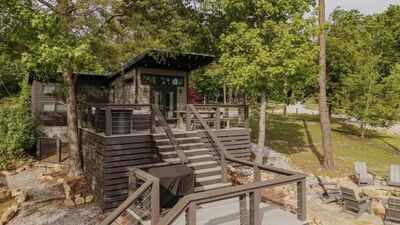
Residents of the Retreat at Deer Lick Falls sued Hayes over alleged HOA control and fund mismanagement. (Realtor.com photos)
More than 40 homeowners in three tiny-home communities in Tennessee are taking legal action against developer Claude 'Chip' Hayes III, accusing him of retaining control of their homeowners associations (HOAs) and mismanaging association funds.
They are seeking $5 million in damages, along with control over HOA funds and records.The dispute centres on three developments including the Retreat at Deer Lick Falls, the Retreat at Sunset Bluff and Water’s Edge, Realtor.com reported. Residents there say Hayes continued to control their HOAs beyond the period allowed under the communities’ governing documents. They called it a 'zombie HOA', where a developer remains in control after residents are expected to take over.Hayes’ business model involved selling land to residents, developing roads and offering community amenities. Buyers could choose from several tiny-home models and either live in their homes or rent them as holiday properties through a property management service run by the developer. Residents also paid fees to an HOA that Hayes managed.Homeowners say problems emerged over the way the communities were managed.
They have raised concerns about HOA finances, promised amenities, building work and restrictions on the contractors they could use.The legal fight began more than two years ago when residents of the Retreat at Deer Lick Falls sued Hayes, claiming he had failed to hand over control of the HOA and had mismanaged its funds. The dispute later expanded to include homeowners at Water’s Edge and Sunset Bluff.
Developer kept control
The governing documents for the developments gave Hayes control of the HOAs for a specific period while the communities were being built.
This included control over builders, common areas, amenities and other association matters.According to the communities’ covenants, conditions and restrictions, Hayes was supposed to give up control either five years after the first lot was sold to a non-developer or once 75% of the lots had been sold to non-developers, whichever came first.Residents at Deer Lick Falls argue that this meant Hayes should have given up control in 2021.
They allege he extended his control by adding more property to the Deer Lick community and arguing that the expansion justified keeping control of the HOA.Residents sued him in 2024 seeking control of the HOA. Homeowners at Water’s Edge later joined the legal dispute, alleging that property taxes on common areas went unpaid for more than two years and that the properties were at risk of a tax sale.They also accused the developer-controlled HOA of failing to provide proper financial records and entering transactions that benefited the developer at homeowners’ expense.The dispute escalated again in 2026 at Sunset Bluff. Hayes sought a temporary restraining order after learning that residents planned to hold a meeting to vote on taking control of the HOA.Residents still voted overwhelmingly to remove Hayes from control and elected their own board of directors. The new board then changed several policies, including allowing homeowners to choose their own property managers rather than being required to use the developer’s rental management company.
HOA money misused
The Sunset Bluff residents then filed a counterclaim against Hayes and his companies. In July, 40 residents signed on to a lawsuit accusing Hayes of self-dealing, breaching his fiduciary duties, overcharging for services and illegally retaining control of the community’s finances. Homeowners are seeking $5 million in damages.A major part of their complaint concerns HOA spending. The lawsuit alleges that nearly 80% of the entire HOA budget at Sunset Bluff was spent on lawn care services.
Residents also claim those contracts were awarded to another company owned by Hayes.The lawsuit also alleges that HOA money from Sunset Bluff was used to pay for the development of a separate project, the Retreat at Deer Lick Falls Phase Two.
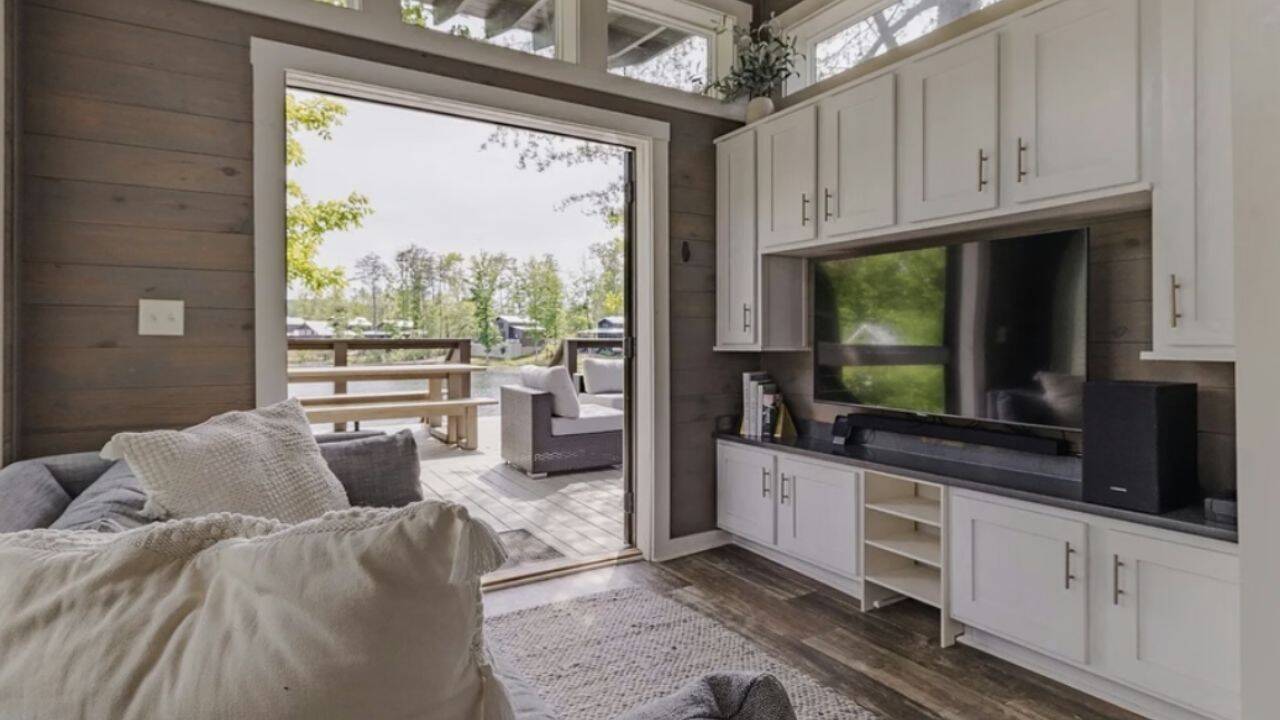
Allegedly, nearly 80% of the entire HOA budget at Sunset Bluff was spent on lawn care services.
Homeowners further claim that they had to pay for the removal of dozens of dead trees damaged during construction, despite already paying HOA dues. The complaint also alleges that Hayes tried to charge residents extra for using a community building that had been built using HOA funds.Hayes has largely remained silent about the lawsuits. Earlier this month, however, he told the Moore County Observer that former business partners and homeowners fighting for control had made it difficult to operate the retreats. He also blamed legal expenses for his inability to complete some of the amenities that had been promised to residents.“I should have folded up and walked away a long time ago. Anybody else would have.
But I don’t want to leave the customers damaged in this. This is something that I love and believe in,” he said, as quoted by Realtor.com.
Amenities not delivered
Gregg Boling, who bought a lot at Water’s Edge in 2021, said he had planned to build a holiday home for himself and his family. He said he chose the property because Hayes had told him there would not be another property across from it and that an adjacent lot would become a community clubhouse with a saltwater pool.
“The pool was always a part of the selling process for us,” Boling said.The pool was never completed, according to him. A lawsuit filed by the pool’s original installer alleged that Hayes failed to properly grade the site, causing water runoff problems and structural damage.Water’s Edge residents have also alleged that other advertised amenities, including hiking trails, kayak access, pools, a pool house and a cabana, were not completed.
The saltwater pool remains listed on the community’s website as “coming soon”.Boling also questioned the quality of construction and the contractors residents were expected to use. After a contract dispute with builder Michael Weidenhamer, whom Hayes fired in 2022, Hayes circulated a list of contractors who were banned from working for residents.Boling said he later discovered that his water main had been installed almost 30 inches below the surface.
During a particularly cold winter, he said he had to dig 44 inches down to locate it and used a metal detector borrowed from a friend.
Residents describe more problems with their properties
Linda Ranz, who owns properties in both Water’s Edge and Sunset Bluff, said she bought two Water’s Edge lots intending to build homes for herself and her daughter. Ranz said the land did not initially have waterfront access, but Hayes told her he would dredge part of Big Fiery Gizzard Creek to provide it.
That never happened.“For two years, I was told, ‘Yeah, there's going to be water. He's going to dredge that.’” Ranz said she eventually asked when the dredging would happen and was told, “oh, never.”Ranz has raised other concerns about roads, septic systems and drainage. She said Hayes built a large drainage ditch through the middle of her property without her permission, forcing her to spend another $2,500 on a survey so she could create a driveway to a second house.At Sunset Bluff, she said she is paying $120 a month in HOA fees for each of her four lots, despite having no home or lawn on them. She said she does not know where the money is going.Despite the lawsuits, Hayes continues to pursue new development projects. Earlier this month, he appeared before the Metro Board of Zoning Appeals seeking permission to build a 17-acre RV park and campground at the Retreat at Whiskey Creek.