2 weeks ago
32
2 weeks ago
32

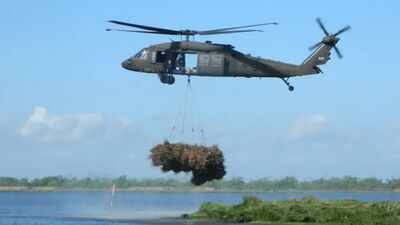
A helicopter dropping its first bundle of trees for the Christmas tree drop restoration project (US fish and wild life service photos)
Every year after Christmas, thousands of used trees are thrown away. In New Orleans, however, many of them get a second use. Instead of ending up in landfill, the trees are collected, tied into large bundles and dropped by helicopters into coastal marshes to help slow land loss.The programme has been running for nearly 30 years and is part of a effort to protect Louisiana's disappearing coastline, according to Ecotias. The recycled trees are placed in shallow wetlands, where they help trap mud and reduce the force of moving water. Over time, this gives marsh plants a better chance to grow and helps strengthen the wetlands.Scientists say this has helped create and stabilise hundreds of acres of marshland and has become an example of how waste materials can support environmental restoration.
Louisiana loses coastal land
Louisiana has lost nearly 2,000 square miles, or more than 5,000 square kilometres, of coastal land since the 1930s. The loss has happened because of several reasons.Coastlines naturally wear away through erosion. Powerful storms can remove large amounts of land in a short time. Rising sea levels add more pressure, while the ground itself is slowly sinking in a natural process known as subsidence.Another major reason is that the Mississippi River no longer deposits as much sediment into nearby wetlands as it once did.
Sediment refers to small particles of soil, sand and mud carried by water. In the past, floods spread this material across marshes, helping replace land that had been lost. Today, changes to the river have reduced that natural process.As a result, many wetlands are shrinking faster than they can recover. These marshes are important because they absorb floodwater, reduce the force of waves and provide habitat for many plants and animals.
They also offer some protection to nearby roads, railways and communities during storms, although experts say they are not a complete barrier against hurricanes.One of the areas receiving attention is Bayou Sauvage Urban National Wildlife Refuge, located next to New Orleans East. It contains some of the last remaining marshland between Lakes Pontchartrain and Borgne.
Christmas trees come to rescue
After the holiday season, residents are asked to donate their natural Christmas trees instead of throwing them away.
Only real trees are accepted. Before collection, people must remove all decorations, including lights, ornaments, tinsel, artificial snow, tree stands and other materials. This ensures that only natural wood enters the wetlands.The City of New Orleans works with its sanitation and resilience teams, the US Fish and Wildlife Service and the Louisiana Army National Guard to carry out the project.In March 2025, nearly 9,000 Christmas trees were collected.
Workers tied them into bundles before helicopters lifted them to selected areas inside the wildlife refuge.After the trees were dropped, crews travelling by boat adjusted their positions where needed. The helicopter flights also served as training exercises for National Guard pilots and crew members.According to refuge officials, each bundle usually contains around 50 to 60 trees. A helicopter can carry three or four bundles at a time using special lifting equipment.
The bundles are placed in straight lines at locations selected in advance. Once the trees are released, crews recover the reusable lifting gear.
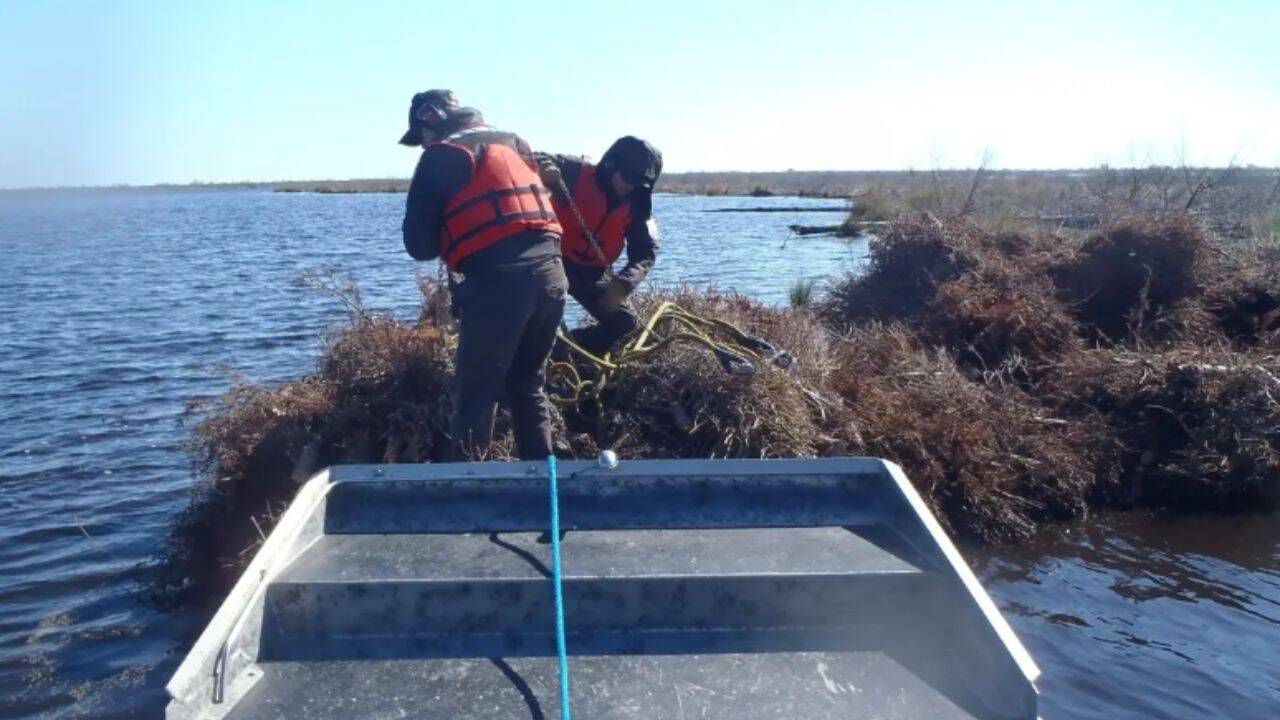
Staff from Bayou Sauvage National Wildlife Refuge drive an airboat to where the Christmas trees are dropped
Trees help rebuild marshes
The bundles of trees act like permeable barriers. This means water can still flow through them, but more slowly. As the water loses speed, it drops the sediment it is carrying instead of washing it away.Over time, more mud and silt collect around the branches. As these materials build up, the ground slowly becomes higher and more stable.This creates better conditions for marsh grasses to grow. Once established, the grasses help hold the soil together with their roots and make the marsh stronger. The restored areas also provide habitat for birds, fish, crabs, crawfish and shrimp.Pon Dixson, a project leader at the refuge, explais, "The trees are doing what they're designed to do."The trees themselves are not expected to last forever. Instead, they act as temporary support while sediment and plant roots gradually create a stronger and more permanent marsh ridge.
That ridge can then reduce everyday wave action and erosion.
Research supports method
Scientists have studied this approach for many years. A field study published in Ecological Engineering in 1997 examined recycled Christmas-tree fences at two marsh sites in Louisiana.The study found that the tree barriers reduced wave energy reaching the marsh bed by about half in the test areas. Researchers also found that sediment built up at rates of up to about 1.3 inches each year in some sheltered locations.
At one monitoring site, vegetation returned after around three years. However, other locations remained without plant growth.Scientists say the success of the method depends greatly on where the barriers are placed. If the water is too deep, sediment may still collect, but it could take many years before the land becomes shallow enough for marsh plants to grow.The researchers also stressed that Christmas-tree barriers cannot stop the wider processes causing Louisiana's land loss.
Instead, they work best as part of larger restoration efforts.
How much land has been restored?
The exact amount of land restored is not completely clear because official estimates have varied over time. By 2023, federal refuge managers reported that the annual Christmas tree programme had created 115 acres.Later updates from the city described the restored area using football field comparisons. One announcement referred to about 200 football fields, while another in March 2025 mentioned around 330 football fields. A later update returned to roughly 200 football fields.The programme continued during the 2025-26 holiday season. In July 2026, Louisiana National Guard crews also delivered donated Christmas trees to another vulnerable marsh near Madisonville on the north shore of Lake Pontchartrain.