1 hour ago
3
1 hour ago
3

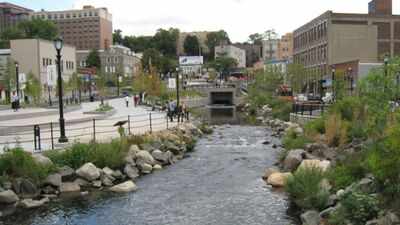
Saw Mill River, Yonkers, New York
For decades, a section of the Saw Mill River in downtown Yonkers, New York, ran underground beneath a parking lot. The river had once helped the city grow into an industrial town, but as land became scarce, parts of the waterway were squeezed into smaller spaces and eventually covered.The last section of the river in downtown Yonkers was covered in the 1920s. The area became a parking lot called Larkin Plaza. By 2000, the surroundings had changed sharply from their industrial past, with empty and boarded-up buildings around the parking lot and downtown.The city later moved to uncover the buried section of the Saw Mill River. According to ENR, the project replaced the parking lot with a three-acre public park featuring the restored river, waterfalls, a footbridge, boardwalks and a tidal basin.The process was completed in September 2012. Within six months of water flowing through the new river path, the area was already supporting aquatic life. The project created 14,000 square feet of new aquatic habitat, including a tidal pool and two freshwater pools.
A buried river
The Saw Mill River played an important role in the early development of Yonkers. Its water power helped the city become a booming industrial town, beginning with grist mills in the 1650s.
As the city developed and land became limited, the river was gradually squeezed and covered in some places. In the 1920s, the final section running through downtown was covered by a parking lot at Larkin Plaza.The idea of uncovering the river had been discussed for years before construction began. In 1992, the US Army Corps identified daylighting the covered section at Larkin Plaza as a valid restoration project.In a major move in 1999, when the US Environmental Protection Agency and the National Park Service launched Groundwork Yonkers with support from the city.In 2002, Groundwork brought in design students from Columbia University to develop a vision for the project. Two years later, Scenic Hudson provided funding for Groundwork to hold community input sessions.
Bringing the river back
The $18.8-million project involved more than simply removing the parking lot. It included an 800-foot-long river diversion and river walk at Larkin Plaza, along with a pedestrian bridge and boardwalks.The existing underground river channel was not removed. It was kept in place as an overflow route for heavy rain, helping prevent flooding in the new park.A chamber was built around the underground channel so that part of the river's flow could be diverted into a new open river path. Because historical contaminants meant the site was considered a brownfield, the new river path was lined with heavy vinyl.
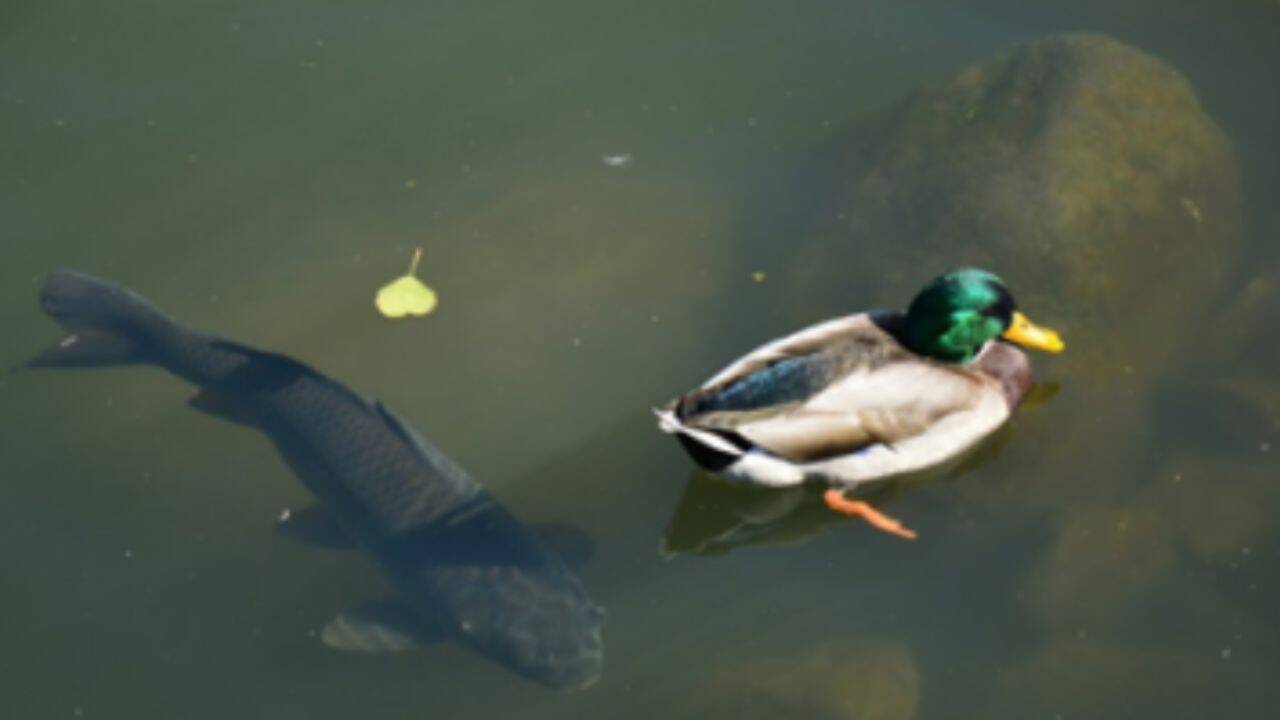
Mallard and carp in daylighted Saw Mill River
The construction also had to deal with existing sanitary and stormwater systems. The project team worked with utility companies to avoid damage and service interruptions.
Improvements were also made to old utility infrastructure around the site.Groundwater was monitored every day during construction. A de-watering system included a 1,500-foot header pipe and 250 well points reaching 25 feet deep. Over five months, 21 million gallons of water were pumped from the project site.An underwater video camera guided a diver who placed grout bags where the Saw Mill River met the Hudson River.
Three-dimensional modelling was also used to help locate the existing concrete flume and enclose the river near active streets and occupied buildings.
The river returns, wildlife follows
The environmental change became visible soon after water began flowing through the new river path. Groundwork USA says that within six months, the river was "teeming with life".The daylighted section created 14,000 square feet of new aquatic habitat. This included one tidal pool and two freshwater pools.The new habitat supports a range of species, including turtles, ducks, blue crabs, black-nosed dace and the endangered American eel. Native plant species were also planted along the river as riparian habitat. These plants attract beneficial insects and help support food chains.
A thriving community space
The new park soon became a place for community activities. It hosts tours, art shows, events, music, public art and a seasonal farmers' market run by Groundwork Hudson Valley.The park also has the American Eel Outdoor Classroom. It includes a mosaic showing the eel's journey from the Sargasso Sea to the river and is used by local educators.The project also became linked to redevelopment in the area. The city credited the new park with helping trigger several developments, including a $7-million renovation of a technology company with 180 jobs.Other projects included a $43-million historic redevelopment involving five to seven buildings, as well as an apartment tower and mixed-use complex planned to replace abandoned buildings along one side of the park.