
 6 months ago
26
6 months ago
26

Ben KingBusiness reporter

 BBC
BBC
When Clarity – the UK's oldest social enterprise – collapsed five years ago, more than a hundred workers lost their jobs and salaries.
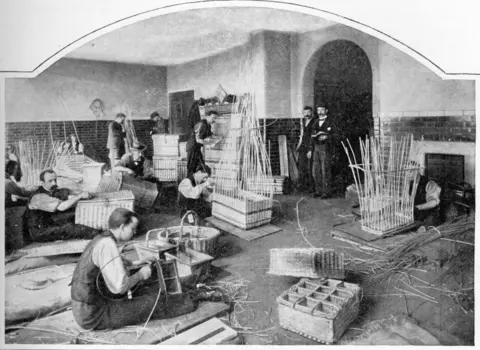
Clarity was founded in 1854 to provide employment opportunities for blind people, and in recent times focused on making soap.
The former owner was taken to court for stealing his workers' pensions, and he sued two employees who spoke out.
Now one of those who was sued has launched a new business, aiming to carry on Clarity's social mission in a new way.
Over its long history, Clarity's patrons have included Queen Victoria and actress Joanna Lumley.
However, in 2020, a big shortfall in its pension fund caused the business to collapse, and a man called Nicholas Marks bought the company out of administration, promising to keep the business going.
It didn't turn out that way.
"He wasn't interested in growing jobs for disabled people and even protecting the jobs for the disabled people that we had working with us, which was truly heart-breaking to watch unfold," says Camilla Marcus-Dew, who was the company's head of commercial.
The workers, many of them blind or visually impaired, were laid off, and didn't get the wages, furlough or redundancy payments they were owed.
The factory closed and the company was shut down for good — owing more than £400,000 to 84 employees.
Shortly after the BBC reported on the story, Marks took Marcus-Dew and another person to court, wrongly blaming them for the company's problems. After a long legal battle, the case was thrown out.
 Getty Images
A factory in London run by General Welfare of the Blind, which later became Clarity, in about 1901
That could have been the end of the story, but Marcus-Dew has taken what she learned and started again.
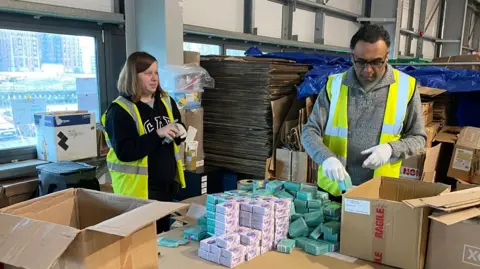
In a corner of a large warehouse in London operated by the homelessness charity Crisis, a group of workers gather once a week to pack soap products for a new business — Amplify Goods.
It provides paid work experience at the London living wage to homeless people, disabled people, and prison leavers.
"The longer you're out of employment, you start to lose confidence that you do have something to offer even just in being yourself," says Pasha Michaelsen, who co-founded the company with Marcus-Dew.
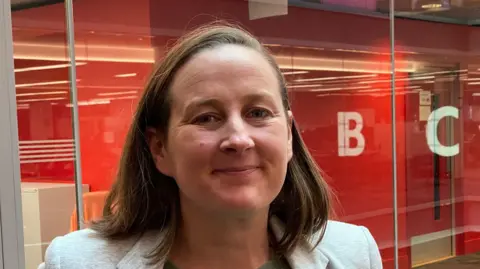
Camilla Marcus-Dew, co-founder of Amplify Goods, says she is putting people who want to work at the centre of her social enterprise
Taylor is autistic and has verbal dyspraxia. She works at the company one day a week.
"I like to get out of the house so I can get money and buy my own stuff," she says. "I learn to pack the soap box properly, so that it could be on my CV."
For another worker, known as Gentle Al, the organisation has provided the first job he's ever had.
"I like coming here, learning new skills," he says. He has to travel across London, and the job has given him the confidence to take the tube on his own for the first time.
The main customers for their soap are businesses, either for washrooms or corporate gifts, but it is also sold to the public online through Amplify's website.
The products are designed to minimise waste. The soap bars are packed in reused (rather than recycled) cardboard and the liquid soap is sold in refillable bottles.
Like Clarity, Amplify is not a charity but a social enterprise. That means it is run as a business but is focused on a social purpose and donates more than half its profits to good causes.
"We're not selling things as fast as we can and giving some money away. We're putting people who want work at the centre," says Marcus-Dew.

Yusuf Hussein now works at Network Rail, after a work experience placement at Amplify Goods
Amplify has already helped Yusuf Hussein to return to work, after he lost his driving licence and his job as a taxi driver and his relationship broke down.
He did 10 days' work experience with them, and they put him in touch with an organisation called Standing Tall, which offered him a home for 12 months and helped him prepare for work.
He now works in customer service for Network Rail at Waterloo Station.
"They did give me assurance like 'OK, it's not the end of the life, we'll help you and you'll get somewhere'," he says.
Last year, Amplify created over 1,000 hours of work. It's still early days, but Marcus-Dew hopes the business can make a big impact.
"It was a massive loss for the disability sector when Clarity went under. So, will we ever have businesses again that are of that scale, that are public facing, doing those amazing things? Maybe not, but we're doing it in our own way now at Amplify Goods," she says.
"I think often people go: 'I don't have influence to create jobs for homeless and disabled people'. I promise you do. I promise you do, through the change of something like soap in a washroom."


