2 hours ago
2
2 hours ago
2

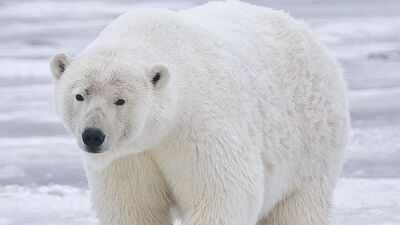
Female polar bear near Kaktovik, Barter Island, Alaska. Image Credit: Alan Wilson/Wikipedia
A single polar bear destroyed 89% of an entire ‘eider bird colony’ on an Alaskan barrier island in less than a day, giving scientists a striking example of how a changing Arctic is altering relationships between predators and seabirds.
The incident, recorded on Spy Island in July 2024, was part of a wider pattern described in a 2026 study published in ‘Norwegian Polar Institute.’ Researchers found that polar bear attacks on bird colonies have become more noticeable as summer sea ice declines, leaving bears with less access to the seals they traditionally hunt. Instead, some bears are spending more time on land and turning to eggs, chicks and birds for food. The discovery is important because such predation was once rare in northern Alaska, but is now adding pressure to seabirds already facing other climate-related problems there.
What happened to the seabird colony of the Alaskan island
The remarkable incident took place on Spy Island, a 58-hectare barrier island in the Beaufort Sea, about 6 kilometres from the mainland coast and the Colville River delta. The island has been monitored periodically since 1983 because it provides important nesting habitat for common eiders and other marine and waterbirds. According to the study, researchers surveyed the colony on 7 July 2024 and recorded nesting attempts by common eiders, glaucous gulls and other birds.
Time-lapse cameras later captured a polar bear moving through the colony and feeding on eggs. The result was striking. That single bear destroyed 89% of the common eider nests in less than a day. The researchers described the event as evidence of a rapid change in predation pressure on Arctic seabirds. The findings were also highlighted by BBC Wildlife, which reported that the bear consumed hundreds of eggs and that the attack represented an unusually destructive event for an Alaskan seabird colony.
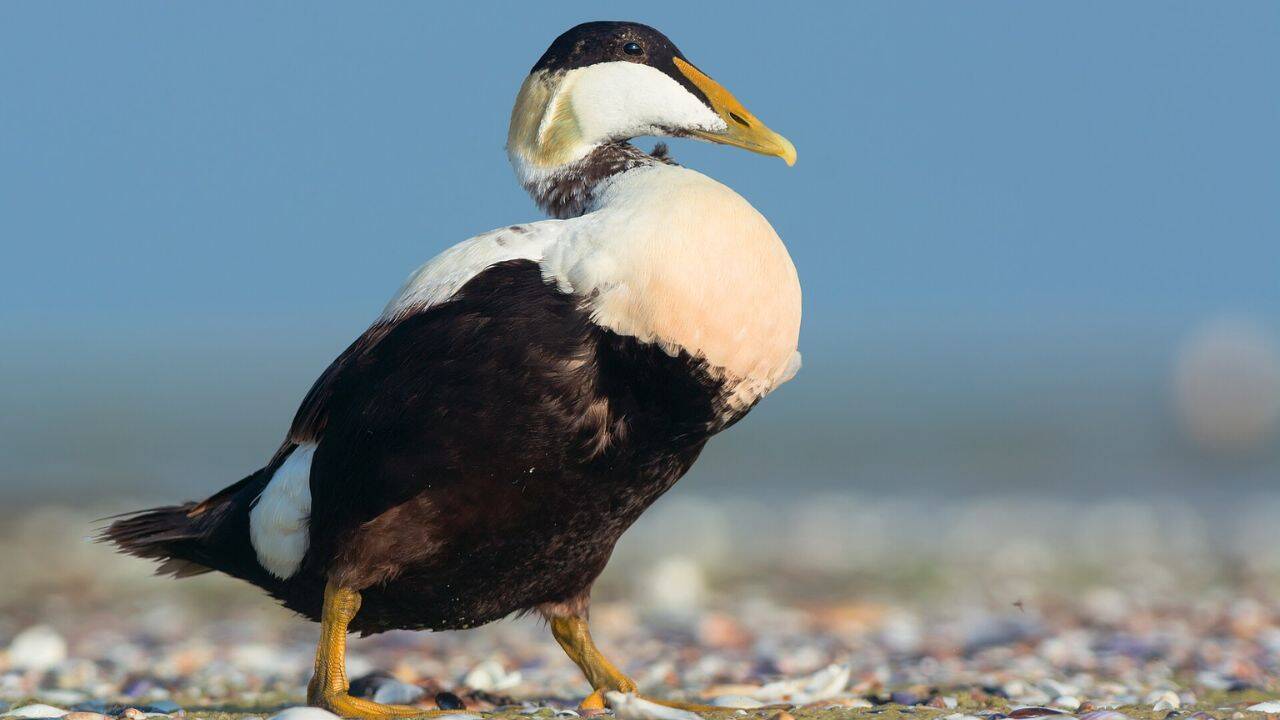
Common Eider. Image Credit: Ryzhkov Sergey/Wikipedia
Why are polar bears eating seabirds instead of seals
Polar bears are traditionally associated with hunting seals from sea ice. As summer sea ice becomes thinner and disappears for longer periods, bears are increasingly spending time on land. The Polar Research study explains that the loss of summer sea ice reduces polar bears’ access to their traditional seal prey. This can push them towards alternative sources of food along Alaska’s coast, including seabird colonies.
For a hungry polar bear, a nesting colony offers an unusually concentrated food source. Eggs, chicks and adult birds are gathered in one relatively small area, meaning a bear can find large amounts of food without having to travel far.BBC Wildlife reported that shrinking sea ice is forcing more bears ashore on Alaska’s barrier islands and mainland coastline. Once there, some are turning to seabird eggs, nestlings and, occasionally, adult birds.
The behaviour does not mean polar bears have suddenly changed into specialist bird hunters. Rather, the researchers see it as an example of animals adjusting their feeding behaviour as their environment changes.
Has this happened before in Alaska
Polar bears have eaten seabirds elsewhere in the Arctic, but the behaviour had historically been uncommon in northern Alaska. The long record from ‘Cooper Island’ provides a useful comparison. Researchers have studied a colony of Mandt’s black guillemots there for decades.
Between 1975 and 2007, polar bear predation occurred in only nine of 33 years and affected less than 3% of nests. That changed between 2008 and 2010.
During those three years, bears disturbed 38% of the nests, while 43% of the 423 guillemot nestlings that hatched were consumed.Researchers attempted to protect the birds in 2011 by replacing wooden nest sites with modified plastic carrying cases designed to resist bears.
The measure initially worked. After 2020, however, bears became increasingly capable of manipulating the protective structures, sometimes ejecting eggs, chicks or adult birds. By 2024-25, polar bear predation had resulted in ‘complete reproductive failure’ at the Cooper Island colony.
Changing ecosystem for the seabird colonies
The impact could be serious because seabirds are already facing other difficulties linked to a changing Arctic. The research study notes that these birds are dealing with reduced food availability as well as nesting habitat that can be flooded or eroded.
Additional predation from polar bears therefore adds another source of pressure during the breeding season. At Cooper Island, the timing of bear visits has also changed.
Earlier observations largely involved bears arriving during August, when chicks were being raised. More recently, bears have appeared in June and July, when adult guillemots are incubating eggs or caring for young.That earlier arrival gives bears access to nests at a particularly vulnerable stage.
The researchers recorded three adult guillemots killed by bears in each of the 2024 and 2025 breeding seasons. In the previous half-century, only two adults had been killed by polar bears. BBC Wildlife reported that black guillemots are already experiencing problems because of a shortage of Atlantic cod in warming seas. Polar bear predation therefore adds to pressures that are already affecting some colonies.
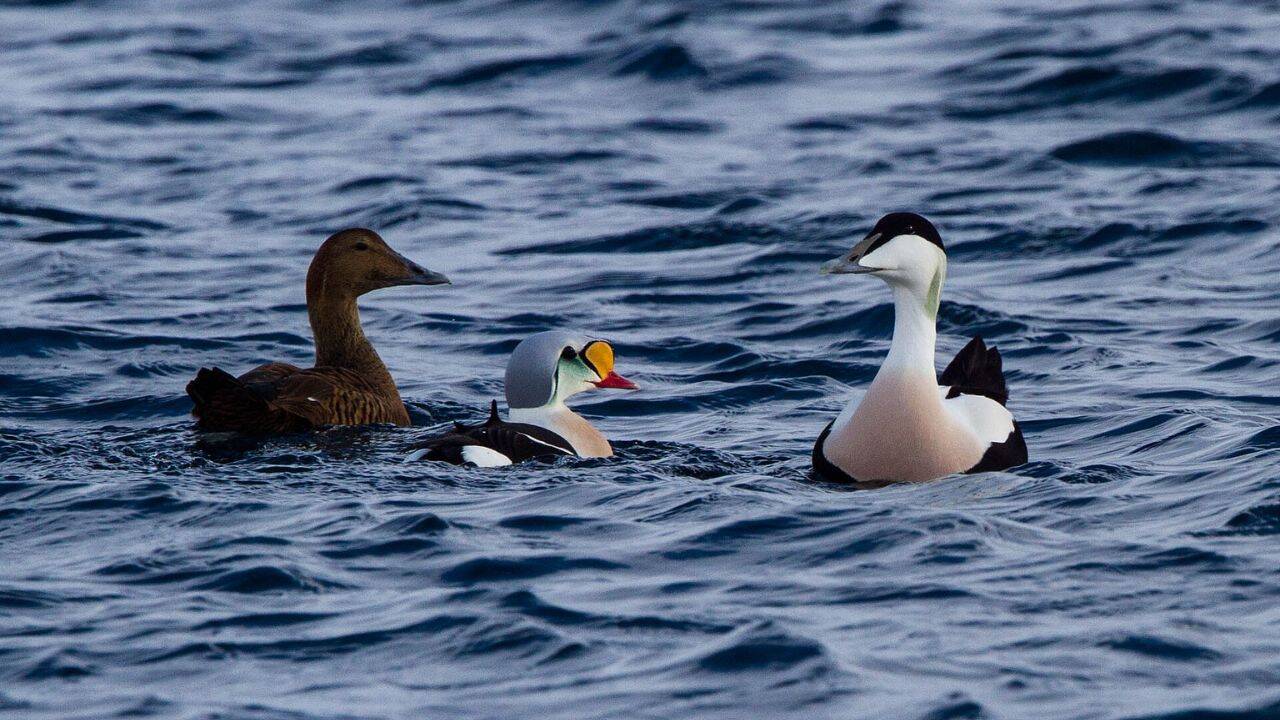
King Eider and Common Eider. Image Credit: Ron Knight/Wikipedia
Could polar bears keep returning to these colonies
The researchers believe repeated visits could become an important concern.
Polar bears can learn where profitable food sources are located and may return to the same places in subsequent years. That creates a difficult situation for seabirds nesting on barrier islands. These islands historically offered a degree of protection because large land predators rarely reached them. Polar bears were also uncommon on the islands during summer.
As sea ice declines, however, that separation is becoming less reliable.The Polar Research study stresses that the documented events currently affect only a small portion of the wider populations of these birds. Nevertheless, they show how quickly ecological relationships can change when the Arctic environment changes. The Spy Island attack is therefore more than a record of one hungry bear. It is a visible example of how sea-ice loss can alter where a major predator travels, what it eats and which species suddenly become vulnerable.
The researchers view such changes as evidence that climate change is reshaping connections between species across the Arctic.