1 month ago
23
1 month ago
23

As Uganda works to contain an Ebola outbreak that is also affecting neighbouring Democratic Republic of the Congo (DRC), health workers are doing more than responding to a deadly virus. They are helping families navigate fear, misinformation and stigma.
According to the latest figures, more than 1,400 confirmed cases of Ebola Bundibugyo virus disease, including 350 deaths, have been reported in the two countries. More than 90 per cent of infections are concentrated in Ituri province in DRC, a major cross-border trading hub with Uganda – ravaged by years of armed conflict.
Calling Kampala
On a Sunday morning in Kampala, Dr Chris Opesen, an anthropologist with the World Health Organization (WHO), receives a call from local authorities shortly after 5.30am.
A woman suspected of having Ebola is preparing to return home, and he has been asked to help ensure her reintegration into the community is safe.
Three days earlier, Lilian* had presented with symptoms consistent with Ebola and was transferred to the Ebola isolation unit at Mulago Hospital for diagnosis and care.
Although the transfer was planned, it was nonetheless a distressing experience for her, her family and neighbours. Since then, everyone has been anxiously awaiting the final confirmatory test that will determine whether she can safely return home.
Over the past 36 hours, Dr Opesen has remained in regular contact with Lilian and her family, offering reassurance and guidance as anxiety in the community has grown.
“The anthropologist is the midfielder of the outbreak response,” he says, drawing on a football analogy. “I connect response teams with communities and deliver feedback, from community to response teams citing concerns, fears and grievances.”
Managing fear and misinformation
Together with colleagues from the Kampala Capital City Authority, Dr. Opesen convenes a community meeting with Lilian’s family and friends to address concerns ahead of her return.
What begins as a tense and emotional exchange, gradually shifts when Dr. Opesen proposes a more structured dialogue. The group agrees and elects a chairperson, a neighbour, and a secretary: Lilian’s sister, Angela*.
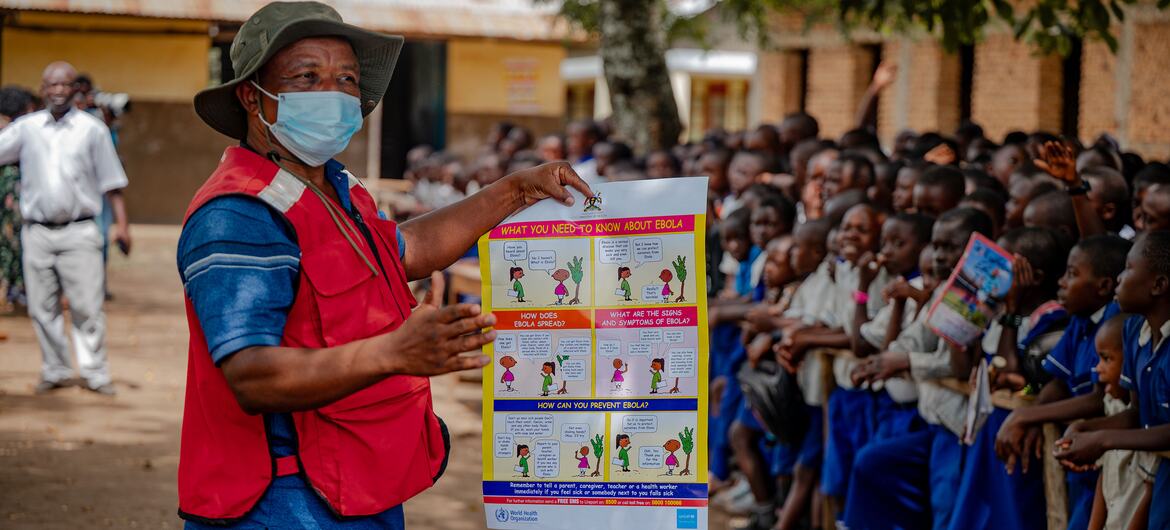
© UNICEF/Joseph Balikuddembe
Students attend an Ebola awareness session at a primary school in Kasese District, Uganda.
As each person is given space to speak, the atmosphere slowly calms. “We appreciate you, because without you there would still be fear,” Angela says afterwards.
Later, Dr Opesen and his colleague Henry Bwire, a surveillance focal point with the Kampala Capital City Authority, accompany a neighbour to a local shop.
Lilian had asked them to speak to the shopkeeper, who had allegedly stigmatised her mother the previous day.
“Ebola is a disease that everyone fears,” Mr. Bwire explains. “Sigma can come through miscommunication and fear, both of which were present in this case. It was our role to bring Lilian back and clear up that miscommunication and reduce that fear in the community.”
After the discussion, the shopkeeper thanks the team and reassures them that Lilian will be treated with respect on her return.
Waiting for the all-clear
All that remains is the laboratory confirmation.
Both decide to wait on neutral ground rather than return home, positioning themselves between the hospital and Lilian’s neighbourhood. They remain in contact with the laboratory and family throughout the afternoon.
At around 6:30pm, the call comes: the result is negative for Ebola. Lilian had been treated for a bacterial infection and is well enough to return home.
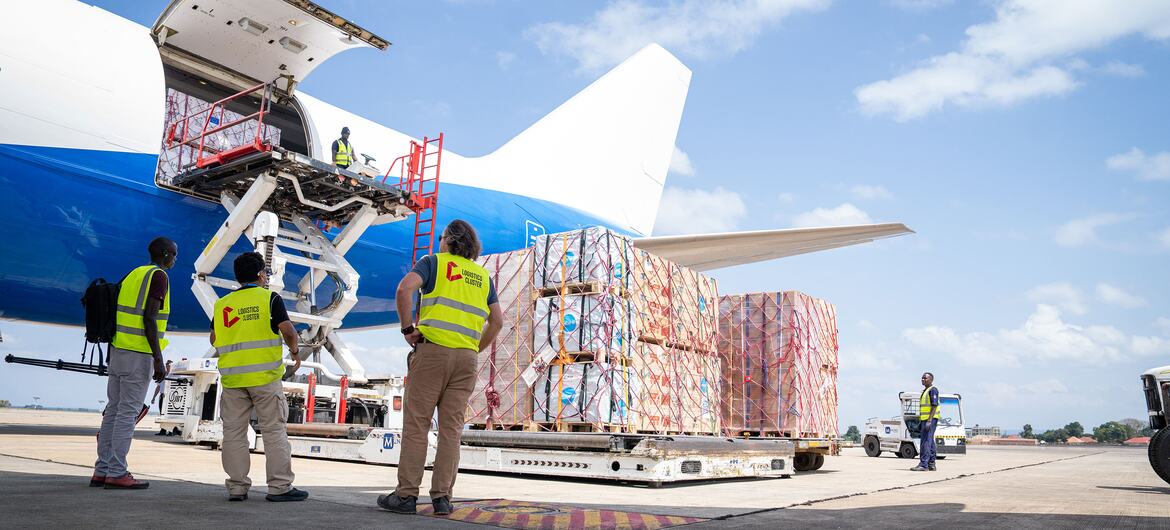
© WFP/Daisy Masembe
Emergency relief supplies for the Ebola outbreak is offloaded from an aircraft in Entebbe, Uganda.
A dignified return
Back at the house, family and neighbours gather in anticipation. Dr. Opesen arrives with a cake and bottles of water.
When Lilian finally arrives, escorted by a member of Uganda’s national Emergency Medical Team, she appears tired but relieved. The group listens as she recounts her experience and what recovery will mean for her.
“As a family, we appreciate you coming to the ground and community to talk to us, because stigma can be too much” she says. “Thank you for listening to and addressing our concerns. I hope this can be a learning experience.”
Lilian then cuts the cake and shares it with everyone gathered together.
“For me reintegration is supposed to be a celebration, especially when the evacuation did not go as planned,” says Chris. “I wanted to do something special for Lilian, and for her to serve people the slices and for them to eat what she has given them, to demonstrate her acceptance back into the community.”
A long day, a shared outcome
By 9pm, more than 15 hours after his day began, Dr. Opesen is finally on his way home. Despite the long hours, he describes the day as rewarding.
“My role in the response gives me satisfaction,” he says. “If I do my job well, I can make a difference and support WHO’s leadership on the frontline of a safe and dignified response.”
*Names have been changed to protect patient privacy
Where next?
Latest news
Read the latest news stories:
- A safe return home: Tackling stigma on Uganda's Ebola frontline Saturday, July 04, 2026
- Invisible peacebuilders: How ‘diplomacy works’ to prevent conflict Saturday, July 04, 2026
- Peru’s Gridlock a Licence for Autocracy? Friday, July 03, 2026
- Europe’s Heat Wave Shows Climate Change Is Not Just a Poor-Countries Issue Friday, July 03, 2026
- Discounting Demographic Realities Friday, July 03, 2026
- Dry Monsoon in South Asia: Looming Fears of Agricultural Loss, Extreme Heat, and Disaster Friday, July 03, 2026
- UN Senior Members Urge Universal Abolition of Death Penalty Friday, July 03, 2026
- Abu Dhabi’s Coral Promise to the Future Friday, July 03, 2026
- Beyond the United Nations — Reclaiming Integrity and Purpose in Global Governance Friday, July 03, 2026
- When an Ally Becomes a Liability Friday, July 03, 2026
Link to this page from your site/blog
Add the following HTML code to your page:
<p><a href="https://www.globalissues.org/news/2026/07/04/43491">A safe return home: Tackling stigma on Uganda's Ebola frontline</a>, <cite>Inter Press Service</cite>, Saturday, July 04, 2026 (posted by Global Issues)</p>… to produce this:
A safe return home: Tackling stigma on Uganda's Ebola frontline, Inter Press Service, Saturday, July 04, 2026 (posted by Global Issues)