4 weeks ago
44
4 weeks ago
44

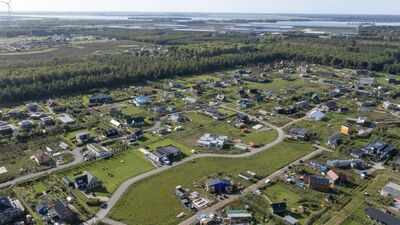
If you are not ready to get your hands dirty in the soil or spend time in nature, then moving to this town in the Netherlands will not be possible for you. In the country where urban planning is considered almost "too perfect," there is a new town Oosterworld built entirely on reclaimed land.Here, nature and living, working and leisure are combined in a low density as a balance act against the more urban west of the city. Oosterworld is a 4,300 hectare urban experiment located east of Amsterdam, in the suburban city of Almere. First visualised about a decade ago by a local network, it was established by local government and Oosterwold planners as a way to challenge the rigidity of Dutch city planning, giving people more freedom, and responsibility, over the urban design process.
50% of the site here is designated for urban farming, and this emphasis on food production is expected to improve the town's sustainable profile and maintain the agricultural character of the area.
Terms and conditions applied
While the town allows an individual to build the house of their dreams, there are certain terms and conditions applied. One can develop a plot but also has to realise all necessary components such as a piece of the road, energy, sanitation, rubbish collection, public green and urban farming.
This can be done as an individual or shared with a collective. To maintain the rural character the overall programming is kept at 18% construction, 8% roads, 13 % public green, 2% water and 59% urban agriculture.This leaves space for golf course villages, plantations, autarkic villas, villages of collective groups etc. MVRDV developed the strategy as part of the Almere 2030 Structure Vision in which the city is growing with 100,000 inhabitants and 60,000 workplaces“This rule – if you want to live in Oosterwold, you have to produce food on at least 50% of your property – is very unique thinking in the world, and makes it also an outstanding area in many ways,” said Jan Eelco Jansma, a researcher at Wageningen University & Research, who has studied Almere for years and inspired the city to include urban agriculture in the planning of Oosterwold to The Guardian in 2024.For those who don't have the skills to farm their own land, hiring a local "city farmer" through a platform built specifically to match landowners with growers is an option.The eventual goal is to provide 10% of Almere’s food, which many see as ambitious but hopefully doable in time.
Life in Oosterwold
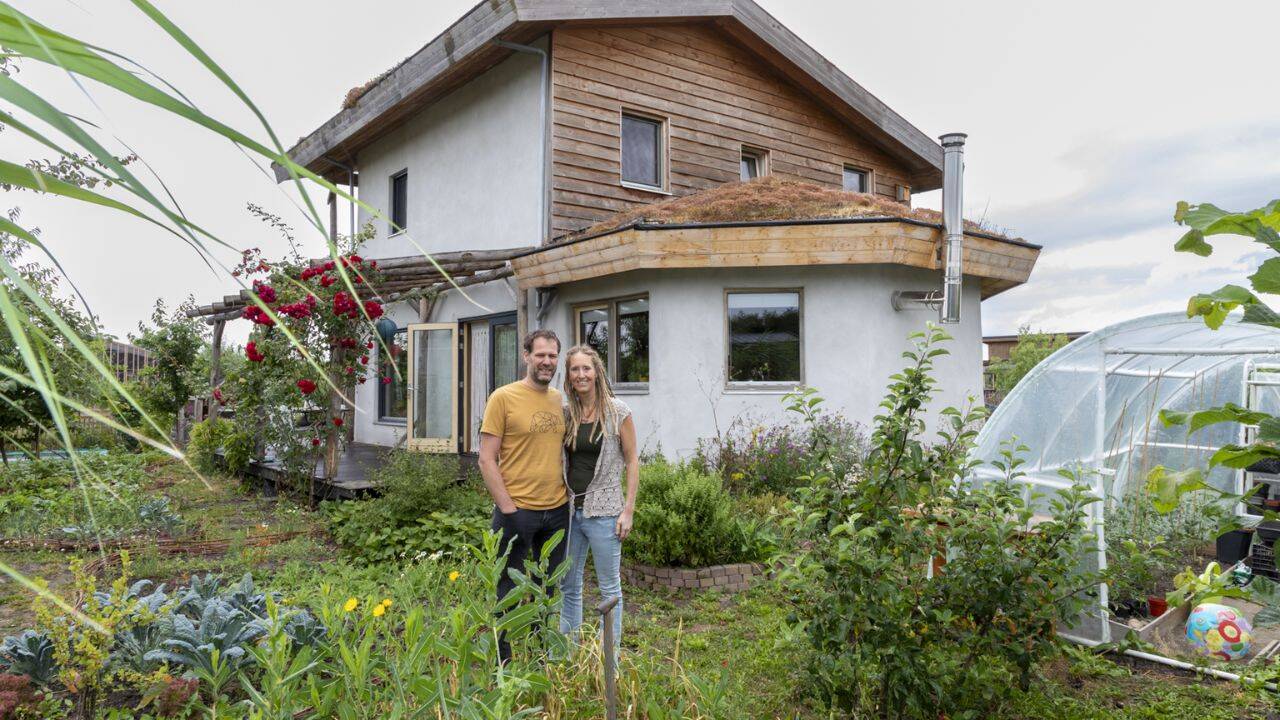
Unlike typical urban areas, Oosterwold offers residents great flexibility in how they manage their plots.
Marco de Kat, a local councillor and Oosterwold resident, has fully embraced the community’s sustainable ethos. Since moving in 2017, de Kat has transformed his 800-square-meter garden into a source of fresh produce, growing fruits, vegetables, and herbs like apples, peppers, and basil.
In the winter, he and his wife rely on preserved foods stored in freezers to maintain their supply.“Yesterday, I forgot to think about what to eat,” de Kat shared as per a report by Happy Eco News. “You just walk through your garden, find something, and that’s what you eat.”While some residents like de Kat focus on personal consumption, others have bigger ambitions. Take Jalil Bekkour, for example. He turned his garden into a testing ground for ingredients used in his restaurant, Atelier Feddan.
Since opening three years ago, 80% of the food served at the restaurant comes from Oosterwold, showing the potential for urban agriculture to drive local food economies.Unlike typical urban areas, Oosterwold offers residents great flexibility in how they manage their plots. Agricultural techniques vary widely, from orchards to greenhouses to small pastures. This freedom has led to a diverse range of approaches to farming, with each resident contributing their own ideas to the overall system.Despite the flexibility, the project has not been successful from the start. Many residents lacked farming expertise, and early on, there wasn’t much guidance available. Jansma described the planning process as “a bit laissez-faire,” leaving many to figure things out on their own. To address these challenges, the Oosterwold Food Hub was created. Managed by the Almere local authority and the Oosterwold food cooperative, the hub provides resources, workshops, and knowledge-sharing to help residents improve their agricultural practices.The environmental impact of Oosterwold’s urban agriculture is also significant. Research indicates that small-scale urban farms in the area are helping to improve soil quality and biodiversity, reducing the ecological damage caused by urban sprawl. Residents use methods like composting, rainwater harvesting, and natural pest control to minimise their environmental footprints.
Lessons to note
Lessons can be learned from other projects as well. Jason Hawes co-authored a 2024 study that found carbon emissions from urban agriculture can be higher than from conventional agriculture.
While the study did not evaluate a community like Oosterwold, there were some relevant ideas to be gleaned from it.Hawes said to the outlet, “For example, we found that infrastructure installed early in the farm-garden setup was a particularly important contributor to the carbon footprint of fruits and vegetables grown there, so it can be useful to prioritise long-term use of infrastructure as well as finding reclaimed or reused materials to support the initial construction.”And it doesn’t necessarily have to start on as large a scale as Oosterwold did. “The first thing I tell people is to start small,” Bekkour said. “Start with the things you love to eat and the easy stuff.”