2 months ago
36
2 months ago
36

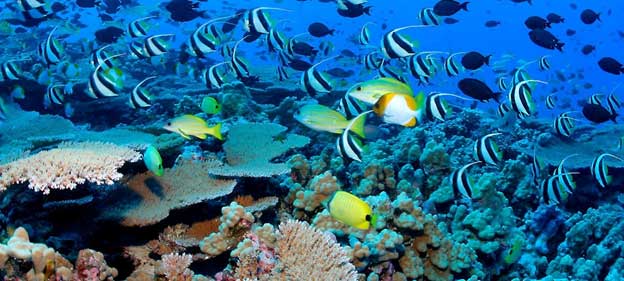 Reef fish and corals. Credit: UNDP
VICTORIA, Seychelles, July 3 (IPS) - In just the first half of this year, Abu Dhabi’s Environment Agency has cultivated 302,415 new coral colonies, bringing the total under the Abu Dhabi Coral Gardens Project to around 1.8 million – a scale of restoration that demands global attention.
Abu Dhabi’s coral project is more than a good news story – it is a glimpse of the future we urgently need.
For decades, I have argued that ocean protection, climate stability and human prosperity are inseparable. I have seen what happens when we ignore this truth: coral reefs bleaching, fisheries collapsing, coastlines exposed, communities losing both livelihoods and hope. That is why what Abu Dhabi is doing today with its coral restoration work speaks directly to my convictions about ocean health, climate resilience and the regenerative blue economy.
This is not a symbolic gesture. Through the Abu Dhabi Coral Gardens Project, the Environment Agency – Abu Dhabi (EAD) is building one of the largest coral reef restoration initiatives in the Middle East. Scientists cultivate fragments of heat resilient corals in nurseries, then carefully transplant them onto degraded reefs and artificial structures across the emirate’s coastal and offshore waters. Colony by colony, reef by reef, damaged seabeds are being transformed into living “coral gardens” capable of supporting fish, restoring biodiversity and strengthening coastal protection.
Coral as an investment, not a charity case
When a government decides to cultivate millions of coral colonies and restore vast areas of degraded reef, it is making a strategic economic choice, not simply ticking an environmental box. Coral reefs are infrastructure – natural infrastructure. They protect coasts from storms and erosion, underpin tourism and recreation, support fisheries, and safeguard cultures that have lived with and from the sea for generations.
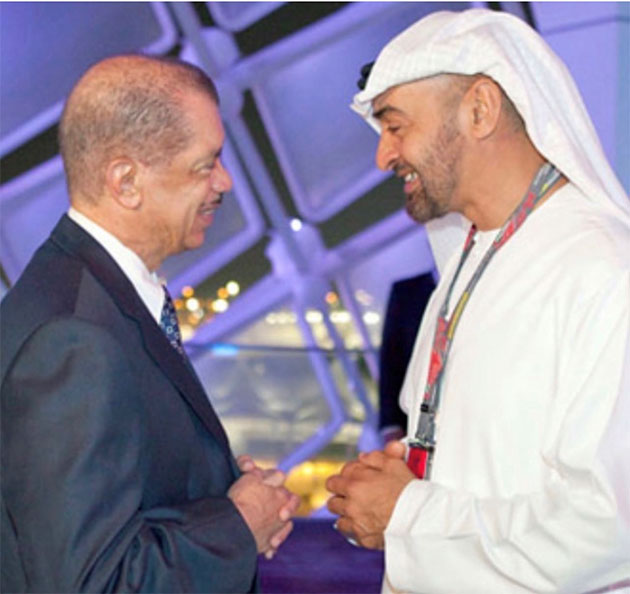 President James Michel with His Highness Sheikh Mohamed bin Zayed Al Nahyan
Abu Dhabi’s decision to expand coral restoration at scale shows a clear understanding: it is cheaper and wiser to invest in living systems now than to pay later for disaster response, coastal damage and social instability.
This is the kind of thinking I have long argued for – treating the ocean not as a dumping ground, but as the foundation of long term resilience and prosperity.
A city of the future
What impresses me most is that coral restoration in Abu Dhabi is not happening in isolation. It sits alongside major investments in renewable energy, digital infrastructure and urban greening. Abu Dhabi is using its fossil fuel wealth to prepare for a post oil future – and that is no small shift.
Across the emirate, we see large scale solar projects harnessing the desert sun, new low carbon infrastructure, and modern digital networks designed for a smarter, cleaner economy. We see mangrove forests being expanded along the coast, seagrass meadows protected, and the city itself being “greened” to make it more liveable as temperatures rise. Abu Dhabi is becoming a prototype of the “city of the future”: one that understands that climate resilience, nature restoration and clean technology are central to development, not optional add ons.
Too many wealthy states still pour money into wars, arms and short term political games, even as their people face heatwaves, floods and collapsing ecosystems. Abu Dhabi may have its shortcomings – all countries have – but it has a vision and is putting serious capital into the pillars of a different future: clean energy, climate resilience, nature based solutions and large scale coral and mangrove restoration. For a resource rich economy, this is a profound shift in mindset.
This is what I mean by a regenerative blue economy: one that restores nature as it develops, rather than consuming it to exhaustion.
Corals on the frontline of climate change
Let us be clear: coral reefs are on the frontline of climate breakdown. In my own region, the Indian Ocean, we have watched reefs bleach and die as waters warm. The Gulf has suffered the same fate. When a place like Abu Dhabi deliberately farms corals that can better withstand heat, it is not clinging to the past – it is trying to give the future a fighting chance.
Instead of simply lamenting the loss of reefs, Abu Dhabi is experimenting, innovating and acting. It is accepting that the climate is already changing, and that we must adapt with intelligence rather than despair.
By focusing on more heat tolerant coral colonies, the project is quietly advancing a new frontier of climate adaptation: learning how to work with nature’s own resilience, rather than against it. If successful, lessons from the Abu Dhabi Coral Gardens could inform restoration efforts in many other warming seas.
Mangroves, greening and clean infrastructure
Coral nurseries alone are not enough, and Abu Dhabi knows this. The drive to expand mangrove forests, protect seagrass and green the city is part of the same story: recognising that nature is our strongest ally in storing carbon, calming storms and cooling our cities.
Alongside nature based solutions, the emirate is directing significant investment into clean infrastructure: solar farms, energy efficient grids, and other low carbon projects that will gradually reduce dependence on fossil fuels.
Importantly, some of this effort is outward looking, supporting clean energy initiatives in vulnerable countries, including small island states such as Seychelles. When a wealthy state backs solar panels, wind turbines and resilient infrastructure in nations on the frontlines of climate change, it does more than tick a development box – it helps anchor a fairer, more stable world.
I have long argued that a healthy ocean is our first line of defence against climate change.
When you connect coral restoration, mangrove expansion and renewable energy under one vision, you start to see what real climate leadership looks like. It is not just about speeches at summits; it is about decisions on land use, budgets, technology and national priorities. It is about accepting that the only truly secure societies in the twenty first century will be those that learn to live within planetary boundaries.
A message to wealthy nations
This is where my opinion becomes blunt.
If you are a wealthy country today and you are not using your resources to restore ecosystems, decarbonise your economy and support those most vulnerable to climate impacts, then you are failing your citizens and the world. It is that simple.
Abu Dhabi shows that another path is possible. You can be an energy producer and still invest heavily in renewables. You can be a global city and still prioritise mangroves and coral reefs. You can be rich and choose to fund regeneration rather than destruction.
So when I look at this coral project, I see more than a local environmental initiative. I see a challenge to the complacency of other rich nations that prefer to invest in weapons and fossil infrastructure rather than in the living systems that sustain us all. It exposes a stark moral choice: spend on the machinery of war and planetary destabilisation, or spend on the stability and dignity that come from a thriving natural world.
Why this matters to me
As someone who has spent much of his life fighting for ocean protection, I cannot simply observe this from a distance. I feel a deep sense of responsibility – and, frankly, urgency. We are fast approaching the limits of what the ocean can absorb. We are already seeing climate impacts that once belonged to scientific warnings, not daily news.
Yet Abu Dhabi’s coral work gives me a measure of hope. It confirms that when visionary leadership, political will, financial capacity and scientific knowledge align, we can still repair, restore and reimagine our relationship with the ocean. It shows that a city built on hydrocarbons can choose to become a champion of coral, mangroves and clean energy instead of doubling down on the old model.
My vision has always been that countries, especially those with resources, should use their wealth to heal rather than harm: to farm corals instead of conflict, to grow mangroves instead of militaries, to build renewable capacity instead of new fossil dependencies.
Abu Dhabi is working towards the embodiment of that vision and it deserves recognition.
If more wealthy states chose this path, the global story on climate and ocean health would look very different – and future generations might say that, when it truly mattered, some leaders chose to use their power and their wealth to restore the ocean that makes life on Earth possible.
James Alix Michel, former President of Seychelles and Founder, James Michel Foundation
IPS UN Bureau
© Inter Press Service (20260703065622) — All Rights Reserved. Original source: Inter Press Service