5 months ago
26
5 months ago
26


 Pacemaker
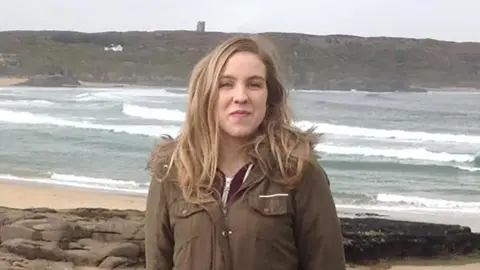
Natalie McNally was 15 weeks pregnant when she died at her home in Lurgan in December 2022
The trial of a man accused of the murder of Natalie McNally heard the 999 call made by the defendant the night after her death.
Stephen McCullagh, 36, from Woodland Gardens in Lisburn, County Antrim, made the call from Natalie McNally's home at about 22:00 GMT on the 19 December 2022.
The 36-year-old, who denies the murder, can be heard sobbing and telling the call handler, "please come as soon as you can, she's pregnant. She's cold".
The prosecution told the court that the 999 call was "an act. Put on. Part of his plan to do the murder and get away with it".
He was asked by the call handler: "Is the patient breathing?"
McCullagh was heard crying: "No, she's gone."
The 999 call heard McCullagh telling the handler: "There's blood everywhere."
McCullagh told the call handler that Natalie was 15-weeks pregnant and they "had a scan" the next day.
The prosecution opened their case to the jury of six men and six women.
Charles MacCreanor KC told the court this was "a planned, calculated and premeditated murder by the defendant. One which he hoped to get away with".
The call lasted for 10 minutes and was played in Belfast Crown Court.
The court was told that Natalie, 32, suffered "serious multiple stab wounds".
MacCreanor told the court a pathologist noted "compression of her neck and noted bruising to her left and right, suggesting finger tips".
The court also heard that Natalie had three wounds to her neck and blunt force trauma to her head caused by "at least five heavy blows to her head".
The prosecution told the jury that "both the neck compression and stabbing injuries could have caused death on their own".
The court heard that Natalie was pregnant when she was killed and that the defendant, McCullagh was the father of their unborn child.