3 weeks ago
32
3 weeks ago
32

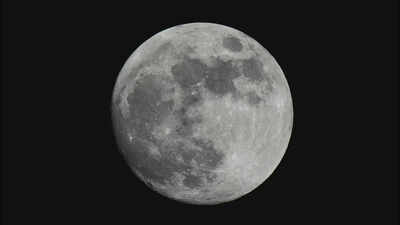
Representative Image (Image Credit: Canva)
In 1971, Apollo 15 astronauts David Scott and James Irwin noticed something unusual on the Moon: tiny green flecks scattered across the otherwise grey surface. They collected samples and brought them back to Earth, unaware that the material would decades later challenge a long-held belief about the Moon.
According to Brown University, the green flecks were volcanic glass beads, and more than 35 years after the mission, researchers discovered evidence of water trapped in the volcanic glass. As per NASA, researchers studying Apollo samples in 2008 detected hydrogen in tiny volcanic-glass beads, providing evidence that water was present inside the Moon when the beads formed during ancient volcanic eruptions.
A strange discovery
Apollo 15 reached the Moon in July 1971 and was designed to be more than simply another lunar landing.
It was the first of NASA's J-type missions, which carried expanded scientific equipment and gave astronauts more time and mobility on the lunar surface.Scott and Irwin spent about 19 hours exploring the lunar surface during several excursions. Using the Lunar Roving Vehicle, they travelled across the surface near the Apennine Mountains and Hadley Rille, collecting rocks and soil for scientists on Earth.During one of those excursions, the astronauts noticed the green material.
At first, Irwin questioned whether the apparent colour was simply an effect of sunlight reflecting from the surface. Scott confirmed that the flecks were indeed green. They collected some of them and returned to Earth with the rest of their samples. The Apollo 15 mission ultimately brought back about 170 pounds of lunar material.
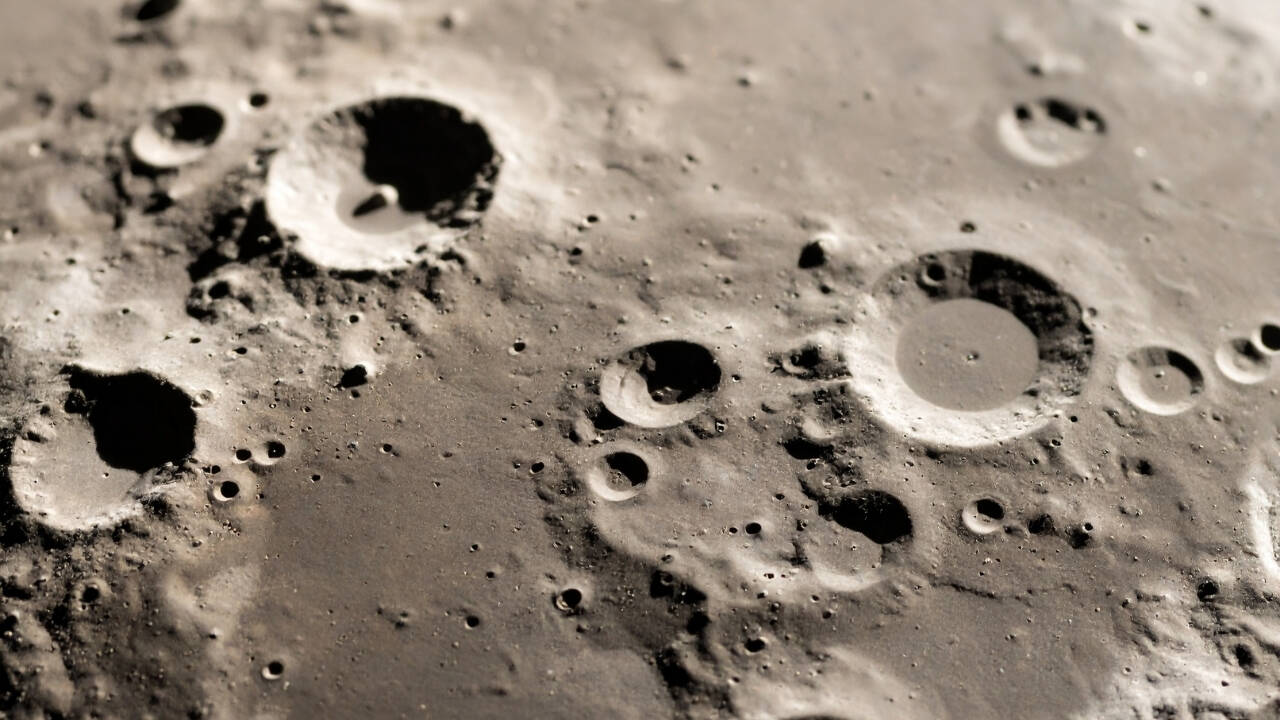
Representative Image (Canva)
What were the green beads?
The unusual particles were not ordinary pieces of coloured rock. They were volcanic glass, formed when molten material erupted from the Moon's interior and cooled rapidly.That detail made the samples particularly valuable. Unlike many surface rocks, volcanic glass can preserve information about the molten material from which it formed. Because the glass originated from deep within the Moon, scientists could use its chemistry to investigate conditions inside the lunar body.The green beads were tiny, but they carried clues about the Moon's ancient volcanic history and its interior.
For decades, however, scientists largely believed that the Moon was extremely dry.
The Moon was thought to be dry
Early Apollo samples appeared to support the idea of a waterless Moon. NASA notes that when Apollo-era lunar soil was tested, researchers initially found no evidence of water. The conclusion was that the lunar surface was essentially dry, and the possibility of significant water inside the Moon received little attention for years.
That picture began changing with improved technology.In 2008, researchers at Brown University revisited volcanic-glass beads from the Apollo 15 and Apollo 17 missions. Geologist Alberto Saal and his colleagues detected water-related hydrogen in the tiny beads. The finding was important because the beads had formed from molten material that came from deep inside the Moon. It showed that at least some water had survived in the lunar interior.
Brown University described the discovery as the first unequivocal evidence that the lunar interior was not as dry as scientists had long assumed.
Why the discovery mattered
The finding changed more than the understanding of one group of lunar samples. It raised a much bigger question: how did water survive inside the Moon? Scientists expected the young Moon to have been extremely hot. The leading theory is that the Moon formed from debris produced by a massive impact involving the early Earth and another planetary body.
Under such extreme conditions, scientists had thought volatile substances such as water would have been lost.The discovery in the volcanic glass showed that at least some water had survived in the lunar interior despite the extreme conditions associated with the Moon's formation. Scientists continue to study how lunar water was distributed and where its different sources originated.Further research strengthened the finding. In 2011, scientists studying tiny crystalline formations within the glass beads found water concentrations comparable to those in some terrestrial basalts, suggesting that parts of the lunar mantle could contain substantial water.
From tiny beads to a wetter Moon
The Apollo 15 discovery also helped change how scientists think about lunar water today. NASA now recognises evidence for water in several forms and locations, including permanently shadowed regions and even sunlit areas of the lunar surface. The green beads were therefore an important early piece of a much larger puzzle. They showed that water was not confined to the lunar surface and that at least some water had existed inside the Moon since its ancient volcanic past.What began in 1971 as a few strange green flecks spotted by two astronauts eventually became a major clue about the Moon's hidden interior. The tiny volcanic-glass beads demonstrated how even the smallest lunar samples can preserve evidence of a world that existed billions of years ago, and how revisiting old samples with better technology can completely change our understanding of Earth's nearest neighbour.