1 hour ago
1
1 hour ago
1

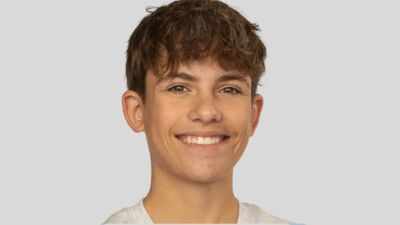
Luca McGillPhoto: Society for Science
When 13-year-old Luca McGill set out to measure carbon dioxide in Arizona, he assumed the busiest city streets would naturally produce the highest levels. However, his custom drone experiments revealed a completely different reality.
As documented by the Society for Science, which highlights young researchers through its Thermo Fisher Scientific Junior Innovators Challenge, Luca’s breakthrough project earned him a spot as a 2025 finalist. By flying sensor equipment 120 meters into the air, he discovered that rural landscapes often contained higher ground-level carbon dioxide concentrations than nearby urban areas. This surprising finding directly challenged long-held assumptions about local air pollution, proving that greenhouse gas behaviour is far more nuanced than simple city traffic patterns.
Luca’s work offers fresh clarity on environmental science while proving that meaningful scientific contributions can come from anywhere.Rethinking how greenhouse gases spreadMost people tie high carbon dioxide readings straight to exhaust pipes, factories, and concrete urban centers. When Luca began analyzing his flight data, he fully expected to see massive spikes over heavily trafficked metropolitan zones.
Instead, his aerial sensors consistently recorded surprisingly high ground-level concentrations in rural locations with heavy plant life and limited wind movement.The surprise comes from biological processes that human-centred models tend to ignore. Plants naturally respire carbon dioxide back into the atmosphere, especially at nite or when the level of sunlight falls. At the same time, micro-organisms in the soil are constantly breaking down organic matter, driving carbon emissions upwards from the ground.
When the weather is calm in the countryside, the air remains stagnant close to the thick tree canopies and carbon dioxide builds up quickly.
Luca’s results showed that natural ecological cycles create microclimates that alter localized carbon balances far more than we previously understood.Creating a solution from scratchLuca’s achievement is all the more impressive for its applied, do-it-yourself approach.
The BASIS Tucson North student did not avail himself of university laboratories or commercial-grade instruments. Instead, he designed and built a special-purpose drone custom-made for high-altitude air sampling. He carefully integrated a high-precision carbon dioxide sensor, an exact GPS module, and a custom data logger, and then coded the software necessary to coordinate the parts in flight.
Flying the drone called for careful execution.Luca programd the plane to fly to certain locations and altitudes, up to fixed test heights of 120 meters.
At each target altitude, the equipment continuously sampled the air at defined geographical locations. Standard stationary sensors only sample at ground level, missing how gasses drift and settle higher. Sampling at different heights, Luca produced fine-grained multi-level maps that traditional ground monitors cannot.Following the data without biasReal discovery happens when researchers follow real evidence rather than holding onto assumptions.
Luca’s willingness to embrace surprising results highlights an exceptionally mature scientific attitude. It is easy for an investigator to ignore unexpected readings as glitchy equipment or simple pilot error. Luca chose to trust his data, double-check his hardware calibrations, and dig into plant biology to explain what he was seeing.That commitment to objective inquiry forms the real foundation of scientific research.Science is not about defending a fixed opinion; it is about adjusting your views when physical evidence tells a different story.
A middle school student put observations ahead of popular assumptions and has found valuable insights into atmospheric monitoring. His work is a working example for researchers of any age of the importance of being open-minded.Skills that reach far beyond the projectLuca’s technical curiosity goes well beyond measuring atmospheric gases. Outside of his drone work, he stays deeply involved in programming, custom engineering, and competitive robotics.He views technical skills as practical tools for understanding and modifying the physical world around him.
Writing custom code and tinkering with hardware gave him the exact technical foundation needed to construct his sampling aircraft without outside professional support.Luca also makes it a point to give back to his local community. He regularly presents his drone findings at regional science fairs, school meetings and student assemblies. He helps his fellow students see that advanced research is completely attainable by explaining technical concepts in clear, simple language.
He firmly believes that youth should never stand in the way of anyone trying to solve major real-world challenges, and actively encourages his peers to build their own projects.A new path for young researchersLuca McGill has already made a genuine mark on environmental science at just 13 years old. His project shows how inventive thinking and DIY engineering can yield real insights into global challenges. Luca’s work illuminates rural carbon behavior, prompting scientists to reexamine the role of local ecosystems in global climate models.
Luca’s blend of persistence and engineering acumen suggests future breakthroughs as he advances his education and pursues new technical interests.
His story stands as proof that curiosity and diligence can turn a local science experiment into impactful research. Whether piloting custom drones, coding software, or analyzing environmental metrics, Luca shows that there is no age limit to true innovation.