1 month ago
23
1 month ago
23

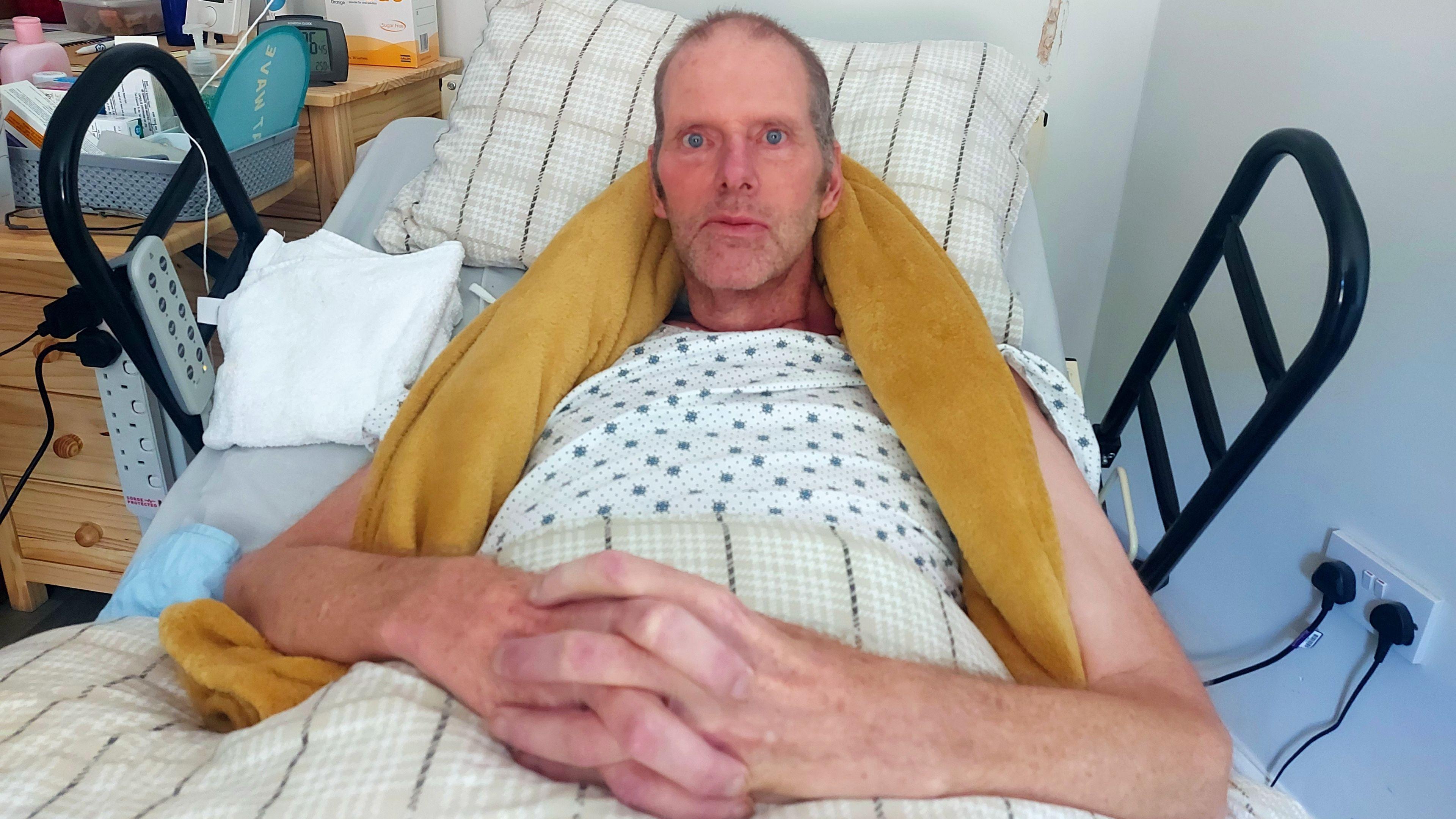
Tim Hull spent the last seven months of his life confined to a bed that was too small
A man who stopped life-saving medication because of his distress at a lack of health and care support, died from infections caused by being bedbound, an inquest has found.
Tim Hull, 56, from Worcester, who was 6ft 10in, spent seven months unable to move from a bed that was too small for him and left him in severe pain, while waiting for the NHS to provide the hoist he needed.
The coroner also heard evidence that complex patients like Hull risked falling through the cracks between services. Local NHS teams have been contacted for comment. The coroner said staff did "the best they could".
Hull had been getting medication after having a kidney transplant. He also had a rare neurological condition.
'Hideously uncomfortable'
In July 2025, two months before his death, Hull, who previously ran his own handyman business and housed Ukrainian refugees for two years, told the BBC about the lengthy waits he faced for a hoist, a wheelchair and a bed that was big enough for him while living in his own home.
He had previously been in the Guinness Book of Records along with his brother as the tallest twins in Britain.
"Above a certain height, you don't exist," Hull told the BBC.
He also said his standard of living was "very, very low".
He described the difficulties of trying to see the right doctors and getting the social care he needed.
The situation led to his decision to stop taking medication that was needed to ensure the continued functioning of a transplanted kidney his brother had donated to him.
Dying, he said, "would be a better option than lying in bed 24 hours a day".
Hull had a rare neurological condition, Hereditary Spastic Paraplegia [HSP] , external– unrelated to his height – which causes spasms and muscle weakness. Pain, fatigue and depression are also common symptoms.
The inquest was told as a result of the BBC's reporting, local community teams began working with the family to install a ceiling hoist – first discussed three months earlier - and an extension to Hull's bed.
He had spent two years in a standard hospital bed, provided by the NHS, which he described as "hideously uncomfortable" and like "torture".
An initial bed extension was eventually provided, but caused him to sit up in a position that presented a choking risk.
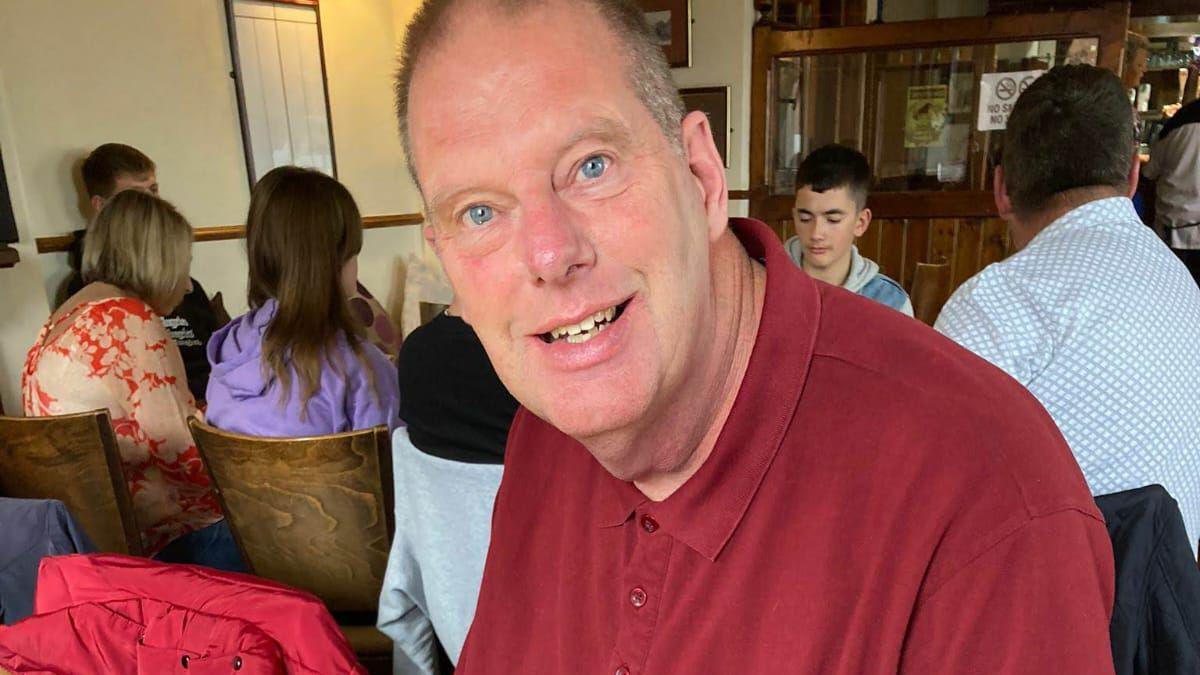 Image source, Family photo
Tim pictured in 2023. His health declined rapidly in the last three years of his life
By the time the new bed extension and hoist were to be installed, in September 2025, Hull had become too ill, and died soon after.
He had previously told the BBC: "If I could be hoisted out [of bed] and sat up to have dinner, if I could be wheeled out into the garden just to get a change of scenery, that could help a lot."
Had he been able to leave his bed, a suitably-sized wheelchair was not available despite over a year of waiting.
The coroner recorded a verdict of natural causes after hearing that a post-mortem found bronchopneumonia and a urinary tract infection. These were caused by firstly a bed bound state and secondary hereditary spastic paraplegia.
Hull's local NHS teams have not responded to request for comment.
In July 2025, Herefordshire and Worcestershire Health and Care NHS Trust told the BBC that "where equipment, home adaptations or community nursing support are required, we aim to have these in place [before discharge] to ensure a safe, well supported transition from hospital."
The inquest also heard of a lack of oversight of patients with complex conditions, who are at risk of falling through the cracks of multiple services.
Hull's care involved several community teams, as well as hospital-based specialists.
At one stage, when he was referred by a specialist neurologist in Birmingham back to his local team in Worcester, an appointment was not arranged due to an administrative error, the court heard, and he went nine months without seeing a neurologist.
Dr Charles Harris, Hull's GP, told the inquest he had not been aware until informed by the family, and that in complex cases it would be "helpful" to have a single care coordinator, but such a role did not exist locally.
Coroner David Reid found that there had not been a lack of joined-up care in other areas, and that teams did "the best they could".
In February 2025, when Harris referred Hull to mental health services, he was denied support as his "low mood" was caused by his physical symptoms – something the GP said was "unfortunately" common for patients with neurological conditions.
NHS Herefordshire and Worcestershire Integrated Care Board (ICB) said it regularly reviews how care is delivered to "make sure it meets the needs of patients and is both safe and effective".
Tim's sister Sue Hull remembered him as someone who went "above and beyond" for others, exemplified by his housing of Ukrainian refugees.
If you are suffering distress or despair, details of help and support in the UK are available at BBC Action Line.