3 weeks ago
25
3 weeks ago
25

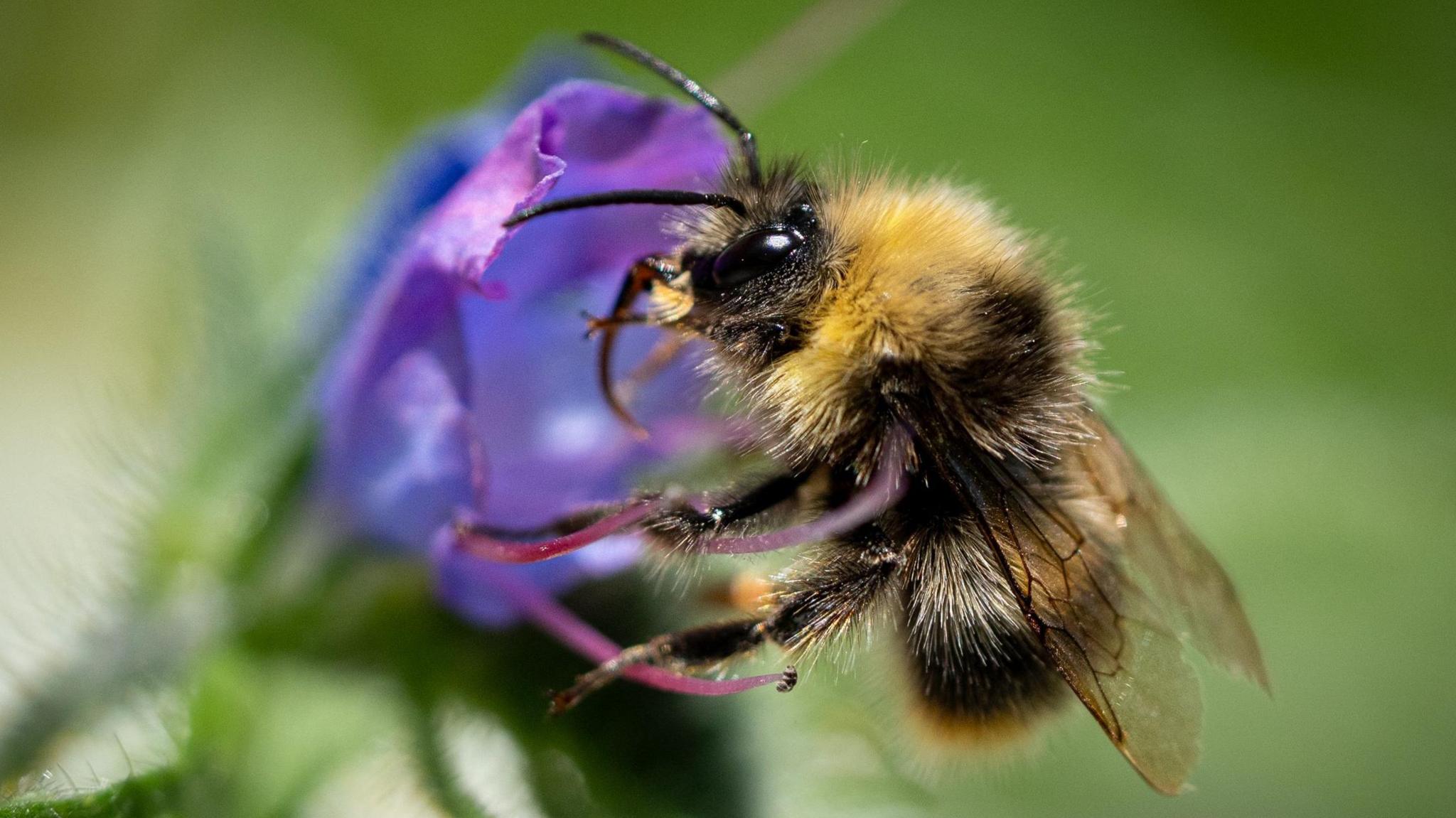 Image source, Tony Jolliffe/BBC
UK bumblebees could suffer sharp falls in their numbers as heatwaves become more frequent and intense, new analysis suggests.
The findings - shared exclusively with the BBC - draw on data from the Bumblebee Conservation Trust's long-running national monitoring scheme, which shows a decline in populations after the record-breaking heat of 2022.
The warning comes as Britain emerges from a third heatwave in as many months, with temperatures in the range where bumblebees can struggle to fly without overheating.
Bumblebees are not just one of the best-loved sights of the British summer, they are also vital pollinators, helping sustain wildflowers and some of the crops we rely on.
The impact of heatwaves is two-fold for bumblebees.
UK species are adapted to our historically cooler climate - with fat, furry bodies that help them retain heat and powerful flight muscles that warm them as they fly.
But in a heatwave their muscles generate more heat, while their thick coats and round bodies make it harder to cool down.
Dr Richard Comont, the Trust's science manager, says that once air temperatures reach around 28C to 32C, UK bumblebees can start to struggle to fly without overheating. If they cannot fly, they cannot forage.
"They actually cook themselves from the inside out," says Comont. "Once their internal body temperature is much above 40C, they literally start dying, they start keeling over."
The BeeWalk data shows in 2022, when the UK had three official summer heatwaves and temperatures reached 40.3C, population numbers dropped significantly.
Red-tailed, buff-tailed and common carder bumblebees - three of the country's most common species - peaked well below normal levels - down 20%, 25% and 35% respectively - before dropping further into autumn as colonies struggled.
The effects appeared to last beyond that summer. BeeWalk data showed overall queen numbers were below average in March, April and May 2023.
UK's Climate Editor, Justin Rowlatt, explains how the UK's bumblebees are fighting a battle on many fronts during heatwaves
Scientists stress that warm, sunny weather is not automatically bad for bumblebees. Previous warm years have been good for some species, particularly those with more southerly ranges.
The problem is extreme heat and drought. As well as their overheating bodies, the other issue for bumblebees is dwindling supplies of food.
Colonies depend on workers bringing back a steady supply of nectar and pollen through the summer. If flowering plants begin to dry up, they produce less.
Dr Paul Williams, a bumblebee expert at the Natural History Museum, says foraging is an energy calculation for bumblebees. The nectar return has to make the expenditure of energy worthwhile. As he puts it, they need to "make a profit".
They cannot afford to waste energy searching dried-up flowers for nectar and pollen that is no longer there.
If they cannot find enough food, larvae develop more slowly, colonies grow less strongly and fewer new queens may be produced for the following year.
Rising global temperatures, as a result of climate change, has put the UK on course for more frequent and intense heatwaves.
What can you do to help the bumblebees?
Conservationists say the best way to help is by creating more flower-rich habitats, so bumblebees can find food even as the climate becomes more extreme.
Dr Sarah Beynon is an insect expert whose west Wales farm is managed for wildlife as well as food. She has planted meadows, willows, hedgerows, tussocky grasses and late-flowering crops to give insects food through the summer.
"When we came, this farm was a wildlife desert," she says. "In 10 years, it's become a nature reserve."
Her message is that people do not need acres of land to help. A pot of native wildflowers on a doorstep or windowsill can act as a small refuelling stop for insects moving through a human-dominated landscape.
"Your flowerpot is a service station," she says. "It's somewhere to rest, refuel and carry on."
Dr Richard Comont adds that putting in a pond - however small - and shade can also help.
Flowers growing near water tend to produce nectar with more moisture in it, he says. Bumblebees cannot collect water in the way honeybees do, they get most of the liquid they need from nectar, so wetter nectar can help make colonies more resilient in hot weather.
Whilst planting dense shrubs gives bumblebees places to escape the heat of the sun, and can allow them to move between flowers through cooler patches of air.