5 months ago
51
5 months ago
51

AI looks set to be transformative for us all, but it also brings a real risk of job losses and widening social and economic divides. UN experts are focusing on how to manage that transition, to ensure the benefits of the technology outweigh the threats.
Whether you are a “doomer” or a “boomer” on the subject, it’s impossible to ignore AI, which is seeping into every corner of our personal and professional lives.
The UN has been banging the drum for a “people-first” approach to the subject for years now.
UN Secretary-General António Guterreswarned the Security Council back in 2024 that the fate of humanity “must never be left to the ‘black box’ of an algorithm,”and that people must always retain oversight and control over AI decision-making to ensure that human rights are upheld.
Since then, the UN System has been consolidating work on the ethical global governance of AI, building on the guidelines and recommendations contained in the landmark Global Digital Compact.
Here is a selection of the key ideas.
1. Education is key
The UN consistently highlights education as central to ensuring people remain relevant in an AI-enabled future. This is not just about plugging AI tools into the education system but making sure that students and educators are “AI-literate.”
“The global education system will need 44 million teachers by 2030,” says Shafika Isaacs, head of technology and AI in education at UNESCO (the UN agency for education, science and culture). “We believe that it is a mistake to argue that we need to invest more in AI technologies rather than investing in teachers. AI can manage data transfer, but it cannot manage human development, Education is fundamentally a social, human and cultural experience and not a technical download.”
2. Embrace the change
Many people across the world are concerned about losing their jobs in the AI era. The World Economic Forum NGO estimated in 2025 that some 41 per cent of employers were planning on cutting their workforce due to AI.
At the same time, new roles matching human strengths with machine capabilities are likely to emerge, because although machines are great at recognizing patterns and repetitive tasks – creativity, judgment, ethical reasoning, and complex interpersonal interactions require a human touch.
Working with global research partners, the International Labour Organization(ILO) has predicted that while one in four jobs is likely to be transformed by AI, this doesn’t necessarily mean net job losses.
However, the way that work is performed is likely to significantly change, putting the onus on workers to be highly adaptable, and open to the idea of constantly learning new skills and training throughout their working lives.
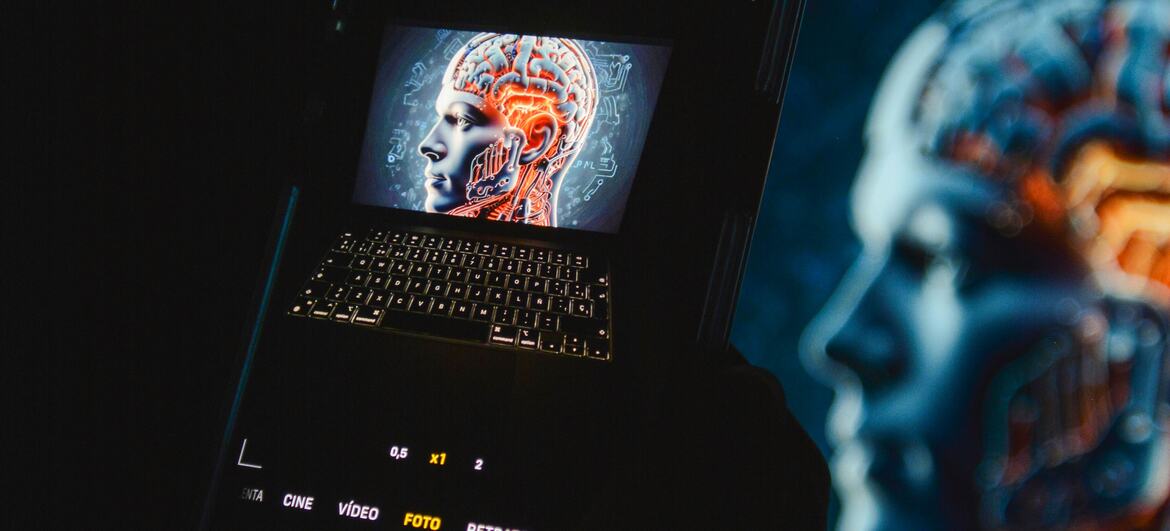
© Unsplash/Aidin Geranrekab
Artificial Intelligence is currently revolutionising the smartphone industry.
3. Make AI available for all
A handful of tech giants are driving research into AI and dominating the creation of new tools. The UN is concerned that, unless access to the technology is widened, inequality between countries and within societies will grow.
Strategies developed by the UN emphasise that educational, economic, and governance policies should ensure that AI benefits are broadly shared, not confined to the privileged or technologically advanced.
4. Put human rights first
The UN has repeatedly stressed that AI development must respect human rights, dignity and inclusiveness, and warned that unchecked automation will have far reaching social consequences.
In 2021, after extensive consultations with global experts, UNESCO released Recommendation on the Ethics of Artificial Intelligence, which argues that human rights can’t be optional – they have to be the binding baseline of sustainable AI systems.
The document argues that tools that threaten dignity, equality or freedom should be restricted or banned, and that governments must actively regulate and enforce these standards.
5. The whole world needs to agree on the way forward
This is not an issue that an individual government, private sector, or civil society can navigate alone, and the UN is calling for far greater international cooperation to manage the risks and opportunities of AI.
This could take the form of dialogues on governance and ethics, UN-supported platforms for coordination, and partnerships between the public and private sectors to fund education and workforce development.
Where next?
Latest news
Read the latest news stories:
- Can workers compete with machines and stay relevant in the AI era? Saturday, January 31, 2026
- U.S. Exit from Paris Agreement Deepens Climate Vulnerability for the Rest of the World Friday, January 30, 2026
- Business Growth and Innovation Can Boost India’s Productivity Friday, January 30, 2026
- The UN is Being Undermined by the Law of the Jungle Friday, January 30, 2026
- UN warns Myanmar crisis deepens five years after coup, as military ballot entrenches repression Friday, January 30, 2026
- South Sudan: ‘All the conditions for a human catastrophe are present’ Friday, January 30, 2026
- World News in Brief: Syria ceasefire welcomed, ‘Olympic truce’, Ukraine’s freezing children Friday, January 30, 2026
- UN watchdog warns Ukraine war remains world’s biggest threat to nuclear safety Friday, January 30, 2026
- Reaching a child in Darfur is ‘hard-won and fragile’, says UNICEF Friday, January 30, 2026
- ‘Unfathomable But Avoidable’ Suffering in Gaza Hospitals, Says Volunteer Nurse Thursday, January 29, 2026
Link to this page from your site/blog
Add the following HTML code to your page:
<p><a href="https://www.globalissues.org/news/2026/01/31/42235">Can workers compete with machines and stay relevant in the AI era?</a>, <cite>Inter Press Service</cite>, Saturday, January 31, 2026 (posted by Global Issues)</p>… to produce this:
Can workers compete with machines and stay relevant in the AI era?, Inter Press Service, Saturday, January 31, 2026 (posted by Global Issues)