1 month ago
25
1 month ago
25

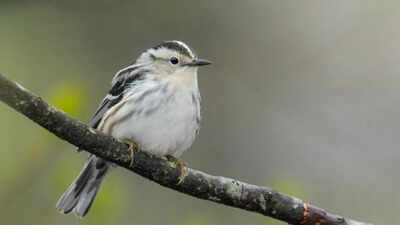
Black-and-white warbler (Mniotilta varia) is less likely to be seen when pollution level rises.
Smoke from Canada's record-breaking wildfires in recent years have done more than reduce air quality across parts of the United States. A new study suggests the wildfires made many birds harder for people to spot in New York State during the breeding season.According to researchers from the University at Buffalo, sightings of many bird species fell as wildfire smoke increased. They say this does not necessarily mean bird numbers dropped. Instead, the birds may have changed their behaviour, making them more difficult for birdwatchers to find.The findings were published earlier this month in the journal Biodiversity and Conservation, Science X reported. The researchers say the study highlights an often-overlooked effect of wildfire smoke and could help improve the way scientists monitor wildlife as climate change increases the frequency and intensity of wildfires.
Smoke and bird sightings
The research focused on the breeding seasons between 2021 and 2023 in New York State. Scientists examined levels of PM2.5, a type of fine particulate matter in the air that is widely used to measure smoke pollution.PM2.5 are extremely small particles that are less than 2.5 micrometres wide. Because of their small size, they can remain suspended in the air and are commonly produced by wildfires.

Birdwatchers recorded the birds they saw and uploaded their observations.
The researchers found that smoke pollution was the highest in 2023- Canada's worst wildfire season on record.
During June and July that year, the smoke travelled hundreds of miles and affected air quality across New York.The scientists wanted to understand whether this smoke had any effect on birds during one of the most important times of the year, when they breed and raise their young.
Air quality vs bird records
To investigate this, the researchers compared air pollution data with bird observations collected through eBird, a citizen science project run by the Cornell Lab of Ornithology.In case of eBird, birdwatchers record the birds they see and upload their observations and created one of the world's largest databases of bird sightings.Following this, the University at Buffalo team matched PM2.5 levels with nearly 99,000 eBird checklists submitted across New York during the 2021 to 2023 breeding seasons.Since birdwatchers have different levels of experience, the researchers filtered the data and used statistical methods to improve reliability of the results.
In total, they studied 84 bird species.
Half species seen less
The researchers found that 40 of the 84 species were less likely to be observed when PM2.5 levels increased. Many of these were migratory forest songbirds, including warblers, thrushes and vireos.Corresponding author Festus Adegbola, a PhD candidate in the University at Buffalo's Department of Geography, said the findings show a clear connection between wildfire smoke and bird observations.
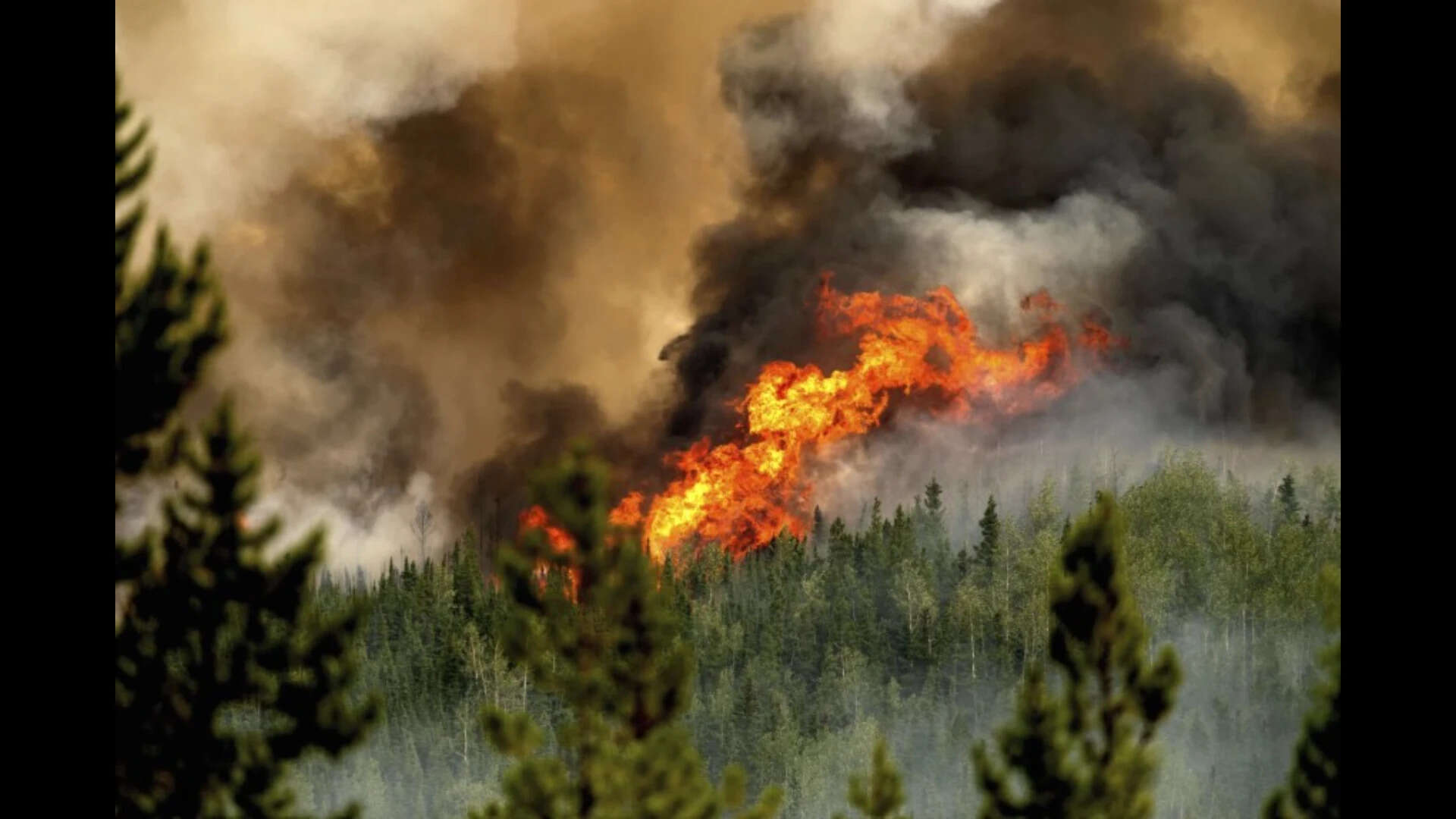
Canada’s 2023 wildfire choked much of North America with dangerous smoke for months.
"Our results show a link between wildfire smoke and the probability of observing particular bird species," Adegbola said, as quoted by Science X.He added, "Wildfire smoke is often underexplored when monitoring biodiversity. Failing to account for air quality may bias models of species distribution and abundance."The researchers believe smoky conditions may have changed how some birds behaved. "It's possible that smoky conditions changed the birds' behaviour- singing and moving less, spending more time in dense forest canopy, and therefore made them harder to detect," Adegbola said.
Some showed different pattern
Not all bird species responded in the same way. The study found that 15 species were actually more likely to be observed as PM2.5 levels increased, while another 29 species showed no significant change in how often they were seen.Many of these species were aerial insectivores, which catch insects while flying, or birds associated with wetlands. However, the researchers cautioned that this does not mean wildfire smoke benefited these birds.Co-author Adam Wilson, an associate professor of geography at the University at Buffalo, said the difference may have been linked to where birdwatchers chose to spend time during smoky weather rather than changes in the birds themselves."These species often occupy more open environments than forest songbirds, so it's possible their increased sightings had more to do with where birdwatchers chose to observe during smoky conditions than how the birds themselves responded," Wilson said.