1 hour ago
4
1 hour ago
4

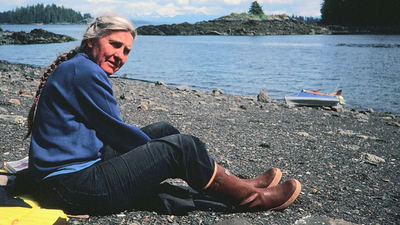
Celia Hunter flew a war-surplus plane to Alaska in 1947 and built a wilderness life near Denali
Celia Hunter spent the final evening of her life writing urgent letters to US politicians, asking them to oppose oil drilling in the Arctic National Wildlife Refuge. It brought an end to a 54-year campaign to protect Alaska's wild landscapes.
According to historical records documented by the Alaska Conservation Foundation, Hunter died in her sleep on 1 December 2001 at the age of 82. Her death marked the end of an environmental career that began when she flew surplus military aircraft north to Fairbanks in the winter of 1946. Hunter co-founded the Alaska Conservation Society in 1960 and later helped establish the Alaska Conservation Foundation in 1980.
Over more than five decades, her work helped protect more than 100 million acres of public land across Alaska.
Military service and the northern flight
Born in Arlington, Washington, in 1919 and raised in a Quaker family, Hunter learned to fly in 1940. During the Second World War, she joined the Women Airforce Service Pilots (WASP), flying military aircraft from factories to supply bases across the continental United States. Federal rules did not allow female pilots to fly military aircraft through Canada to Alaska, but Hunter remained determined to visit the territory.
In late 1946, Hunter and fellow WASP pilot Ginny Hill Wood made an agreement with an Alaskan pilot in Seattle to deliver two war-surplus aircraft to Fairbanks. They took off in early December, and the winter journey lasted 27 days in difficult weather. Recalling the flight in archival material kept by the Alaska Conservation Foundation, Hunter described the harsh conditions. “It took us 27 days to fly from Seattle to Fairbanks.
Ginny's plane had unairworthy fabric and no heat—we nicknamed it 'Li'l Igloo'. On the leg between Watson Lake and Whitehorse, a three-hour flight, we had to chip her out of the cockpit when we landed; she was so cold she couldn't move!” Hunter remarked. When the two women reached Fairbanks on 1 January 1947, sub-zero temperatures had stopped commercial flights. They were forced to stay and found work as flight attendants on early commercial flights to Nome and Kotzebue.
Wilderness tourism at Camp Denali
When Hunter first arrived in Alaska, she did not see herself as a conservation campaigner. “I don't think 'conservationist' existed in my vocabulary at that time. We were just looking for adventures!” Hunter later noted. After briefly studying in Sweden and travelling through post-war Europe, Hunter and Wood returned to Alaska. In 1951, they joined Wood's husband in claiming a homestead under the Homestead Act near the boundary of what was then Mount McKinley National Park.
A year later, in 1952, they established Camp Denali, a wilderness lodge based on the European hut system. It offered simple accommodation while also teaching visitors about nature. Their approach set strict environmental standards for tourism at the time. “We specialized in providing healthy, sustaining meals, with fresh baked bread and pastries, and we refused to handle either soft drinks or beer in our small store because we didn't want to see the throw-away cans littering the roadsides,” Hunter recalled.
They ran Camp Denali until 1975, when they sold the property. The lodge was later included within the expanded boundaries of Denali National Park and Preserve.
Organizing the Alaska conservation movement
As industrial development, resource extraction and military projects grew across Alaska after the war, Hunter turned towards organised environmental campaigning. Having seen Alaska's huge wilderness areas before statehood, Hunter remembered how connected and untouched the landscape appeared.
“Flying across bush Alaska, the entire landscape was a seamless whole, unmarred by man-made boundaries,” Hunter observed.
In 1960, Hunter and her colleagues created the Alaska Conservation Society, the first statewide volunteer environmental group in Alaska. The organisation gave local residents a way to speak on federal conservation policies, including plans to establish the Arctic National Wildlife Range. In 1976, Hunter became the first woman to serve as interim executive director of The Wilderness Society. She led national campaigns during an important period of debate over federal land policy. In 1980, she co-founded the Alaska Conservation Foundation, which provided grants and financial support to grassroots environmental groups across the state. Her work received major recognition. In 1991, the Sierra Club gave Hunter the John Muir Award, its highest honour for lifetime conservation work. The Wilderness Society followed with the Robert Marshall Award in 1998. Hunter continued taking part in public policy debates into her eighties. She regularly wrote to federal officials and mentored younger conservationists. On the night she died in December 2001, she stayed late at her desk writing letters to members of the US Congress, urging them to vote against allowing petroleum exploration on the coastal plain of the Arctic National Wildlife Refuge.