1 hour ago
3
1 hour ago
3

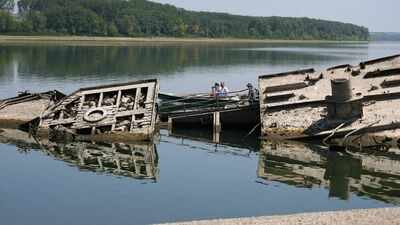
Wreckage of a WWII German warship, emerged from the Danube river. Image Credit: Darko Vojinovic/AP
The Danube River has fallen to exceptionally low levels this summer, exposing the remains of Nazi-era warships that have spent more than eight decades beneath its waters near Prahovo, Serbia.
The wrecks are part of a much larger graveyard of vessels deliberately sunk in 1944 as German forces retreated from advancing Soviet troops during the Second World War. With the river shrinking, parts of the ships and other wartime debris are now visible above the waterline, offering a reminder of a dangerous chapter in European history.The discovery is not entirely new, as the wrecks have appeared during previous periods of low water, but the latest drop has once again brought them into view.
As Smithsonian Magazine reports, the exposed wrecks are also creating practical problems for ships using the river today.
Why are the Nazi warships appearing in the Danube river
The wrecks are becoming visible because the Danube river has fallen to record-low levels in several places following heatwaves and drought across Europe. The river stretches for about 1,770 miles and passes through 10 countries, making it one of Europe's most important waterways.According to Smithsonian Magazine, the falling water has exposed some of the World War II-era Nazi warships near Prahovo, where roughly 200 boats are part of a decades-old ship graveyard.
The Times of Israel also reports that the unusually low river level has revealed sunken ships that have remained beneath the Danube for decades. Their sudden reappearance has turned sections of the river into a window for the Second World War.
Why were the German ships sunk in the Danube river
The ships were not simply abandoned after being damaged in battle. Their sinking was a deliberate decision made during the German retreat in 1944. As the Soviet Red Army advanced, Hitler's forces faced the prospect of losing their vessels and supplies to the enemy.
According to Smithsonian Magazine, German forces arranged the vessels in the Danube and then deliberately sank them.This move also served another purpose. The sunken ships created a blockade that could slow or hinder Soviet movement along the river. More than 80 years later, the consequences of that decision are still visible. What was once a wartime attempt to obstruct an advancing army, has now become a persistent obstacle for modern river traffic.
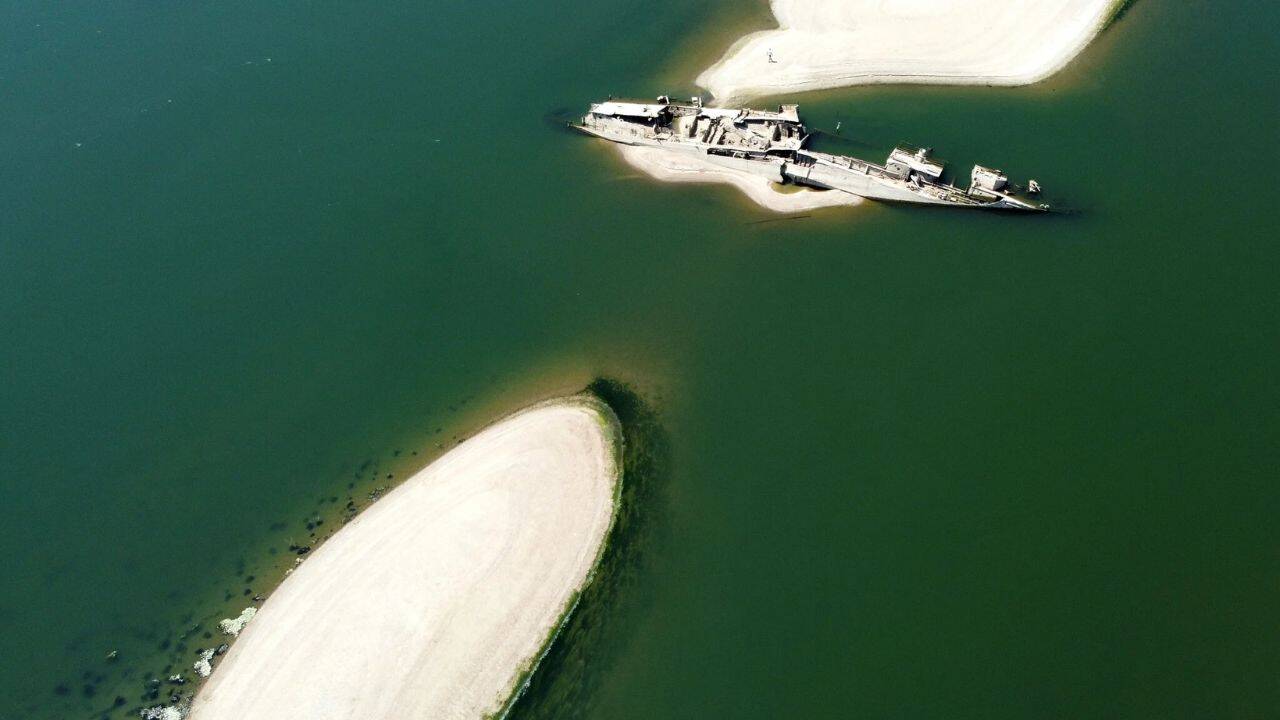
Wreckage of a WWII German warship emerged due to the drought in the Danube River. Image Credit: Darko Vojinovic/AP
Ship wreckage affecting the modern vessels
The Nazi-era wrecks can still interfere with vessels travelling along one of Europe's major waterways. Smithsonian Magazine reports that the wrecks remain a significant obstacle for modern shipping, particularly when the river level falls. Low water leaves more of the wreckage exposed and reduces the amount of space available for vessels to navigate safely.The problem also has an economic cost. Disruptions linked to the wrecks are estimated to cost Serbia about $5.75 million in lost trade and transport each year, according to the Smithsonian report.
That makes the wartime ship graveyard an unusual example of history continuing to affect everyday life.
Why is removing the ship wreck so difficult
The wrecks cannot simply be pulled out of the river. Some may still contain dangerous remnants from the war, making any attempt to move them a potentially hazardous operation. Smithsonian Magazine reports that Serbia and the European Investment Bank launched an initiative in 2024 to remove 21 ships from the river.Crews had to work carefully because sudden movement or exposure to the atmosphere could potentially cause leftover ammunition to explode. At least two ships were ultimately buried in the river bottom rather than removed. The operation shows why the exposed wrecks are both historically interesting and potentially dangerous.
Could more Nazi ships emerge from the river
The continuing fall in water levels could expose even more of the ship graveyard. Smithsonian Magazine reports that the exceptionally low levels seen this summer may provide another opportunity for crews to remove some of the remaining vessels.
In 2024, the effort to clear 21 ships was described as increasingly feasible because of modern technology and techniques. The timing was also considered important because traffic and goods transport along the Danube river have been increasing.The river is a crucial transport route for Europe, so the wrecks present a problem that goes beyond archaeology. Removing them could make navigation safer and reduce disruption for vessels using the waterway.
What do the exposed wrecks reveal about the past
For people living near the Danube, the appearance of the ships offers a rare physical connection to the events of 1944. The wrecks have remained hidden for generations, only becoming visible when the river falls far enough. Their appearance is therefore more than an unusual sight. It reveals how decisions made during the final stages of the Second World War continue to shape the river today.The Smithsonian report notes that similar wartime remnants have also appeared elsewhere along the Danube as water levels have fallen.
In Budapest, for example, officials were forced to close a bridge after a Second World War bomb was exposed in the riverbed. Near Prahovo, however, the most striking remains are the ships themselves. Their rusting structures emerging from the Danube bring an old wartime episode back into view, while also reminding modern authorities that the river still carries the physical remains of its past.For now, the low water has given the public an unusual glimpse of the Nazi-era fleet. But for those responsible for keeping the Danube open to modern shipping, the appearance of the wrecks is also a warning that a chapter of history buried beneath the river has never completely disappeared.