3 weeks ago
36
3 weeks ago
36

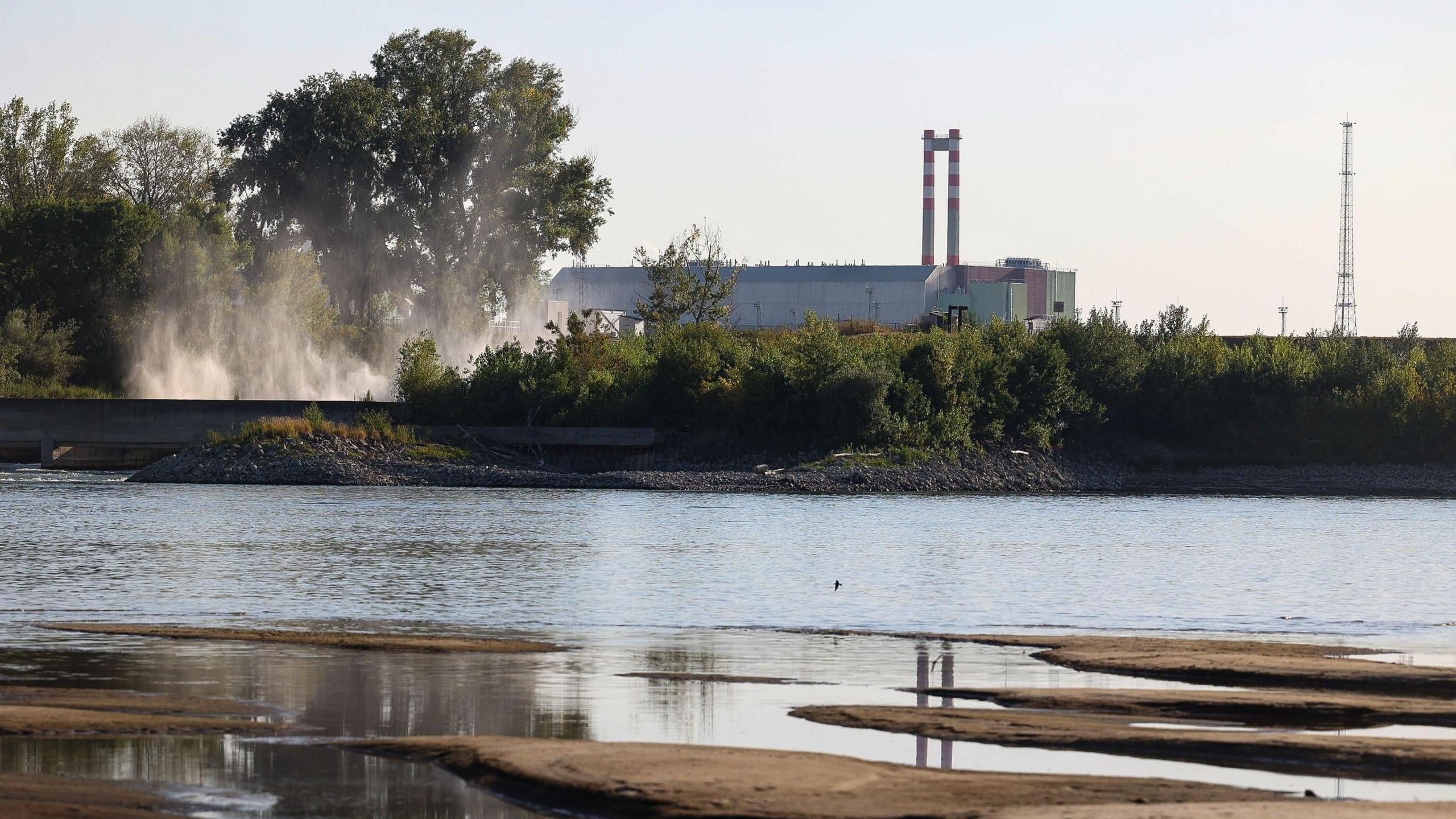 Image source, EPA
The level of the water of the Danube is so low that the nuclear power plant's suction nozzles cannot reach it
ByLaura Gozzi and Paul KirbyEurope digital editor
Hungary's only nuclear power plant will be forced to shut down entirely for the first time due to record low water levels of the River Danube, Prime Minister Péter Magyar has said.
The Soviet-era Paks power plant uses the Danube for cooling but the water level is so low that the suction nozzles cannot reach it.
Magyar warned Hungary's energy supply could become "critical" from Monday due to the Paks shutdown and the ongoing heatwave, which will see temperatures hover around 37C for a week.
Like much of Europe, Hungary has seen very low rainfall and high temperatures for much of the summer.
The waters of the Danube have fallen to the lowest levels for 30 years in several countries, including neighbouring Serbia and Romania.
Magyar asked Hungarians to limit activities that required significant energy consumption between the peak times of 17:00 and 22:00, including charging electric cars and using air conditioning equipment.
A "rotational shutdown regime" was also possible if the other combined efforts were not enough to maintain the balance of the national grid, Magyar said, adding the government would compile a list of electricity and water consumers whose consumption could be limited.
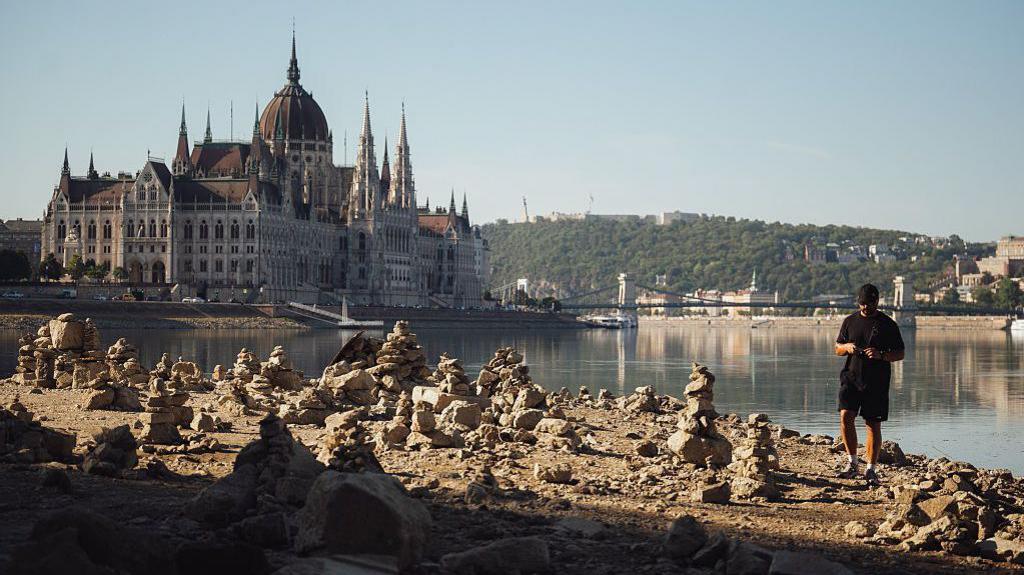 Image source, Anadolu via Getty Images
Large areas of the riverbed have been exposed in the centre of Budapest after weeks of extreme heat and drought
In Romania, one of the country's only two nuclear reactors has been shut down at the Cernavoda power plant, which provides about 20% of the country's power.
The first of the two 706-megawatt reactors was shut down earlier this week because the Danube's levels were so low, and state-owned company Nuclearelectrica was trying to avoid closing down the other on Thursday. If the second reactor is shut down Romania will, like Hungary, be temporarily without any nuclear energy production.
Climate change is driving up temperatures around the world - but particularly in Europe.
It is the fasting warming content, heating up twice as fast as the global average, according to the Copernicus climate service. This is causing increased summer heatwaves, greater pressure on Europe's waters and more intense wildfires.
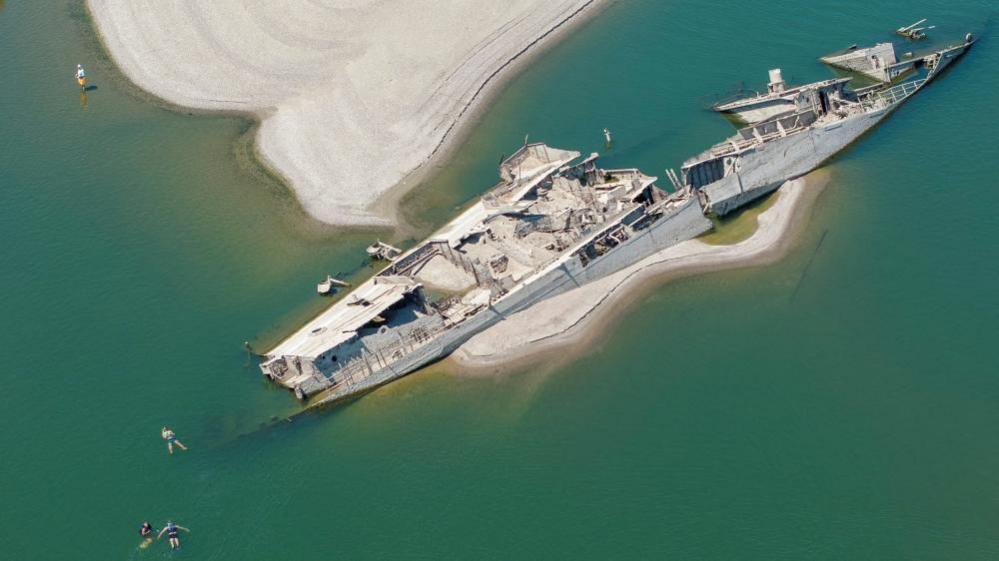 Image source, Reuters
Among the wrecks exposed by the low levels of the Danube was a World War Two German warship at Prahovo in Serbia
Romania's National Institute of Hydrology says the average river flow where the Danube enters the country is 4,700 cubic metres per second in July, whereas on Wednesday it was down to less than a third of that, at 1,600cm per second. The institute forecast it would continue to fall to 1,500cm per second by Tuesday.
The Danube runs 2,857km (1,775 miles) through 19 countries.
The Upper Danube goes from Germany to the Slovak capital Bratislava, the middle basin runs from Bratislava to the border between Serbia and Romania and the Lower Danube extends through Romania and Bulgaria into the three main branches of the Danube Delta that flow into the Black Sea.
The low waters of the river have resulted in several unexpected discoveries. The remains of a sunken Hungarian cargo ship resurfaced in Croatia, while the hulks of a German river flotilla was seen in Serbia.
And a resident of the northeastern Bulgarian city of Ruse found bones on the Danube river bed, which experts determined were the remains of a mammoth.
They were able to recognise a lower jaw, two tusks, and possibly a mammoth rib.
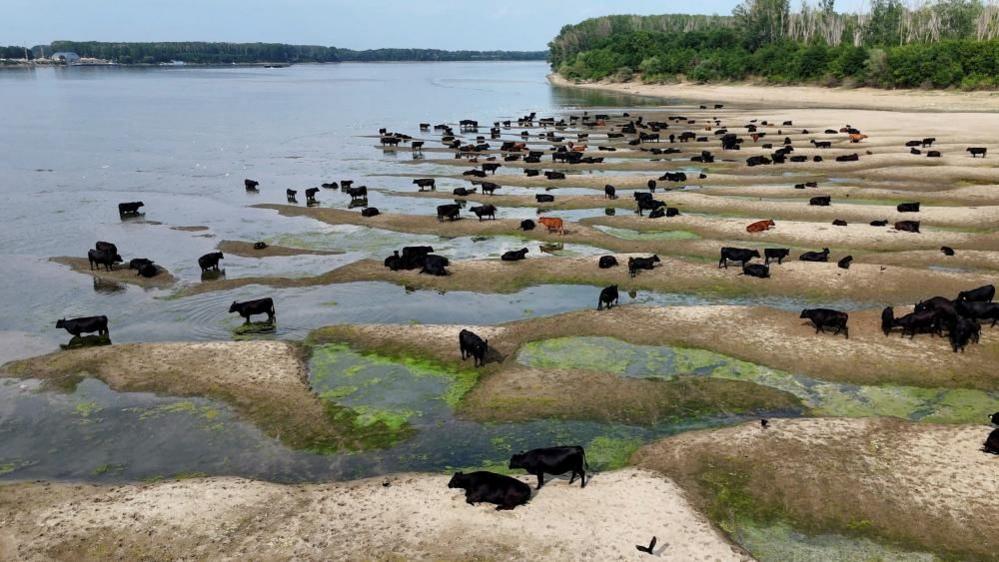 Image source, Inquam Photos/Ovidiu Micsik/Reuters
River flow in Serbia on the Danube is now a third of the average for July
Shipping has ground to a halt on the river in Bulgaria, and border police had to evacuate 186 river cruise passengers from the Viking Ullur ship earlier this week when it ran aground close to Vidin, a city that sits on the border with Romania.
Passengers had been running low on food and water because the cruise ship was unable to dock in Vidin, and another boat that was called in to help was unable to get close enough.
"I have never heard of such low levels over the years. There has certainly not been a similar situation since 1990," Ivan Zhekov, head of river supervision at Bulgaria's maritime administration agency told BTA news agency.
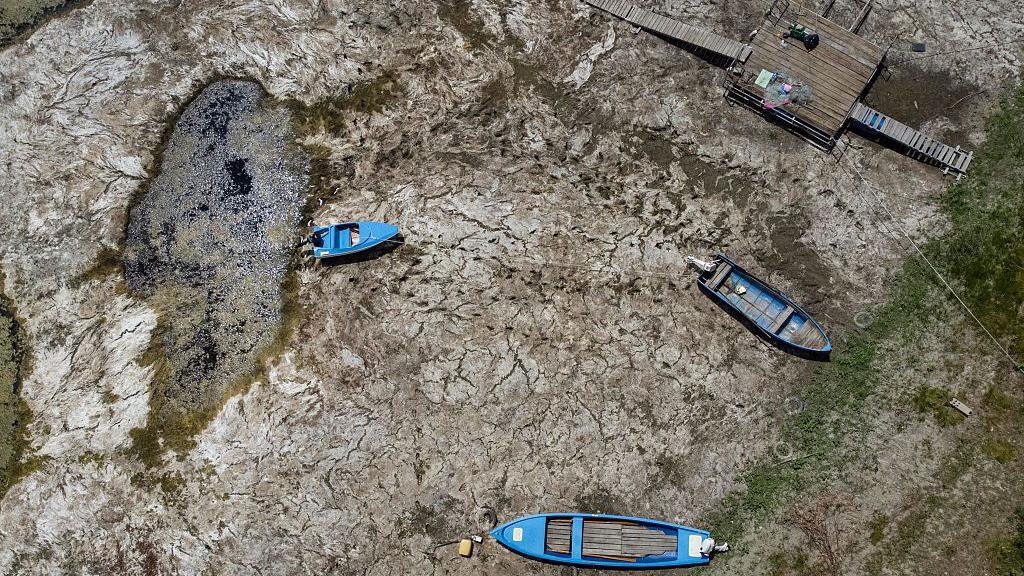 Image source, Getty Images
Boats lie on the dried-out Danube riverbed in front of the Calafat-Vidin bridge, connecting Bulgaria and Romania
It is not just the Danube where river levels are low. In Serbia, the levels are also very low on the Sava and Tisa, which are both tributaries of the Danube.
Serbian hydrologist Dejan Vladiković said the problems were not just down to the current high temperatures but also to low rainfall during the spring.
He told Serbian TV channel N1 that the Danube was down to levels not seen for 50 to 60 years, and climatologists did not expect to see any improvement until mid-September.
Temperatures in Serbia are set to climb as high as 38C on Friday, and locally up to 40C, with night-time temperatures in Belgrade as high as 26C.
Elsewhere in Europe, forecasters say fire-prone conditions are expected to spread towards central Europe, with Greece and Turkey among the countries worst affected.
Vast areas of France and Spain have just experienced some of the most intense and widespread wildfires in living memory, leading to hundreds of thousands of evacuations.