1 hour ago
4
1 hour ago
4

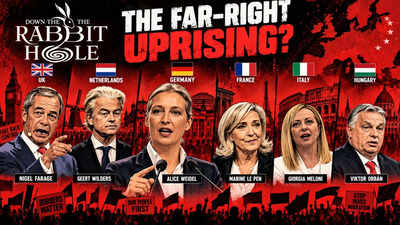
Nigel Farage, Geert Wilders, Alice Weidel, Marine Le Pen, Giorgia Meloni, and Viktor Orban
Jeffrey Epstein’s good buddy and consent enthusiast Noam Chomsky argued that language was a means of controlling the populace. The powers-that-be decide the terms of this universal vocabulary to shape the debate and decide what’s polite and what’s not.
But so often, words get used ad nauseam that they cease to have any real meaning. Like AGI. Tech bros have been announcing the imminent arrival of AGI or Artificial Generative Intelligence with every iteration with the alacrity of your food delivery guy who says he’s just getting there but, like Godot, never arrives.The same goes for the term far right, a word used with such alacrity these days that it has ceased to have any real meaning, to the point that a right inside-forward who drifts a little too close to the touchline could be deemed far right.In Europe, parties as diverse as Giorgia Meloni’s Brothers of Italy, Marine Le Pen’s National Rally, Geert Wilders’s PVV, Viktor Orbán’s Fidesz and Nigel Farage’s Reform UK are routinely bundled together under the overarching umbrella of the far right.AfD’s recent victory, which saw them win 39 of the 83 seats in the Saxony-Anhalt state election, led to WENA’s mainstream media bandying about their favourite term with alarmist headings to the point that a non-political observer would wonder if the Fourth Reich had risen.
And, this time, the Reich gets the mandatory Disney update and will now be headed by a lesbian woman with a Sri Lankan partner.But what does the AfD actually stand for?Among its promises are to start remigration and deportation, ban rainbow flags in schools and halt the building of new wind farms, making them slightly right of Don Quixote.It also wants sanctions on Russia lifted, nuclear power revived, Swiss-style referendums introduced, dual citizenship sharply restricted and the public broadcaster reduced to a fraction of its current size.It rejects Sharia, believes in old-school family values, rejects self-identification of genders and wants Germany’s relationship with the EU rewritten.The party’s leaders are from different walks of life.
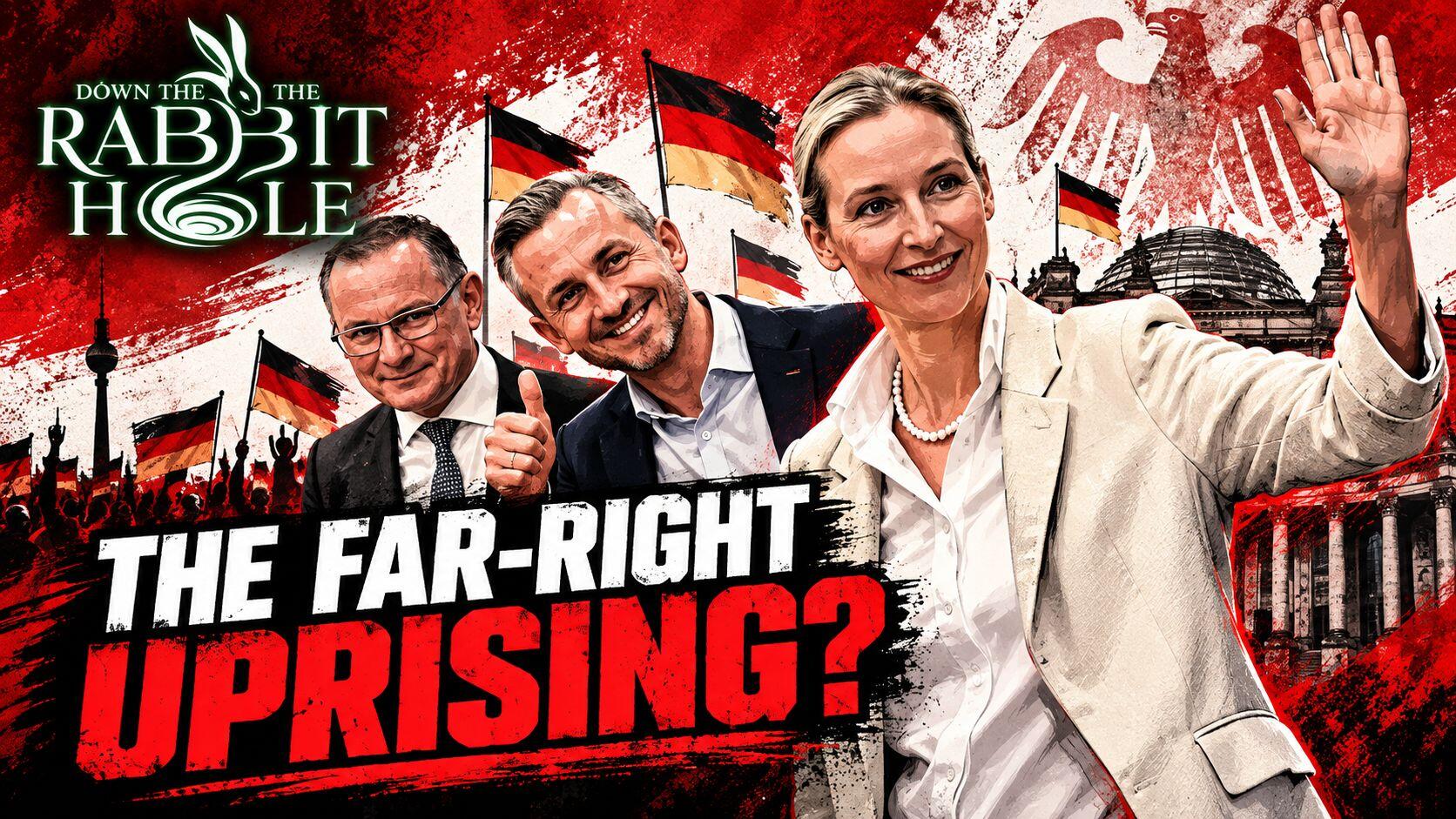
The Far-Right Uprising
Co-leader Alice Weidel is an economist and the party’s moderate face whose partner Sarah Bossard is a Sri Lankan-born film producer who was adopted by a Swiss couple. Meanwhile, Tino Chrupalla is a master painter from Saxony who is a hit with its traditional eastern German base.Another prominent leader is Björn Höcke, a former history teacher who called Berlin’s Holocaust memorial a “monument of shame” and was convicted in 2024 for using the banned Nazi slogan “Alles für Deutschland” who remains the party’s most explosive yet popular proponent.And the newest rockstar is Ulrich Siegmund, a 35-year-old who led the party to its influential win. A businessman who sells fragrances, he has a softer public image than Höcke despite being vocal on similar issues.German Chancellor Friedrich Merz, whose Christian Democratic Union (CDU) was dealt a crushing blow, said he was “shocked”, as most mainstream politicians are wont to be when they fail to hear people’s pleas about reality.Merz added he was searching for answers as to “why far-right populism and far-right extremism were able to rise in such a rapid manner” and that his party had underestimated “fears of the population”, an analysis that really doesn’t need one to be Otto von Bismarck to make.Of course, Merz didn’t invent the “far right” label.Germany’s domestic intelligence agency, the Bundesamt für Verfassungsschutz, has treated the national AfD as a suspected right-wing extremist organisation since 2021, a designation upheld by German courts. In 2025, the agency went further and classified the entire party as confirmed right-wing extremist, but that stronger designation was subsequently suspended by a Cologne court.Several state branches are deemed “right-wing extremist” but, far right itself is not a German legal category and just a broader political and journalistic epithet that has been shoved on its shelf.Currently, German parties have an understanding that can be called a ‘firewall’, a gentleman’s agreement that no party will be part of a coalition with AfD, but given that it’s almost at the halfway mark, that wall is likely to crumble very soon.But a bigger question that one ought to answer – because no academic or mainstream WENA publication will do that honestly – is: how far right are the AfD? And what exactly is the far right?So, what exactly is the far right?The terms left and right, like most other political concepts such as democracy, beheadings and bread-free diets, come from the French Revolution, when the pro-monarchy predecessors sat on the right and the anti-monarchy sat on the left.Since then, the left-right dichotomy has been extrapolated to almost every single political movement on earth. Political scientists – who have never encountered a human activity they could not chart on a scatter plot – have a modicum of an answer.The most influential modern definition comes from Dutch political scientist Cas Mudde, who distinguishes the radical right from the extreme right but puts both under far right.The radical right follows the basic principle of popular sovereignty and contests elections – like communists in India – while rejecting liberal democracy, pluralism and institutional restraints. The extreme right – like communists elsewhere in the world – rejects democracy and, like the far left, believes that armed revolution is the only solution.The populist radical right therefore has three key ingredients for its broth: nativism, authoritarianism and populism.In simple English, that means: our country, our rules; immigrants ought to assimilate and behave themselves; and that, no matter who wins the election, a corrupt elite is ruining our lives.Populism in particular – political political scientists can agree – is neither right nor left. From Bernie Sanders to Donald Trump to Hugo Chavez, anyone the mainstream press or the old establishment cannot wrap its head around is a populist.Ergo, we can surmise that the AfD, in the political scientist’s imagination, is the populist radical right. The problem is when this terminology escapes the political-science department and enters the popular lexicon of mainstream media.The Far-Right FamilyConsider the leaders of parties deemed far-right in Europe right now.Meloni is an Atlanticist – that doesn’t mean she loves extremely long essays – who has kept Italy inside the EU consensus on NATO and supports Ukraine.In France, Marine Le Pen has built a party around French nationalism that combines welfare protectionism and a strong state.In the UK, Nigel Farage’s Reform UK is a gallimaufry of old-fashioned Thatcherism, tax-cutting, deregulation and a healthy disdain for Europe. In another era, he might have worked in the Ministry of Administrative Affairs.In the Netherlands, the anti-Islamist Geert Wilders is a defender of LGBT and women’s rights, perhaps because he abhors political Islam more than any of those things.Viktor Orbán’s Fidesz is an interventionist state, speaks of the erasure of Christian civilisation and of building a Hungarian political system.Yet these parties all disagree on various things, from Russia-Ukraine and economics to state intervention and religion.There are variations even within these agreements.Wilders’s objection to Islam is through the prism of Oranje liberalism, while Orbán prefers Christian civilisation.
Meloni has moderated a lot in office while Le Pen has made the National Rally respectable enough for French suburbia.Farage’s Reform does not speak the same language of blood, soil and historical destiny associated with parts of continental Europe’s radical right, yet calls out the powers-that-be in the UK for bowing down to multiculturalism.Political scientists call parts of this nativism, authoritarianism and populism.
Normal voters might simply call it wanting your government to remember which country it governs.The Spanner in the Works In 2019, political scientist Shafiqur Rahman wrote a piece for the Dhaka Tribune that is perhaps the most honest critique of political Islam, a piece that can be treated as the ideological sequel of a thought first expressed on the popular South Asian blog Brown Pundits, which posited: “If and when modern humanism and liberalism crashes and burns, will future historians look back and say that Islam was the rock on which it first and decisively broke?”Rahman, in his piece, took the argument further that the stubborn defence of group identity for Muslims has made “upholding group identity respectable for all groups”.He wrote: “If Muslims can be unabashedly assertive about the sanctity of their religious identity and traditions, other groups can be unapologetic about their respective identities too.”He went on to argue that Islam had “weakened liberalism by emboldening and consolidating its enemies across established democracies” that had been vanquished post-World War II.
Down the Rabbit Hole
The piece ominously ended: “Abandoning universalism and embracing identitarianism is hollowing out liberalism from within.
Either the principles of liberalism apply for all groups or none at all.”Seven years later, it’s hard to argue with Rahman’s prognosis, with right-wing parties knocking on the doors of electoral democracies across Europe or having already broken the door down in America.The contradiction between liberal values for different groups always existed in plain sight. For example, they expect citizens to accept LGBT values but will give a pass to other groups when it comes to it.Karl Popper had identified a version of this problem decades earlier in The Open Society and Its Enemies with his famous paradox of tolerance. Unlimited tolerance, he argued, could eventually destroy tolerance itself if a tolerant society allowed fundamentally intolerant movements to flourish unchecked. Ergo, is it inevitable that tolerating deeply illiberal religious or cultural practices will lead to liberalism digging its own grave?Liberal democracies spent decades telling groups that preserving one’s identity was desirable. At times, they did so even when those values went against basic tenets of liberal democracies like free speech or individual freedom, and chalked it up as the hallmark of a multicultural society. But this bargain became complicated when the native majority asked: why doesn’t the same principle apply to us?If Muslim identity could be protected, why was Christian identity reactionary? If minority communities could worry about cultural erasure, why was a European majority doing the same automatically nativist?The irony is that Europe’s new right has increasingly learnt to speak liberalism’s own language.
Wilders, for example, is standing on the shoulders of classic liberals and arguing that Islam threatens gay rights, women’s rights, secularism and freedom of speech. The barbarians weren’t just at the gates but quoting the constitution.Like all other things, there’s obviously an OG German reference which, in this case, is by constitutional theorist Ernst-Wolfgang Böckenförde, who famously argued that the liberal state depends on conditions it cannot guarantee.
Democracy requires trust, solidarity and some conception of a shared political community, but no liberal state can coerce that in its populace without ceasing to be liberal.Which leaves Europe with a rather awkward question: if assimilation is oppressive, national culture is nativist and borders are exclusionary, what precisely holds the liberal nation together? This is the fissure that parties like AfD have exploited.Missing the WoodsOne of the signs that mainstream media has no finger on the pulse of its populace is how it often refers to any rising right-wing star as the Donald Trump of said country. Viktor Orbán was called the Trump of Hungary. Farage has been called the Trump of the UK. Even though these people had been politically active when Trump was just a reality TV star. And that perhaps explains why mainstream European parties or the press are genuinely astonished whenever a right-wing party comes knocking.For years, they have ignored their own populace’s pleas about things that have gone wrong.They didn’t listen to the views of residents worried about migration, integration, crime, cultural change or whether the social contract could survive limitless demands on it. Worse, too often they treated the vocabulary of those concerns as the problem itself.Immigration became xenophobia, anxiety about Islamism became Islamophobia, national identity became nativism and opposition to progressive orthodoxies became one phobia or another.
The establishment was more bothered about labels than common sense.Across the Atlantic, the Americans made the same mistake about Trump. For years, every American establishment treated Trump as an aberration rather than asking what conditions caused his rise. Instead, his supporters were deplorables, his politics a temporary fever dream, and they assumed that normal service would resume once Trump lost.But then he won again.The American establishment missed the bus and now Europe appears determined to wait at the same bus stop.Many years ago, Otto von Bismarck observed that politics was “the art of the possible”. The modern European establishment appears to have inverted the Iron Chancellor’s maxim. Politics has increasingly become the art of explaining to voters why what they want is impossible, irresponsible, xenophobic, Islamophobic, nativist or, inevitably, far right.
And made it impossible to vote for the so-called far-right party that’s actually willing to admit there’s a problem.The AfD may well be far right. Parts of it undoubtedly deserve intense scrutiny. But if almost half the electorate is willing to get on that bus, standing at the stop shouting “far right” at the passengers is not politics.Bismarck called politics the art of the possible. Perhaps the mainstream ought to start by asking why the AfD suddenly looks possible.