1 year ago
48
1 year ago
48

France, Germany and the UK threw their weight behind the UN agency as Iran said it cannot guarantee IAEA inspectors' safety. Meanwhile, Israel expressed openness to normalization with Syria, Lebanon. Follow DW for more.
https://p.dw.com/p/4wgA9
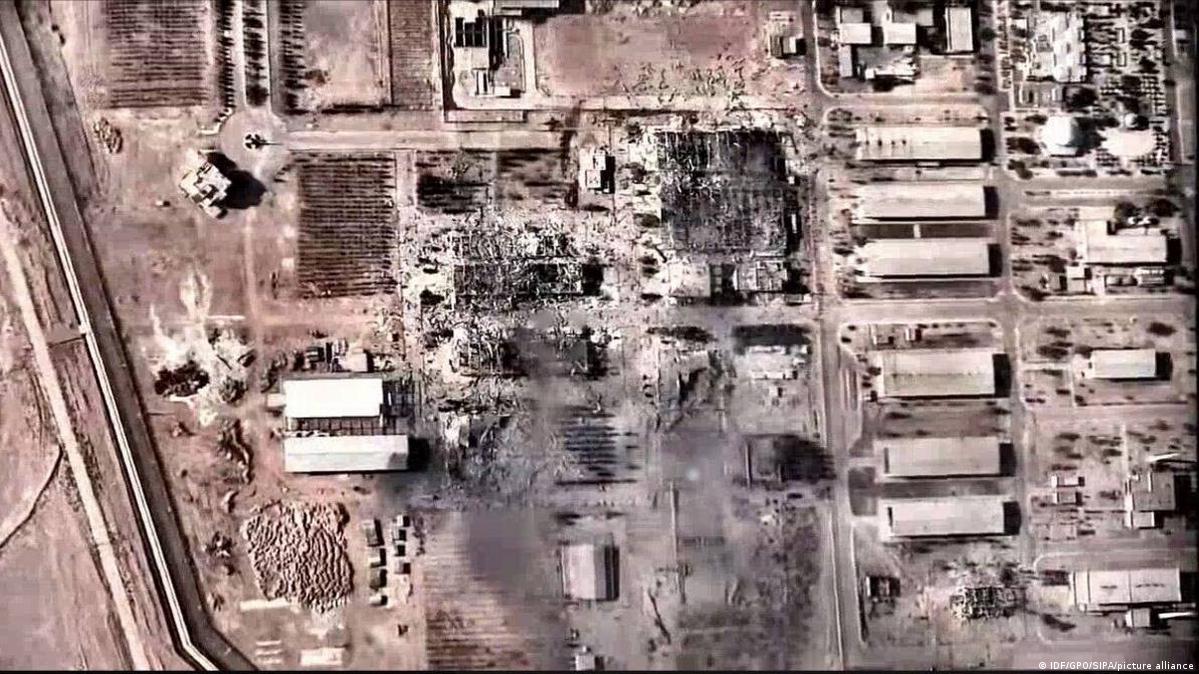 Iran has argued it cannot guarantee IAEA inspectors' safety following the Israeli, US strikes on its nuclear facilitiesImage: IDF/GPO/SIPA/picture alliance
What you need to know
- European countries condemn Iranian "threats" to UN nuclear watchdog chief
- Tehran says it cannot guarantee IAEA inspectors' safety following Israeli/US strikes on Iranian nuclear sites
- Israel is "interested" in normalizing ties with Syria, Lebanon, foreign minister says
Below, you can read a roundup of developments on the status of the ceasefire in the Israel-Iran war and the wider crisis in the Middle East on Monday, June 30:
06/30/2025June 30, 2025
Israel 'interested' in normalization with Syria, Lebanon, foreign minister says
Israel signaled it was ready for more normalization deals with its Arab neighbors, amid a war in the devastated Gaza Strip, which has dragged on for over 20 months.
"Israel is interested in expanding the Abraham Accord circle of peace and normalization," Israeli Foreign Minister Gideon Saar said at a news conference, referring to US-sponsored agreements signed in 2020 by Israel with the United Arab Emirates, Bahrain and Morocco.
"We have an interest in adding countries, Syria and Lebanon, our neighbors, to the circle of peace and normalization while safeguarding Israel's essential and security interests," he added.
In parallel to the war in Gaza, Israel had been engaged in fighting with the Iran-backed Lebanese militant group Hezbollah since October 2023. In October 2024, Israeli forces launched a ground invasion, with a ceasefire coming into effect the next month that was meant to guarantee both Israel and Hezbollah's exit from southern Lebanon.
Israel has also intensified strikes on Syrian locations since the ouster of dictator Bashar Assad in December 2024, with Israeli troops moving into a demilitarized zone inside Syria, including the Syrian side of the strategic Mount Hermon.
"In any peace agreement, the Golan will remain part of the State of Israel," Saar said, referring to the territory Israel seized from Syria in 1967 and later annexed in a move not recognized by the United Nations.
Abraham Accords: Could Syria normalize ties with Israel?
https://p.dw.com/p/4wgIg
Skip next section E3 countries condemn Tehran 'threats' against IAEA06/30/2025June 30, 2025
E3 countries condemn Tehran 'threats' against IAEA
Paris, Berlin and London have condemned what they called "threats" against the head of the United Nations' nuclear watchdog after Tehran turned down a request by the International Atomic Energy Agency to visit its bombed nuclear sites.
"France, Germany and the United Kingdom condemn threats against the director general of the IAEA, Rafael Grossi, and reiterate our full support to the agency," Foreign Ministers Jean-Noel Barrot, Johann Wadephul and David Lammy said in a joint statement.
The trio called on Tehran to "refrain from any steps to cease cooperation with the IAEA," and "immediately resume full cooperation in line with its legally binding obligations."
The three countries comprise the E3 group, which coordinates on foreign and security matters, particularly Iran's nuclear program.
On Friday, Iran's Foreign Minister Abbas Araghchi had criticized IAEA chief Rafael Grossi's insistence on visiting the nuclear sites bombed by Israel and the US during the recent war, saying such insistence was "meaningless and possibly even malign in intent."
Tehran reiterated its position on Monday but toned down its rejection, saying it could not guarantee the safety of the IAEA inspectors.
"How can they expect us to ensure the safety and security of the agency's inspectors when Iran's peaceful nuclear facilities were attacked a few days ago?" Foreign Ministry spokesperson Esmaeil Baghaei told a news conference.
Israel struck Iranian nuclear and military sites on June 13, prompting a response from Tehran which started a 12-day war where the US also struck three Iranian nuclear sites, before US President Donald Trump announced a ceasefire.
One day before the Israeli strikes, the IAEA's board passed a resolution that accused Iran of ignoring its nuclear obligations. Tehran has argued that the resolution was an "excuse" for the war.
How much damage was done to Iran's nuclear program?
https://p.dw.com/p/4wgHa
Skip next section Welcome to our coverage06/30/2025June 30, 2025
Welcome to our coverage
Thanks for tuning in to our Middle East blog!
Tensions remain high in the region after Tehran rejected a request by the United Nations International Atomic Energy Agency (IAEA) to visit the facilities bombed by Israel and the US during the war earlier this month.
European countries Britain, France and Germany lambasted Iran's "threats," while Tehran defended its position, saying it could not guarantee the safety of the watchdog's inspectors.
In Israel, officials condemned an attack reportedly by settlers in the occupied West Bank on Israel Defense Forces (IDF) soldiers, while Foreign Minister Gideon Saar said the country was "interested" in normalizing ties with its Arab neighbors Syria and Lebanon.
This blog will bring you the latest on the situation in the Middle East, including in Iran, Israel and Gaza.
https://p.dw.com/p/4wgGm