1 hour ago
4
1 hour ago
4

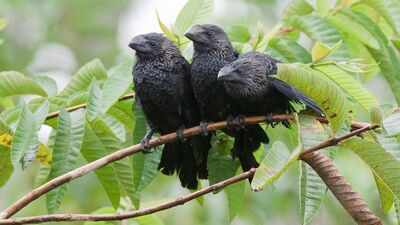
A group of three smooth-billed anis in Galapagos. Image Credit: Michael Dvorak/ Galapagos Conservation Trust
The smooth-billed ani was brought to the Galapagos Islands in the 1960s in an attempt to tackle a cattle tick problem that had caused serious losses for local farmers. The black bird was known to feed on ticks in mainland South America, making it seem like a practical solution.
However, the introduction had consequences that extended far beyond cattle farming. As described by the Galapagos Conservation Trust, the birds spread across most of the major islands, eventually reaching an estimated population of 250,000 and raising concerns about the survival of native wildlife.
The smooth-billed ani spread across the Galapagos Islands
The original introduction was intended to solve an agricultural problem, but the birds did not follow the outcome farmers had hoped for. The 1990 study published in Biological Conservation, explains how the population changed after the birds arrived.According to the study, smooth-billed anis first appeared in the early 1960s but were not reported again until the late 1970s. Their numbers then increased rapidly following the heavy rainfall associated with the 1982-83 El Niño event. Researchers estimated that around 800 birds were present on Santa Cruz Island, and the population began spreading to other islands.The researchers found that the birds were already established beyond their initial location by the time of their 1986 survey.
They estimated approximately 4,800 anis in the farming areas of Santa Cruz, where the population was most concentrated, and around 100 on Isabela, mainly in its agricultural zone. Several other islands had also been invaded, with suitable habitats likely to support further expansion.
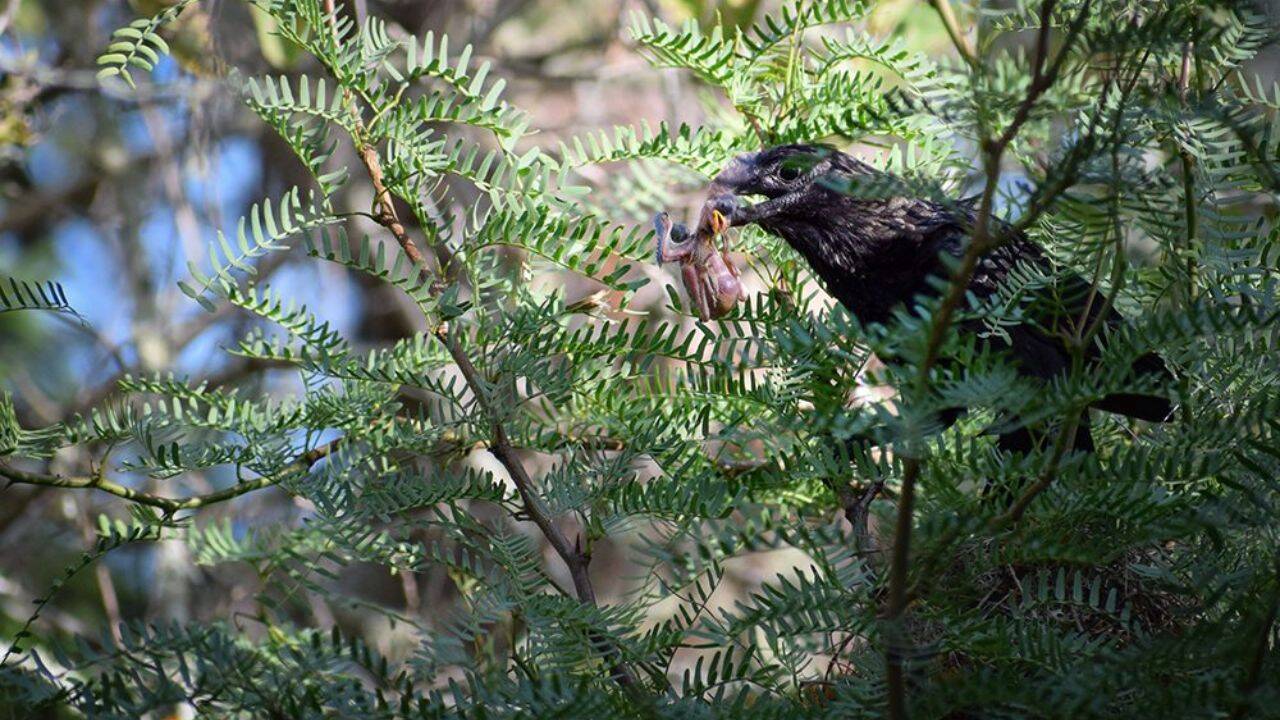
A smooth-billed ani with a nestling it had just taken from a nest, believed to be that of a small ground finch, on Santa Cruz. Image Credit: Joshua Lynton-Jenkins/ Galapagos Conservation Trust
El Niño created conditions for a population surge
El Niño is a climate phenomenon that can bring unusually heavy rainfall to the Galapagos. The 1990 study linked the exceptional rainfall of 1982–1983 with the rapid increase in the ani population.
The episode demonstrated how changing environmental conditions could help an introduced species establish itself in a new location.The study's findings also suggested that the birds' expansion was not simply a gradual process following their arrival. Instead, their numbers increased sharply after the weather event, allowing them to spread to additional islands.The Galapagos Conservation Trust later described a much wider expansion.
In its article published in 2018, the organisation reported that the species had spread to all but one of the major islands over roughly 50 years. Darwin remained the exception, while the estimated population across the archipelago had reached 250,000.These figures reflect different stages of the birds' spread rather than conflicting estimates. The 1990 research documented the early population surge and expansion, while the conservation organisation described the much larger population recorded decades later.
What do the birds eat instead of cattle ticks
The original plan depended on the assumption that smooth-billed anis would help reduce tick infestations. Their feeding behaviour in their native range made them appear suitable for the task, particularly because they were often seen around cattle.However, the 1990 study found that the birds' principal food sources in the Galapagos included grasshoppers, caterpillars and spiders. Their diet overlapped with that of native bird species, raising concerns about competition for food.The Galapagos Conservation Trust reported further evidence of the birds' effects on local wildlife. Smooth-billed anis have been observed taking nestlings from the nests of Darwin's finches, yellow warblers and native mockingbirds. They have also been reported killing adult mockingbirds because of their territorial behaviour.These interactions are particularly concerning because some native finch and mockingbird species are endangered or critically endangered.
The arrival of a bird intended to support farming had therefore created a potential threat to wildlife found nowhere else in the world.
The wider ecological consequences are still being investigated
The concerns extend beyond the direct effects of feeding and competition. The 1990 study identified the possible spread of introduced plants through seed dispersal and the introduction of bird diseases as additional risks. These were potential threats highlighted by the researchers, rather than proof that every anticipated impact had already occurred.The Galapagos Conservation Trust subsequently identified other ways smooth-billed anis could affect the islands. Its article reported that the birds eat Galapagos lava lizards and endemic insects, including the Galapagos carpenter bee, which is the islands' only native bee and an important pollinator.The organisation also explained that anis helps spread the seeds of invasive blackberry plants. In addition, they can host the invasive fly Philornis downsi, a parasite associated with high mortality among chicks of native bird species.
The mangrove finch, considered the bird most at risk of extinction in the Galapagos, is among those threatened by the parasite. Despite these concerns, the full scale of the ani's impact remains uncertain.
Controlling the introduced population remains difficult
The prospect of removing smooth-billed anis has attracted interest among scientists and local residents, but eradication presents practical challenges. The Galapagos Conservation Trust reported that previous attempts had failed to achieve lasting results and that no effective, widely applicable method had been established.There is also a complication in deciding whether removal would produce the intended benefits. The birds eat introduced animals such as mice, rats, wasps and cockroaches. Removing anis could therefore allow some of these other non-native species to increase, creating a different set of problems for the islands.The organisation called for more research into the birds' diet, their interactions with other introduced species and the effectiveness of potential control methods. Such work would help conservation teams decide whether eradication is justified and how it could be carried out without causing additional harm.