3 weeks ago
42
3 weeks ago
42


ByCalum Watson
BBC Scotland
Scotland's state-owned shipyard is to cut nearly a quarter of its total workforce while it waits for confirmation of promised new orders.
Workers at Ferguson Marine have been invited to apply for voluntary redundancy as construction draws to a close on the second of two long-delayed CalMac ferries.
The Port Glasgow firm currently employs 283 staff, including 34 apprentices - but says it expects to shed 70 posts through a voluntary redundancy process.
The Scottish government has promised to directly award the yard new orders for four smaller ships, but ministers say they are still conducting "due diligence" on the plan.
Ferguson Marine is the last commercial shipyard on the Clyde.
It was nationalised in 2019 after a long dispute between its former owner and government-owned ferries agency Caledonian Marititime Assets Ltd (CMAL) over claims for extra costs for two dual-fuel CalMac ferries.
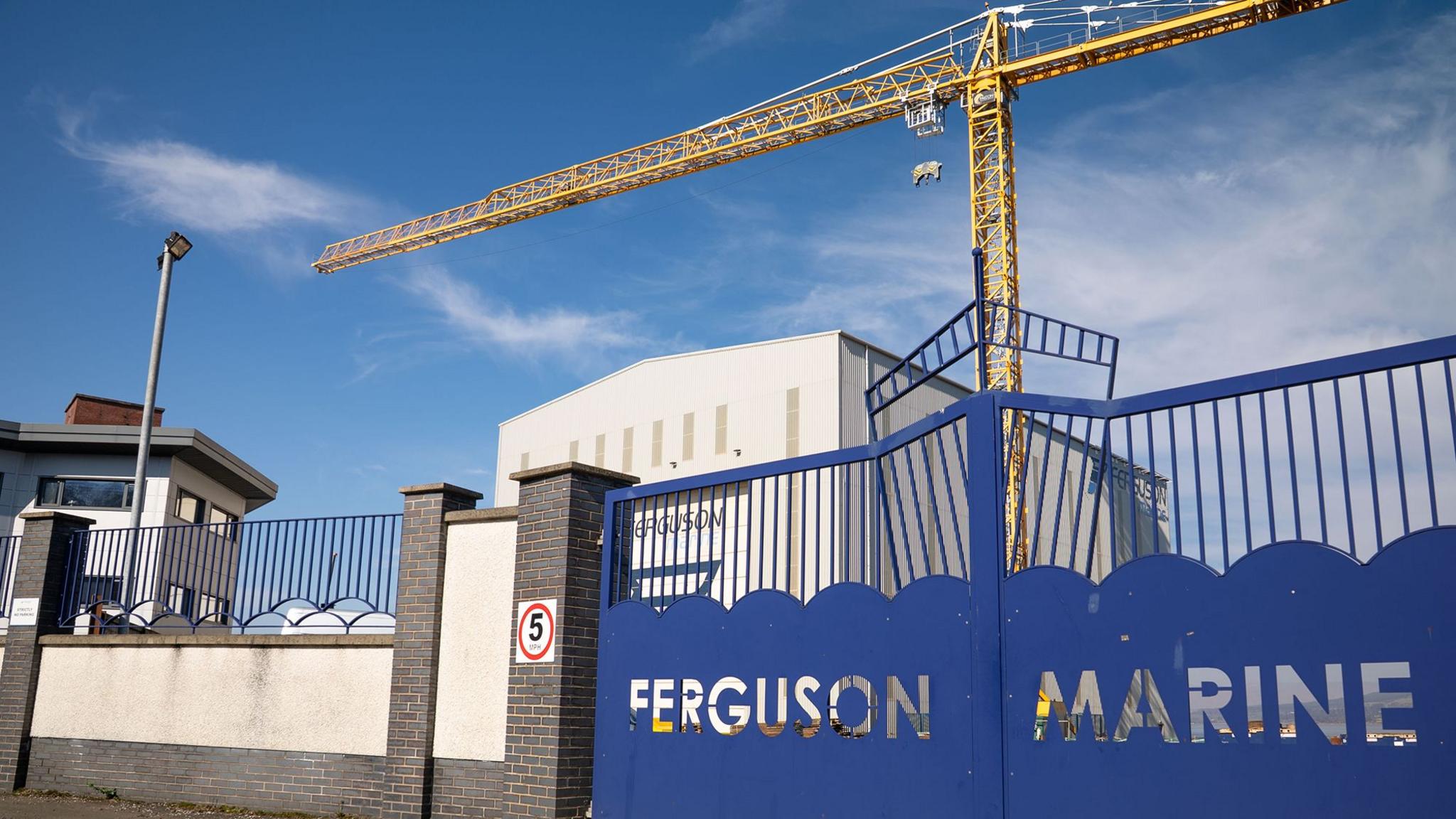
The Ferguson shipyard faces a gap in orders despite promises of new work from the Scottish government
The first, MV Glen Sannox, was finally delivered in November 2024, while MV Glen Rosa is due for completion by the end of this year.
The shipyard recently completed sub-contracting work for BAE Systems for new Type 26 frigates and currently has no confirmed future orders.
In March, before the Holyrood election, the Scottish government announced plans to directly award the shipyard contracts for four future vessels.
It said the vessels - two small CalMac ferries, a fisheries research ship and a marine protection vessel - would provide a "bridge to the future" for the yard.
The then Economy Secretary Kate Forbes said the government had "done a lot of the upfront work in terms of scoping out, securing some of the legal advice about what is possible".
But she added that engagement with the Competition and Markets Authority would be required.
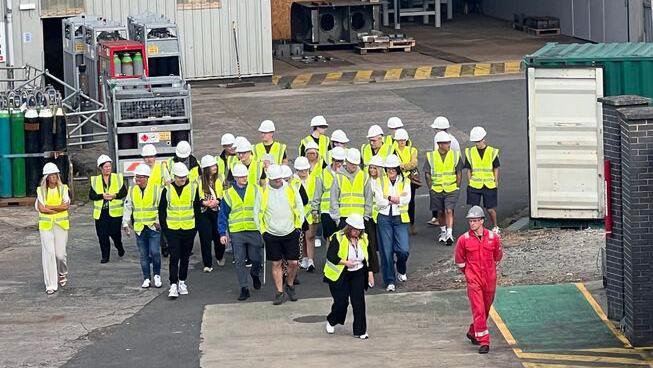 Image source, Ferguson Marine
The latest intake of 10 apprentices and their parents were recently given a tour of the yard before the trainees begin their first year in college
Since then none of the contracts have been confirmed, with ministers saying "due diligence" is still being carried out.
Even if a new contract was awarded imminently, at least a year of design work would be required before the yard would be in a position to start cutting steel.
While the promised new orders have yet to be confirmed, they have allowed the firm to update its business plan, potentially unlocking the £14.2m of modernisation money first announced by ministers more than two years ago.
Ground investigation work is taking place with a view to installing new equipment and software which is hoped to raise productivity.
The shipyard's apprentice programme is also unaffected by the redundancies in the short term, with 34 young workers already in training and a new intake of 10 trainees about to start their first year in college.
Why is the shipyard struggling for orders?
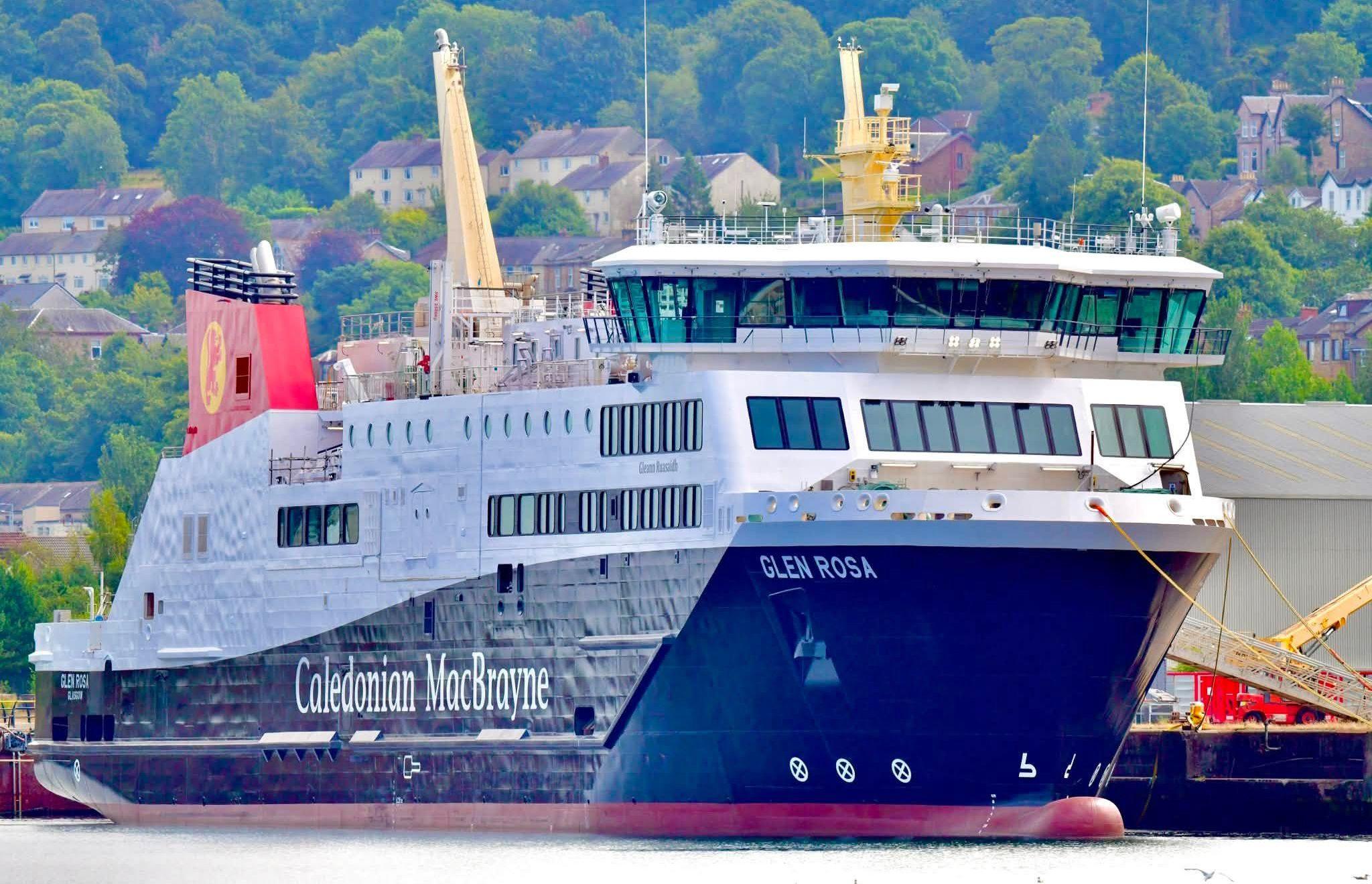 Image source, Christopher Brindle
MV Glen Rosa has now been moved downriver to Inchgreen for final fitting out and commissioning, leaving the main Port Glasgow yard without a ship under construction for the first time in 12 years.
Ferguson's has successfully built more than 360 ships since it was founded by four brothers in 1903, but its reputation has been harmed by the controversy over the long-delayed and over-budget ferries MV Glen Sannox and MV Glen Rosa.
Construction of the first liquefied natural gas (LNG) vessels of their kind ever built in the UK was blighted by design challenges and disputes over claims for extra costs.
While there is wide agreement the workforce were not to blame, the controversy may have left potential customers nervous about placing new orders.
The shipyard also faces wider challenges, in common with all UK shipbuilders, of having to compete on cost with overseas firms, particularly in eastern Europe and the Far East.
The Society of Maritime Industries says foreign yards are typically able to undercut UK-based shipbuilders by 10-20% due to a mix of cheaper labour and better state support.
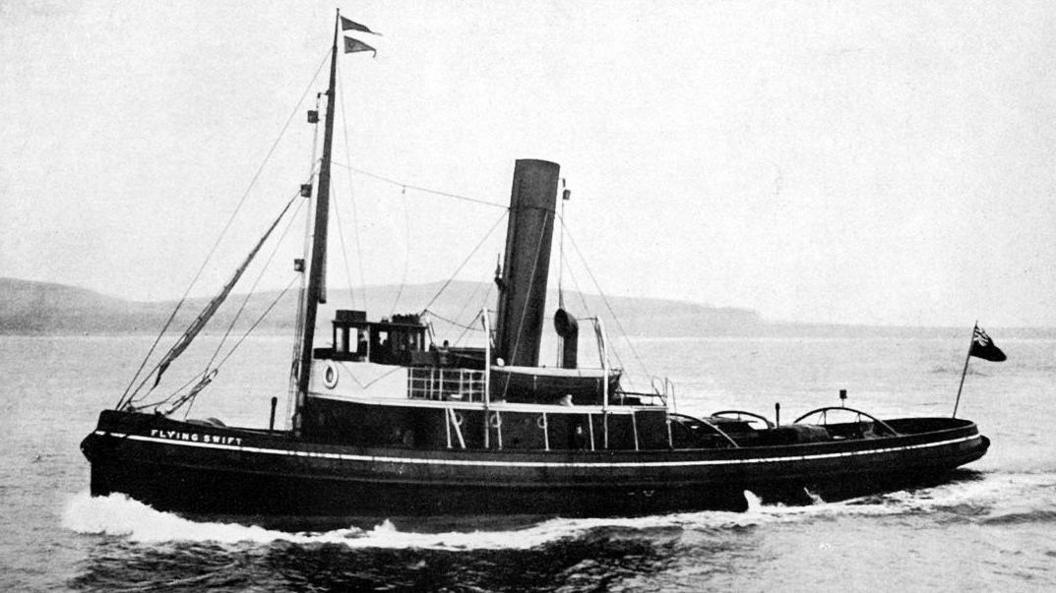 Image source, Ferguson archive
The Ferguson shipyard has built more than 360 ships since its first vessel, a tug called Flying Swift, took to the water in 1903
Two years ago Ferguson's missed out on an order for seven small CalMac ships which was widely regarded as an ideal contract to help rebuild the firm's reputation.
While its bid was praised for its quality, CMAL awarded the deal to a Polish firm because it could build the ships more cheaply.
Ferguson's management has repeatedly called for "social value" to be factored into such evaluations, which would recognise the wider economic benefits of building ships in Scotland rather than focusing on the headline price.
But CMAL claims it is restricted in its ability to score bids for social value because Scotland's pre-Brexit procurement rules mean it must treat all bidders equally.
Last summer Ferguson's boss Graeme Thomson called for the direct award of another CalMac ship, a replacement for MV Lord of the Isles.
He described it as a "target contract" and warned it would be "very difficult" to sustain workforce numbers if the yard did not secure the work.
But his appeal was rejected by ministers, and the contract went out to tender earlier this year.
Ferguson's was unable to bid for the work because CMAL set pre-qualification criteria which, according to Ferguson's management, no UK-based commercial shipbuilder was capable of fulfilling
A shortlist of bidders has now been drawn up, but CMAL has declined to reveal which firms are on it or where they are based, on grounds that this would harm competition. The winning bidder will be announced early next year.