1 hour ago
3
1 hour ago
3

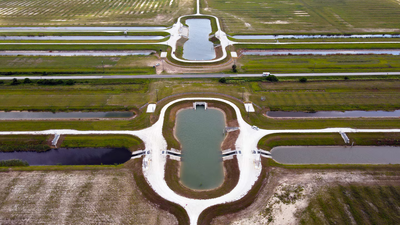
USACE celebrates advancement of the Indian River Lagoon South Restoration Project
A major environmental restoration project in South Florida has reached an important milestone with the completion of a 2,560-acre stormwater treatment area designed to capture, clean, and store runoff before it reaches vulnerable coastal waterways, according to US Army Corps of Engineers.The completion of the Indian River Lagoon-South (IRL-South) C-23/C-24 Stormwater Treatment Area (STA) is a major step in the multi-billion-dollar Comprehensive Everglades Restoration Plan (CERP). The project is jointly managed by the U.S. Army Corps of Engineers (USACE) Jacksonville District and the South Florida Water Management District (SFWMD).The new facility can store up to 4,750 acre-feet of water and is designed to protect the St.
Lucie Estuary and the southern part of the Indian River Lagoon."The Indian River Lagoon and the St. Lucie Estuary are more than just a simple body of water, they are the heart of South Florida’s natural heritage," said Col. Brandon Bowman, commander of the USACE Jacksonville District.Bowman said the waterways support thousands of plant and animal species and are important to the region's economy, recreation, communities, and natural environment.
Creating a natural filter for polluted runoff
For decades, agricultural and urban runoff carried through Canal-23 and Canal-24 has delivered excess nutrients such as phosphorus and nitrogen directly into coastal waters.High levels of these nutrients can cause harmful algae blooms, reduce water clarity, and change the salinity levels that marine life needs to survive.The new C-23/C-24 STA covers an area almost as large as the nearby North Fork St. Lucie River Aquatic Preserve, which protects about 3,000 acres.The treatment area uses wetland plants as a natural filter. The plants help trap sediment and absorb excess nutrients before the cleaned water moves downstream.The system also sends some excess water into the floodplain along the north fork of the St. Lucie River. This helps reduce sudden increases in freshwater entering the estuary and keeps salinity levels more stable.Stable salinity is important for seagrass beds and areas where young fish grow and develop.
A large network of water infrastructure
The 2,560-acre treatment area includes several major structures designed to control the movement of water, including:
- 43,900 feet of perimeter levees
- 13,200 feet of interior levees
- An ungated culvert under CR-613 connecting the eastern and western treatment areas
- 19 internal culverts that move water between different wetland cells
- An interim pump station that will provide water to the treatment area and support plant growth until the future North Reservoir is completed
Wetlands now entering the growth stage
With the major earthwork finished, the C-23/C-24 STA is moving into its operational phase.One of the most important next steps is the vegetation "grow-in" period. During this stage, wetland plants will become established and develop the dense root systems needed to remove nutrients from the water effectively.Construction is also continuing on the interim pump station after receiving authorization and funding. The station will keep water moving through the treatment cells and help maintain the wetland plants until the future C-23/C-24 North Reservoir is completed."All of us want a healthy environment with abundant fish and wildlife. The C-23/C-24 features will help deliver exactly that," said SFWMD Executive Director Drew Bartlett.Bartlett said the district will continue working with the U.S. Army Corps of Engineers to improve water quality and speed up Everglades restoration projects.
A larger restoration effort
The C-23/C-24 STA is only one part of the larger Indian River Lagoon-South Restoration Project.Once the entire project is completed, it is expected to provide more than 130,000 acre-feet of water storage, about 9,000 acres of artificial stormwater treatment wetlands, and nearly 90,000 acres of restored natural habitat."This is a very big milestone, and I commend the entire USACE and SFWMD teams," said Michael Drog, the USACE Jacksonville District project manager for the Indian River Project.Environmental agencies expect the combined system of reservoirs and treatment wetlands to significantly reduce nutrient pollution entering South Florida's coastal waters.The restoration effort is also expected to help rebuild oyster beds, restore underwater vegetation, and improve the long-term health of the St.
Lucie Estuary and Indian River Lagoon.The completed treatment area therefore represents more than a new piece of water infrastructure. It is designed to use natural wetland processes to clean polluted runoff, control freshwater flows, and protect some of South Florida's most important coastal ecosystems.