5 months ago
31
5 months ago
31

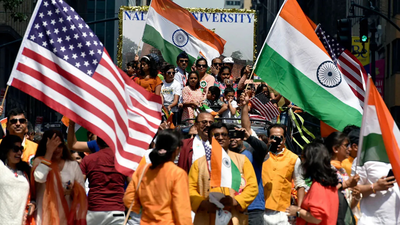
Hate speech and hostile rhetoric targeting Indians and other South Asians in the United States rose sharply between 2023 and 2025, according to civil rights and extremism monitoring groups, as immigration and visa policies became flashpoints in national political debate.
Researchers say online discourse increasingly shifted from policy-focused criticism to racialised attacks, with anti-Indian slurs, stereotypes and conspiracy narratives spreading widely on social media. The surge coincided with renewed attention on skilled worker immigration, particularly the H-1B visa programme, and the growing visibility of Indian-origin communities and public figures in the US.
Sharp rise in hate against Indians and South Asians
According to Stop AAPI Hate, as cited by The New York Times, the use of anti–South Asian slurs in online spaces associated with targeted violence increased by 115 percent between January 2023 and December 2025.
The organisation said much of the rise was driven by content specifically targeting Indians, reflecting broader hostility linked to immigration debates and demographic anxiety.A similar trend was identified by the Center for the Study of Organised Hate, which tracks online extremism. The group found that posts on X containing anti-Indian slurs, stereotypes or narratives such as calls to “deport Indians” or claims of an “Indian takeover” generated around 280 million views over roughly two months in mid-2025.
Researchers said the scale of engagement showed how quickly such rhetoric can spread once amplified by social media algorithms.
Immigration and visa debates as a trigger
Analysts linked the spike in online hostility to renewed focus on the H-1B visa programme, which allows US employers to hire skilled foreign workers. Indians account for roughly three-quarters of approved H-1B applications, making them a central target in debates over jobs, wages and outsourcing.
Critics argue the programme disadvantages US-born workers, while supporters say it addresses labour shortages in specialised fields.
Economic impact and economists’ views
Economists and labour market researchers have generally found that Indian professionals working on H-1B visas contribute positively to the US economy. Studies by economists such as Giovanni Peri of the University of California, Davis, and William Kerr show that high-skilled immigration is associated with higher productivity, innovation and job creation.
Research published by the National Bureau of Economic Research has found that H-1B workers often complement rather than replace US-born workers, contributing to wage growth and overall economic expansion.
Echoes of conspiracy theories
Advocacy groups and researchers noted that some of the rhetoric mirrors elements of the “great replacement” conspiracy theory, reframing Indians as both elite actors and demographic threats. Experts warned that such narratives can blur the line between policy debate and racial targeting, increasing the risk of normalising hostility.
Impact on Indian and South Asian communities
Community leaders said the rise in online hate has heightened anxiety among Indian and Indian American residents, even as the group remains one of the fastest-growing, most educated and economically successful immigrant communities in the US. Researchers cautioned that sustained online hostility could spill into offline discrimination if political and policy debates continue to be framed in racial terms rather than evidence-based discussion.