4 weeks ago
20
4 weeks ago
20

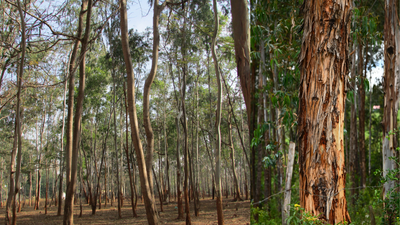
Hawaii imports much of the lumber used to build its homes, schools and infrastructure, but a new University of Hawaii at Mānoa research project is asking whether some of that material could instead come from trees already growing on the islands.
More than 34,000 acres of managed eucalyptus plantations exist across Hawaii, yet much of the wood is not used for structural construction because engineers and builders lack the locally specific design data required to certify it for that purpose. Led by civil engineering researcher Jun Wang, the new project will harvest Hawaii-grown eucalyptus, turn the trees into lumber and test the material for strength and durability.
Supported by a $300,000 USDA Forest Service Wood Innovation Grant, the work aims to establish engineering design values for structural applications. The researchers say successful testing could reduce dependence on imported lumber while creating new opportunities for Hawaii’s forestry and wood-products industries.
Meet the University of Hawaii researchers testing whether local eucalyptus can become construction-grade lumber
The project is led by Jun Wang, an assistant professor in the University of Hawaii at Mānoa’s Department of Civil, Environmental and Construction Engineering.
Rather than assuming eucalyptus is automatically suitable for structural construction, the researchers are taking a testing-based approach: trees will be harvested, processed into lumber and subjected to strength and durability testing so that engineers can establish the numerical design values required for construction.
The need for this work is specific to hawaii-grown wood. Earlier U.S. Forest Service research found that eucalyptus grown in Hawaii has useful mechanical properties, but also documented challenges such as growth stress, splitting and differences in density and strength between trees grown in Hawaii and those grown elsewhere.
The new research is intended to provide the modern engineering data needed to determine where the locally grown material can safely be used. The University of Hawaii says the project will work with state agencies, forest landowners and industry partners to evaluate the wood under conditions relevant to commercial construction. If the testing establishes reliable design values, the work could eventually support structural applications and engineered wood products made in Hawaii.
Wang's broader research focuses on infrastructure sustainability and structural behaviour, making the eucalyptus project part of a wider effort to develop construction approaches suited to Hawaii's environmental and infrastructure needs.
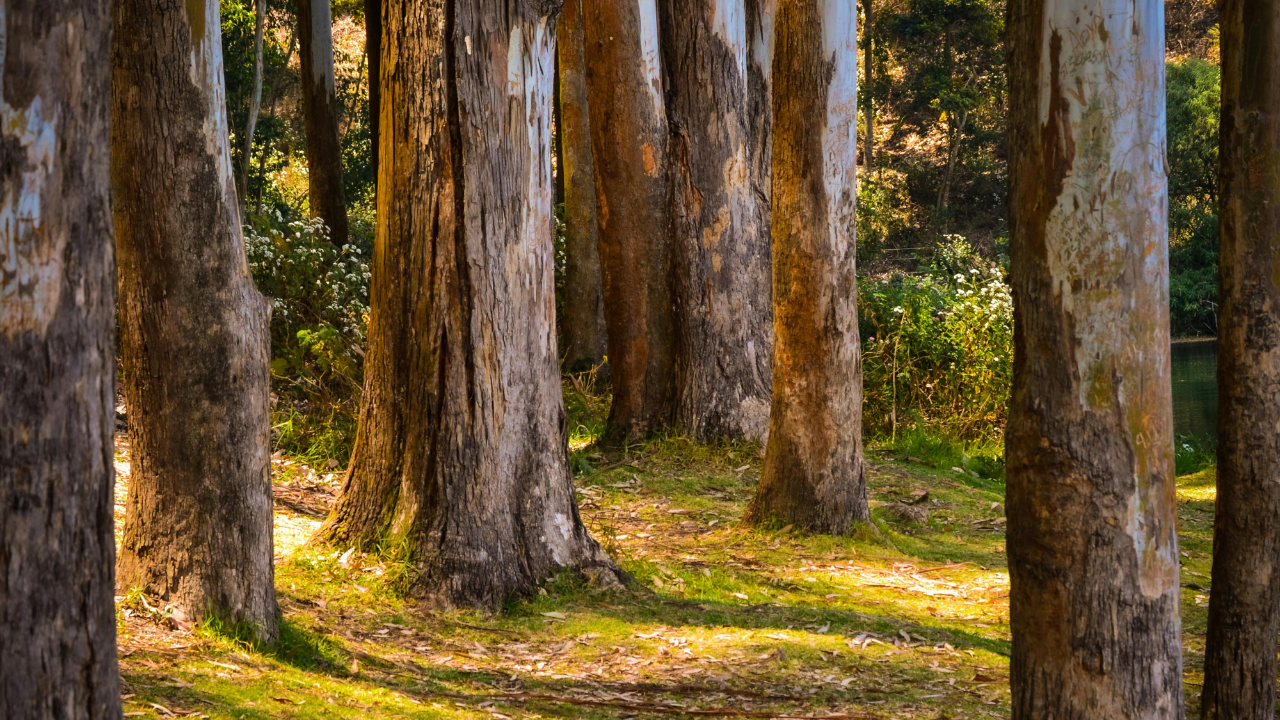
Meet the University of Hawaii researchers testing whether local eucalyptus can become construction-grade lumber (Image: Canva)
Why Hawaii has thousands of acres of eucalyptus but still imports construction lumber
Eucalyptus is not new to Hawaii. Different species have been planted on the islands for decades, including Eucalyptus saligna, Eucalyptus grandis and Eucalyptus robusta.
The University of Hawaii's College of Tropical Agriculture and Human Resources notes that E. grandis was introduced to Hawaii in 1957 and is now a major plantation species along the Hāmākua Coast, with wood historically used for poles, construction, mine props and pulpwood.
E. robusta, meanwhile, was introduced around 1900 and has been used for house siding, framing, flooring and pallets.The problem is therefore not that eucalyptus has never been used as timber.
The problem is establishing the technical evidence required for broader structural use. Building materials have to meet engineering standards that specify how much load they can safely carry and how they behave under different conditions. Without reliable design values for a particular locally available wood resource, builders and engineers cannot simply assume that its performance will match timber produced elsewhere.This issue was recognised decades ago. In a U.S. Forest Service study of 12-year-old Eucalyptus saligna grown on Maui, researcher Roger G. Skolmen found that the trees had potential for lumber but also encountered growth stress and log end-splitting. The resulting lumber was predominantly low grade, although the study found useful properties including relatively high bending strength for its specific gravity and reasonable performance in nailing, machining and glueing.
The wood was somewhat different from the same species grown in Australia: Hawaii-grown wood had lower density, shrinkage and compressive strength parallel to the grain, but was approximately equal in bending and shear strength and was stiffer. The researchers described it as exceptionally stiff compared with commercially important mainland species for its density. Those earlier findings help explain why the new project matters.
The question is no longer simply whether eucalyptus wood can be sawn into boards. It is whether modern testing can establish sufficiently reliable performance data to allow Hawaii-grown eucalyptus to enter the structural construction market at a much larger scale.
How turning eucalyptus into local building material could affect Hawaii’s forests and supply chains
If the research succeeds, the benefits could extend beyond replacing imported boards with locally harvested ones. hawaii's distance from major mainland timber-producing regions means construction materials have to travel long distances before reaching the islands.
Increasing the use of responsibly managed local timber could shorten supply chains and reduce some of the transport emissions associated with importing lumber.
The Hawaii Department of Land and Natural Resources similarly notes that locally sourced wood can reduce shipping-related emissions while supporting local jobs and the state's wood-products economy. The researchers also see a forest-management dimension to the project. The University of Hawaii says greater use of eucalyptus could create an economic reason to manage existing plantations more actively, including removing excess wood that can contribute to wildfire fuel.
This does not mean harvesting eucalyptus automatically makes a forest healthier; management outcomes depend on where the trees grow, how they are harvested and what replaces them. But creating a viable market for timber can give landowners another reason to manage plantations rather than allowing usable wood to remain unutilised.That distinction is particularly important in Hawaii because eucalyptus plantations are not the same as native Hawaiian forests.
The research is focused on managed eucalyptus plantations, not replacing native ecosystems with commercial tree plantations. The University of Hawaii's forestry resources distinguish between the different eucalyptus species and their management histories, while the current project is specifically concerned with making better use of an existing plantation resource.
The potential economic effect could also extend into manufacturing.
Once reliable structural properties are established, locally grown timber could potentially be used not only as conventional sawn lumber but as a feedstock for engineered wood products. The University of Hawaii says the current project could lay the groundwork for future engineered wood products made in Hawaii, creating opportunities further down the supply chain for processors, manufacturers and construction companies.
What the eucalyptus research still needs to prove before it can change Hawaii’s construction industry
The project is still a research effort, not a declaration that Hawaii-grown eucalyptus is ready to replace conventional structural lumber. Researchers first need to establish how the wood performs across the characteristics that matter to construction. That includes strength, stiffness, durability and the consistency of those properties between trees and batches of lumber. The University of Hawaii says the team will produce lumber and test its strength and durability specifically to establish the engineering design values needed for commercial construction.
The earlier Forest Service studies demonstrate why that testing cannot be skipped. Growth stress can cause problems during sawing, drying can affect wood dimensions, and different growing conditions can change mechanical properties. The 1974 study of Maui-grown Eucalyptus saligna, for example, recorded average growth stress of about 1,350 pounds per square inch per log and noted that the logs could split badly during processing.The current project is therefore building on a much older body of forestry research while attempting to answer a modern construction question. Its goal is not merely to show that eucalyptus is strong enough for some applications; it is to generate the engineering evidence that allows professionals to calculate safe structural performance. That evidence could ultimately determine whether Hawaii-grown eucalyptus remains primarily a plantation resource used for lower-value products or becomes part of the state's mainstream construction-material supply.The project is also bringing students into the process. The University of Hawaii says Wang's team received an $8,000 American Society for Engineering Education grant to incorporate Hawaii-grown eucalyptus into civil engineering courses. Students will compare the local timber with conventional construction materials while examining structural performance, carbon emissions and local sourcing.For Hawaii, the significance is ultimately larger than one tree species.
A locally available material that has long been underused could potentially become part of a more resilient construction supply chain, but only if the science establishes that it can meet the demanding requirements of structural building. The current University of Hawaii project is designed to answer exactly that question. As Wang told UH News, the goal is to determine whether a resource already growing in Hawaii can be used safely to build the homes, schools and infrastructure communities need.
If the testing produces the required design values, eucalyptus trees already standing in Hawaii's managed plantations could take on a new role: not simply as forest biomass or a source of limited wood products, but as a locally tested building material capable of contributing to the islands' future construction needs.