42 minutes ago
1
42 minutes ago
1

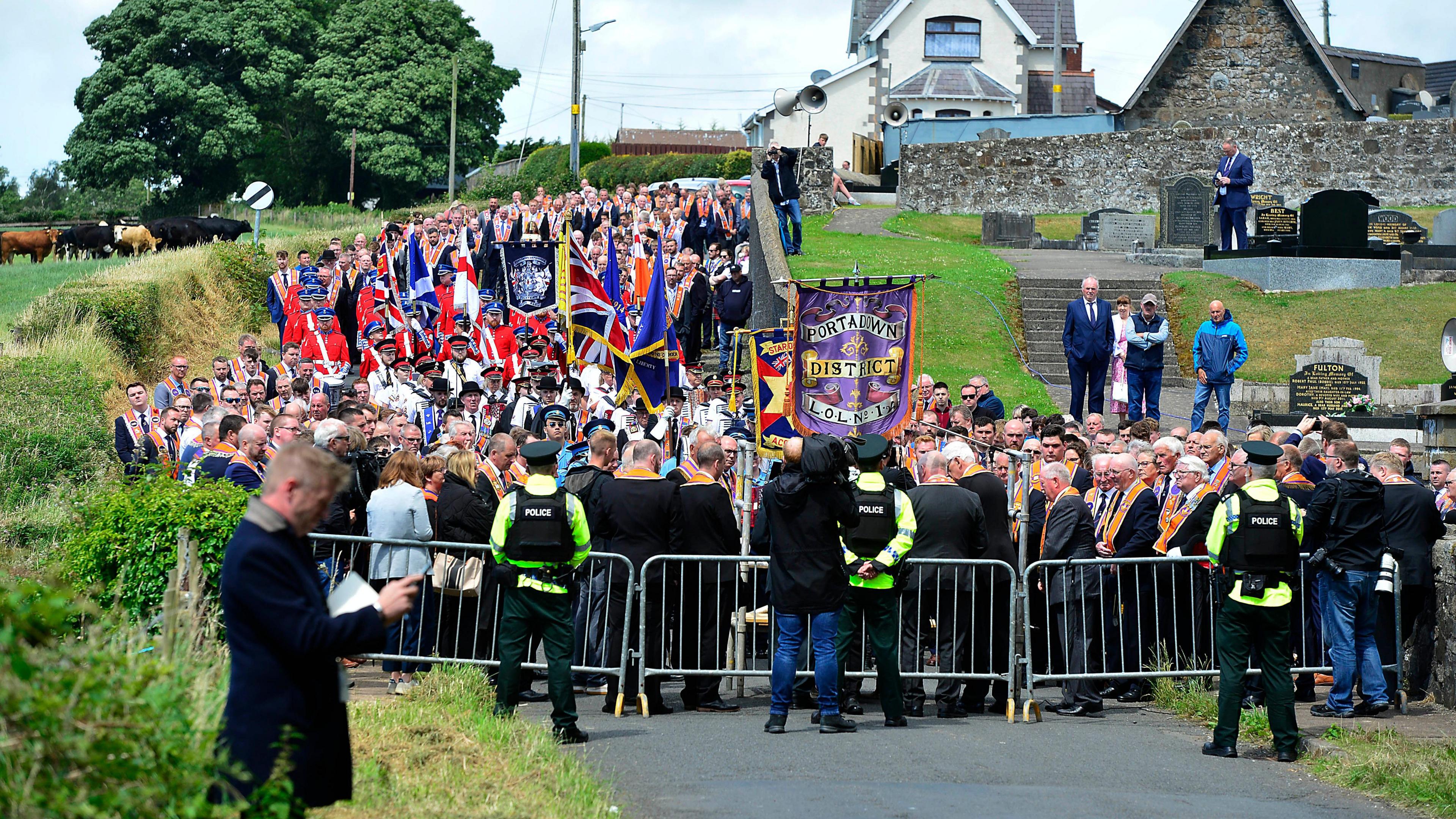 Image source, Pacemaker
The Orange Order Drumcree march is turned away from going down the Garvaghy Road every year
By
Crime and justice correspondent, BBC News NI
The High Court has quashed a Parades Commission decision to impose restrictions on the annual Orange Order parade at Drumcree in Portadown.
It follows a legal challenge brought by a member of the Order.
The commission had banned the July parade from entering the mainly nationalist Garvaghy Road - a move which reflected every decision it has made since 1998.
In 1998, the Parades Commission refused permission for the Orange Order's march to go down Portadown's Garvaghy Road. This decision led to widespread disorder in Portadown and across Northern Ireland.
It has been claimed the case may pave the way for a future parade on the road being permitted.
But it would require a new decision based on a fresh application.
The legal challenge was launched last month on a number of grounds.
The High Court was told on Tuesday that the commission conceded the case last week and requested the court quash its determination before a full hearing.
Lawyers for the applicant argued that Garvaghy Road residents had refused talks with the Orange Order and the commission breached legislation by making it "a pre-requisite to a parade".
It was also claimed the commission had imposed restrictions to prevent disorder when no evidence for potential trouble was presented.
The commission also failed to act on a request to make representations from Carla Lockhart, the Democratic Unionist Party (DUP) MP for the area.
Commission members were also accused of failing to read or consider the decision.
Lockhart was in court, along with several other politicians, including the Traditional Unionist Voice (TUV) MP Jim Allister.
What is the Garvaghy Road dispute?
In 1998, the newly-established Parades Commission ruled the Orange Order should not march down the Garvaghy Road on the end leg of its annual march from Drumcree Church.
About 1,000 police and 1,000 soldiers were deployed to enforce the decision.
The Orange Order - the most prominent of the "loyal orders" associated primarily with Ulster Protestants - had been using the route as part of its traditional march every year on the last Sunday before 12 July.
However, over a number of years the route had become contentious, with protests from residents living along the mainly-nationalist Garvaghy Road.
Before 1998, there had been years when the Royal Ulster Constabulary (RUC) decided not to allow the march to go down the road, most notably in 1996.
But following loyalist violence and disorder across Northern Ireland, a U-turn allowed 1,000 marchers to complete the route sparking subsequent rioting from nationalists.
The issues at Drumcree, and other disputes over marches, led the government to set up the independent Parades Commission to find solutions.
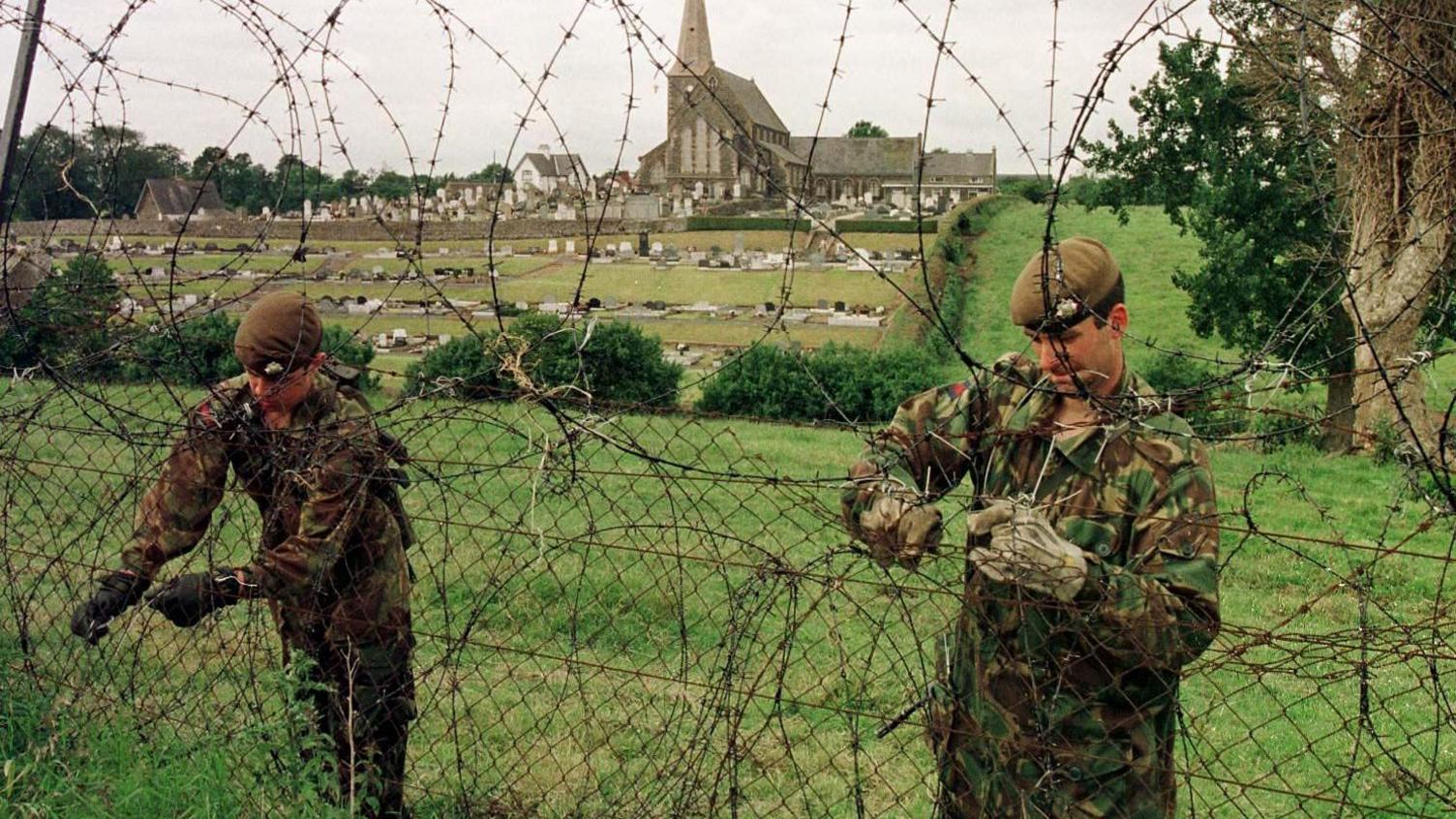 Image source, Pacemaker
British soldiers in position around Drumcree church in Portadown on 4 July 1998
Despite the commission's ruling, the Orange Order maintained it would march down what it said was its traditional route.
The Army and RUC had built a barricade on the road which links Drumcree Church with the Garvaghy Road.
On Sunday 5 July, those taking part in the parade left their service at Drumcree Church and marched up to the barricade, where the standoff began.
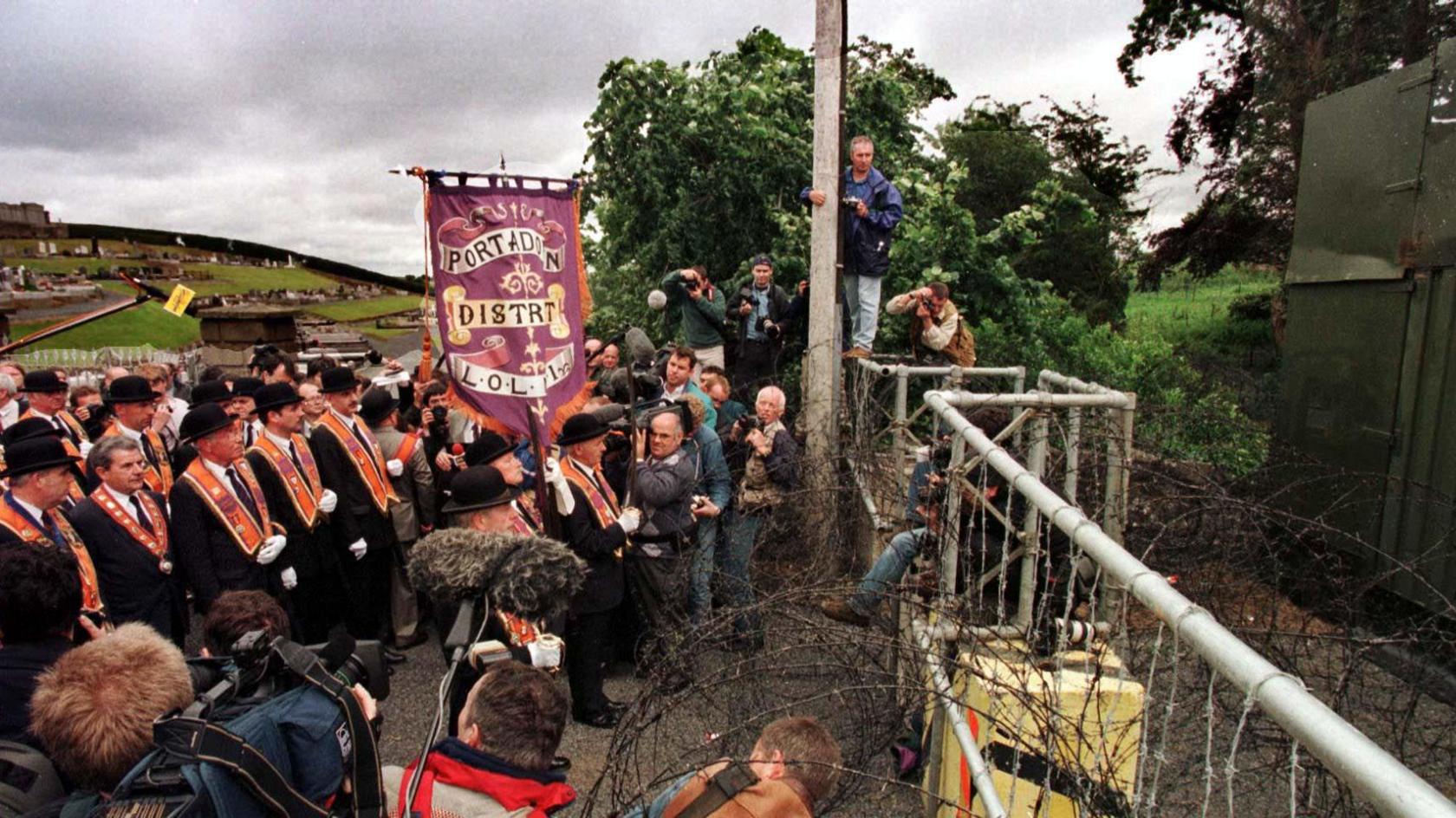 Image source, Pacemaker
Orange Order members found their route down the Garvaghy Road blocked by steel girders and razor wire on 5 July 1998
Over the following days, thousands of Orange Order members joined the marchers in Portadown to demand access to the road.
Widespread disorder broke out in Portadown and across Northern Ireland.
Between Saturday 4 July and Tuesday 14 July, there were more than 2,500 public order incidents recorded, according to RUC statistics in an Ulster University archive, external.
Of these, 615 attacks were on members of the security forces, including 24 shooting incidents and 45 blast bombs.
Just over 140 houses were damaged in attacks during the violence across Northern Ireland.
Three children - Richard Quinn, 11, and his brothers Mark, nine, and Jason, eight - were killed in an arson attack on their home in Ballymoney, County Antrim.
Their deaths created widespread revulsion, extending even as far as the then US President Bill Clinton.
The Portadown District Lodge has attempted to make the march annually since 1998, with the exceptions such as during the Covid pandemic - but every year has been denied permission by the Parades Commission.
Marchers make their way from the church down to a police cordon and then turn back.