1 hour ago
3
1 hour ago
3

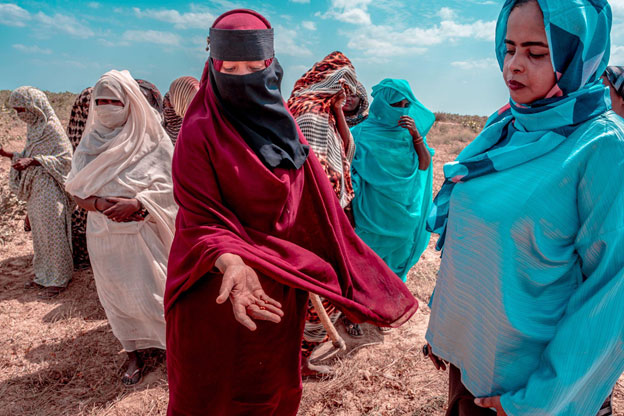 Amna Idres Musa Mahamod leads the Al-Wifag Women’s Association in Toker, Sudan.
Photographed for the Through Her Lens: Women Rising for Peace Exhibition. Credit: UN Women/Mona Elfateh
Amna Idres Musa Mahamod leads the Al-Wifag Women’s Association in Toker, Sudan.
Photographed for the Through Her Lens: Women Rising for Peace Exhibition. Credit: UN Women/Mona ElfatehUNITED NATIONS, August 17 (IPS) - Women-led and women’s rights organizations (WLOs) in humanitarian settings are collapsing amidst a complicated predicament in which needs are surging and international support is dwindling.
These organizations are often the first responders in humanitarian and conflict settings, providing psychosocial and gender-based violence (GBV) support; however, 84 percent of WLOs surveyed report that women and girls in the communities they serve have reduced access to essential services, according to UN Women’s July 2026 Beyond the Breaking Point report.
The report surveyed 855 WLOs operating across 52 crisis- and conflict-affected countries and found that as women and girls face heightened risks and increased need for assistance, services and support have dwindled significantly. Nine in ten organizations say they cannot meet the current levels of need, and two in five expect to shut down either temporarily or permanently within the next year.
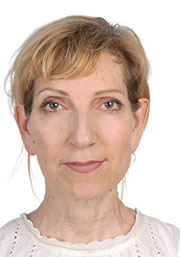 Galit Wolfensohn, UN Women’s Humanitarian Research and Knowledge Management Specialist
“The women’s organizations at risk of being shut down are on the frontlines of the world’s most severe humanitarian crises,” said Sofia Calltorp, UN Women Chief of Humanitarian Action. These organizations “operate where international actors cannot and stay long after global attention has moved on.” Despite the vital role of WLOs, support continues to be stripped away as international humanitarian funding declines.
Beyond the Breaking Point builds off UN Women’s alarm first raised in their 2025 report, At a Breaking Point. In it, they warned that half of WLOs surveyed in crisis zones risked closure within six months if current funding levels persisted. Fifteen months later, the situation remains the same. When asked what the warning in ‘At a Breaking Point’ generated from donors, Galit Wolfensohn, UN Women’s Humanitarian Research and Knowledge Management Specialist, told Inter Press Service it brought “greater recognition among donor governments and humanitarian partners of the severe consequences that funding reductions were having.” She added that the response has “not matched the scale or urgency of the crisis…the latest findings show that recognition alone is not enough.”
When examining the collapse of WLOs, Sudan offers an illuminating case to understand the on-the-ground impacts of the reduction of services. Over three years of conflict in Sudan have driven GBV needs to unprecedented levels, with the number of girls and women requiring GBV services quadrupling since the conflict began. However, two-thirds of WLOs in Sudan reported having to close or significantly reduce services, and half expect to close entirely within the next year without urgent financial support.
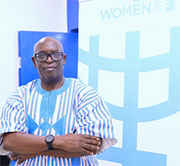 Salvator Nkurunziza, UN Women’s Representative in Sudan
Salvator Nkurunziza, UN Women’s Representative in Sudan, described how the escalation in hostilities and insecurity in El Obeid, Sudan, has significantly affected the ability of WLOs to operate. Many organizations, he explained to Inter Press Service, have “experienced losses of assets, equipment, and supplies, while disruptions to infrastructure and population displacement have constrained their operational capacity.” Furthermore, “the prevailing insecurity has restricted movement, complicated access to communities in need, and increased operational costs.”
As WLOs across Sudan have had to either close or scale back operations, Nkurunziza explained that “women and girls lose access not only to critical support but also to safe spaces that provide protection, psychosocial assistance, information, and a sense of security.” WLOs act as trusted entry points for survivors of GBV seeking help, and when these services disappear and become harder to access, survivors “may be less able or willing to seek assistance.” When services disappear, it creates a vicious cycle that “can result in prolonged exposure to violence, increased psychosocial distress, and heightened protection risks,” including greater reliance on “negative coping mechanisms, like child marriage and other harmful practices.”
“What we are observing is likely only the surface, as the absence of quality services is deterring those in need from seeking help,” Fabrizia Falcione, UNFPA’s Representative in Sudan, said on help-seeking behaviors in GBV survivors. In El Obeid, UNFPA estimates that 55,712 women and girls are at an increased risk of GBV as of August.
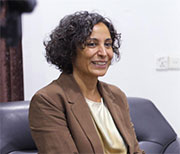 Fabrizia Falcione, UNFPA’s Representative in Sudan
The situation described across Sudan aligns with broader patterns documented globally. UN-Women’s latest report found that 62 percent of organizations surveyed reported having to close or drastically reduce safe spaces and women’s centers, and 61 percent reported reductions in GBV case management services. The result of which has led to a widening gap between need and resources available, as many organizations “have been forced to prioritize the most urgent life-saving interventions,” Nkurunziza said.
Despite the operational and financial challenges, he remarked that many Sudanese WLOs “have demonstrated remarkable resilience and adaptability”. Organizations have “continued to provide services by reprioritizing activities, mobilizing community-based volunteers, utilizing remote modalities where feasible, and strengthening partnerships with other local actors to share resources and referral networks.” However, Nkurunziza was clear that these adaptive approaches “are not a substitute for sustained financial support.”
On a global scale, Wolfensohn outlined the changes that need to happen within the next six months to reverse the course of what was documented in the reports. “Donors must protect and increase funding for WLOs by providing direct, flexible, predictable and multi-year financing,” she said.
At the same time, Wolfensohn emphasized that funding alone is not sufficient: “women’s organizations must be recognized as essential humanitarian partners through meaningful participation and leadership in humanitarian coordination and decision-making.”
Reversing the current trajectory requires a type of accountability that does not yet exist: “measurable commitments, clear funding targets and greater transparency on how much humanitarian financing reaches local women-led organizations directly,” Wolfensohn said. Without decisive action, WLOs will be forced to scale back or close services globally.
“Reversing this trend is not only about sustaining organizations; it is about safeguarding access to protection services, GBV prevention and response, livelihoods support, and other critical assistance relied upon by women and girls in crisis settings,” Wolfensohn remarked.
In the weeks since Beyond the Breaking Point was published, Wolfensohn discussed the impact the report has had in increasing conversations between donors, governments, and humanitarian organizations. “The discussions generated by the report are helping to reinforce broader humanitarian reform agendas focused on localization, equitable partnerships and the meaningful participation of affected communities,” Wolfensohn said. However, she stopped short of claiming progress at the scale required to reverse the trends documented in the course, but “it should serve as a catalyst for action.”
UN organizations are already working in collaboration to close the funding gaps WLOs face in Sudan. According to Falcione, the approach is not only about advocacy, but also about working with WLOs “as genuine partners in the response.” Agencies like UNFPA and UN Women “support local and grassroots organizations in capacity development, institutional strengthening, leadership, and empowerment.” Falcione underscored the importance of strengthening the partnership, as WLOs “are not simply beneficiaries or implementing partners, they are essential actors in the humanitarian response.”
Over the course of fifteen months, UN Women’s reports have painted a picture from warning to confirming what happens when WLOs disappear. In Wolfensohn’s own framing, what comes next depends on measurement and follow-through. This requires donors publicly tracking what funds reach WLOs, and commitment to multi-year flexible financing. Recognition alone will not solve the problem, and supporting WLOs is the difference between a third report that documents reversals of these trends or repeats the same warnings.
IPS UN Bureau
© Inter Press Service (20260817080516) — All Rights Reserved. Original source: Inter Press Service