51 minutes ago
1
51 minutes ago
1

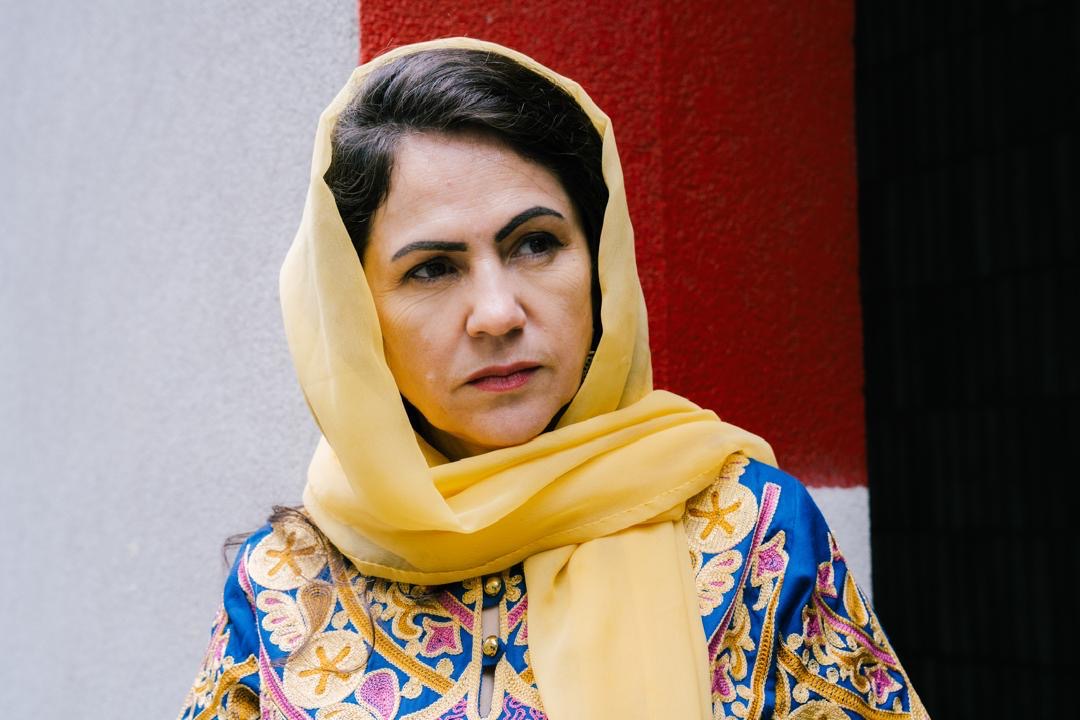 Fawzia Koofi, former Deputy Speaker of the Afghan Parliament, says the country is experiencing gender apartheid.
 ROME, August 20 (IPS) - FIVE years after the Taliban returned to power, Fawzia Koofi, the former Deputy Speaker of the Afghan Parliament, denounces what she describes as “gender apartheid.”
Despite bans, terror, and the systematic erasure of women from society, Afghan women continue to resist through underground schools and online solidarity networks.
Koofi was also a member of the official delegation that represented the Afghan government during the 2020 peace negotiations with the Taliban in Doha, Qatar.
Since the fall of Kabul, she has been living in Europe after being evacuated from Afghanistan, where she continues to advocate for Afghan women and campaign for political alternatives to Taliban rule. Speaking with IPS, Koofi explains how the Taliban have systematically erased women from public life while describing the resilience and determination of Afghan women to continue resisting.
IPS:Three years after their return to power, the Taliban have gradually stripped women of all their rights. Today you describe the situation as genuine gender apartheid. How would you describe the condition of Afghan women?
Fawzia Koofi: Women have gradually lost their rights as the Taliban imposed increasingly restrictive measures through a series of decrees. In 2021, girls were banned from attending secondary school. Then, in 2022, women were barred from universities. In 2024, they were no longer allowed to study medicine, not even gynaecology.
Today, every field of education is closed to them. Compared with the first Taliban regime, the current restrictions are even harsher. Yet Afghan women continue to resist because they know education is essential, and their families understand that it is vital. They attend classes in clandestine home-based schools.
Most of these home schools are run by NGOs that pay teachers’ salaries and sometimes even cover students’ internet connection costs. They also provide online English and computer courses. These schools do not issue diplomas. Nevertheless, students receive an education that sometimes enables them to start an online business, pursue distance learning while remaining underground, or teach other young girls.
IPS: How do these underground schools operate, and how do women manage to escape repression?
Koofi: Officially, these schools do not exist; they are not registered. As a result, whenever the Taliban discover them, they can arrest the teachers, students, or those responsible for running them. That is exactly what happened to one of the networks I helped establish, for example, in Ghor Province, in central-western Afghanistan, and also in Badakhshan, in the country’s northeast. They raided the schools and arrested the staff. In other cases, however, they may be more lenient when members of their families attend these schools.
The curriculum focuses on science, computer skills, and English to help women and girls obtain scholarships, work online, or run online businesses. Some women who manage to build small businesses personally take charge of marketing in an effort to expand their activities. Unfortunately, without diplomas or accreditation, professional opportunities remain extremely limited for most women.
Many Afghan women living in exile devote a large part of their time to providing online education for women inside Afghanistan. We connect them with university students and try to teach them English or other languages. It is regrettable that Western governments repeatedly promise to defend women’s rights while failing to provide the funding or scholarships that would allow Afghan women to continue their studies abroad, return home one day, and help rebuild their country. The Taliban’s declared objective is to erase women from Afghan society in the name of Islamic morality.
IPS:Why do you use the term gender apartheid?
Koofi: Because, little by little, women have been completely erased from public life. Some women tell me that when they walk through the streets of Kabul and encounter Taliban officials or soldiers, they are often looked at as though they were criminals.
They are told: “You are not allowed to work or attend university, so why are you out in the street?”
That is precisely the principle of apartheid: separating a gender or a group of people on the basis of their sex, race, or religion and excluding them from society. That is exactly what the Taliban are doing.
The silence of the international community is deeply regrettable. Some governments occasionally condemn the Taliban system, but that is where it ends.
Even worse, they adopt the same kind of practices.
The United Kingdom, for instance, continues to say, “We support Afghan women,” while refusing to grant student visas for fear that applicants might later seek political asylum. It makes no sense. How many of them would actually do so? Two hundred students? In a situation where they can neither study nor work in their own country, it should not be considered a problem if they apply for asylum.
All these contradictions, together with the international community’s lack of action, only encourage and strengthen the Taliban, who interpret this as a form of recognition and legitimacy.
Many experts say that women are disappearing from public space in Afghanistan. Do you agree with that assessment?
Koofi: Imagine the reality faced by women living there today, who are not even allowed to leave their homes freely. Take humanitarian aid distribution as an example.
In many regions, aid distribution is controlled by the Taliban with the assistance of the local councils they have appointed. Beneficiaries are selected from among relatives or supporters.
Single women, such as war widows with dependent children, or women who lost their jobs under Taliban rule, are excluded from receiving aid. And when they protest, the local council members appointed by the Taliban report them, and they are arrested.
There have been cases of sexual violence in Taliban prisons.
The Taliban have locked down the entire system by systematically controlling the country and all its institutions. If local council members rebel or fail to cooperate sufficiently, they are simply replaced. That is how the system functions.
Yet women continue to resist and to protest in order to survive, although it is far from easy. Some open beauty salons or small shops inside their homes. A few television channels that have reached agreements with the Taliban and comply with censorship are still allowed to employ women, but they are required to wear face masks while on air. In effect, they have become spokespersons for the Taliban, who tightly control the news that they broadcast.
Are there still any spaces where women can enjoy some degree of freedom?
They are becoming increasingly rare. Last month in Herat, in western Afghanistan, the Taliban arrested more than 60 women who were not wearing the burqa but instead a large headscarf in keeping with local tradition. Their families and other women protested, and for once, men also took to the streets. The Taliban responded by opening fire. To them, human life has very little value. They arrest, imprison, torture, and kill.
On April 28, they arrested three members of my family as well as one of our gardeners. They then confiscated my house. My relatives were held in solitary confinement for a week and tortured. We managed to mobilise social media, and my family was eventually released. All this simply because I am able to speak to the media and communicate with the United Nations Assistance Mission in Kabul.
In most cases, however, families do not even know where their loved ones are being held. They can disappear for months. The media do not report these cases because they are controlled by the Taliban. This is the reality for everyone. Women continue to write and to protest through social media, each in their own way.
Do you feel that the world has forgotten Afghanistan and Afghan women?
Yes. The world paved the way for the Taliban’s return.
Let us remember the Doha Agreement signed between the Taliban and the United States, which says absolutely nothing about the condition of women or about human rights in general. A
ll of this encouraged the Taliban.
I took part in those negotiations, and the Taliban told me that women’s rights were not among the priorities of my American and European friends. Unfortunately, they were right.
Now the European Union has invited the Taliban to negotiate the return of Afghans living abroad irregularly or individuals considered to pose a security threat. This approach is rather strange and paradoxical because as long as conditions in Afghanistan do not improve, people will continue to want to leave.
Everyone living in the country wants to leave. I speak by telephone every day with Afghans, and every one of them tells me they want to leave. Without work, without education, and without freedom, there is no dignity.
It is absurd. The European Union is engaging with the Taliban, who will simply exploit these negotiations for their benefit.
The attention of Western countries, and indeed of the world as a whole, is focused on other major conflicts. I believe this is a mistake because, sooner or later, Afghanistan will become a rear base for several violent extremist groups.
The Tehrik-e-Taliban Pakistan (TTP), the Islamic State (ISIS), and Al-Qaeda remain highly active in the region. In fact, Al-Qaeda’s leader was killed only two kilometres from the Taliban presidential palace in July 2022.
To claim that the Taliban will effectively fight these groups while allowing them to govern the country is, in my view, sheer hypocrisy. The world must act before it is too late. We are not asking for NATO troops to return. Rather, we are asking governments not to encourage or support the Taliban.
Unfortunately, I have the feeling that human rights — and women’s rights in particular — are simply not considered a strategic issue or a priority. That is the reality.
IPS UN Bureau Report
© Inter Press Service (20260820102438) — All Rights Reserved. Original source: Inter Press Service