5 months ago
25
5 months ago
25

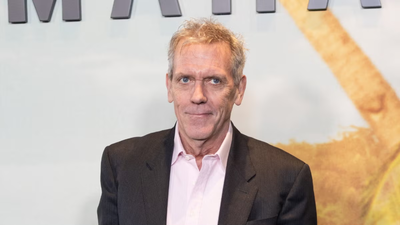
Hugh Laurie denied being a Zionist after online backlash over Dana Eden tribute.
Grief turned into controversy this week after British actor Hugh Laurie paid tribute to television producer Dana Eden, only to find himself at the centre of a heated social media storm.What began as a message of sorrow over the sudden death of a colleague quickly spiralled into political accusations, online abuse and a blunt response from the British actor.
Dana Eden: Unanswered Texts Shock Before Brother Discovered 'Tehran' Producer Inside Hotel Room
A sudden death in Athens
Dana Eden, 52, was an Emmy-winning Israeli producer and the co-creator behind the Apple TV+ spy thriller Tehran. The series, known for its tense storyline involving Israeli agents and Iran, earned international attention and strong reactions for its political themes.Eden was found dead on 15 February 2026 in a hotel room in Athens, Greece. She had been there overseeing production of the fourth season of Tehran. Reports indicate her death is being treated as an apparent suicide. Authorities are still working to determine exactly what happened.Her passing shocked the television industry. Tributes poured in from colleagues in Israel and Hollywood, many describing her as a driving force behind the series and a respected figure in international television.
Hugh Laurie, who starred in Season 3 of Tehran and was due to appear in Season 4, was among those who publicly expressed grief.
Laurie’s tribute and the backlash
In his post, Laurie called Eden’s death “a terrible thing”. He described her as brilliant, funny and an exceptional leader. The message was personal and direct, centred on loss rather than politics.
However, the reaction online was swift and divided.Some users on X responded harshly. A number of posts appeared to celebrate or mock Eden’s death. Critics of Tehran have long accused the show of promoting pro-Israel or Mossad narratives.
For some online commentators, Eden’s association with the series became the focus of their anger.He also faced criticism for his involvement in Tehran, with some accusing him of supporting Zionism simply because he worked on the series and publicly mourned its co-creator.
The discussion quickly shifted from condolence to confrontation.
Laurie responds
Laurie addressed the criticism directly in a follow-up post.“Nothing I have ever said or done could lead a sane person to believe that I am a Zionist,” he wrote.
He added that if someone “exults in the death of a friend of mine” he would block them, and that anyone who would not do the same in his position could “f**k off off too.”
The statement was firm and unambiguous. He denied that his public record supports the claim that he is a Zionist. At the same time, he made it clear that he would not tolerate people celebrating the death of someone he considered a friend.An earlier message suggested a shift in how he handles online hostility.
“I used to hate blocking people, and hardly ever did it. I’m older now,” he wrote. The remark appeared to reflect a growing willingness to distance himself from toxic interactions.
Politics, grief and online polarisation
The situation has drawn criticism from different directions. Some voices accused Laurie of distancing he should never have worked on the series in the first place.himself from Eden by rejecting the Zionist label. Others argued At its core, however, the dispute began with a personal loss.Eden’s death has left colleagues mourning a respected producer who helped bring one of Israel’s most internationally recognised dramas to global audiences. Laurie’s response suggests he sees the matter as one of basic decency rather than political alignment.The episode highlights how quickly grief can become politicised in an online environment shaped by polarisation. What began as a tribute to a colleague became a broader argument about identity, ideology and loyalty.For Laurie, the message appears straightforward. He is grieving a friend. He rejects the political label placed on him. And he is unwilling to engage with those who celebrate a death, regardless of their position.In the middle of an already tense global conversation, a personal tragedy has become another flashpoint.