
 7 months ago
29
7 months ago
29


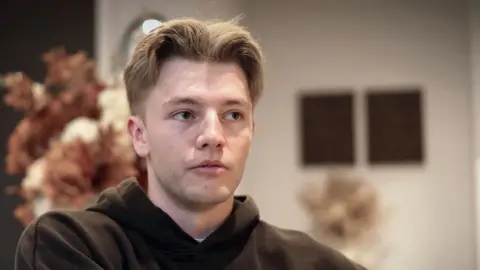 DocoDocumentaries/TullenProductions
Paisley says talking to AI was easier than speaking to real people
Working from home after years spent alone over Covid lockdowns, 23-year-old Paisley said he began to feel trapped, and felt only AI could help him.
"I lost the ability to socialise," he said, and like many in Gen Z, he turned to AI for company.
"At one point, I was talking to ChatGPT six, seven, eight times a day about my problems, I just couldn't get away from it, it was a dangerous slope."
He shared his experience of loneliness with 22-year-old documentary maker Sam Tullen, who told the BBC what Paisley was going through was part of a wider Gen Z "loneliness crisis".
Gen Z, a term used for those born between 1997 and 2012, often referred to as the first 'digital native' generation.
That lack of connection has led many to seek advice and support from AI, blurring the line between technology and companionship.
A report by youth centre charity Onside found 39% of young people in England aged between 11 and 18 use chatbots for this reason.
In the North West, that figure is 38%, and 21% of those who responded said it was easier to talk to AI than to a human.
The report containing the figures is based from a survey carried out by YouGov of more than 5,000 young people in England.
 EPA
EPA
In the North West, 21% of young people said using AI was easier than talking to a real person.
After he finished school, Paisley, who lives in Manchester, went straight into a job where he worked from home.
In the 20-minute documentary Generation Lonely, he said: "I felt lost, I didn't know how to speak to people, and I couldn't figure out why.
"I was hoping that it [ChatGPT] just would be my friend, and the easiest point of contact was talking to a robot because it gave a response".
Sam, who is from Liverpool, produced the documentary to investigate rising loneliness among Gen Z.
He told the BBC the Covid-19 pandemic had "caused a lot of problems" for a digitally connected, but socially isolated generation.
"As a 22-year-old myself, thrust into adulthood during a global pandemic, I can relate to Paisley's struggles and I'm sure many others in their early twenties will too."
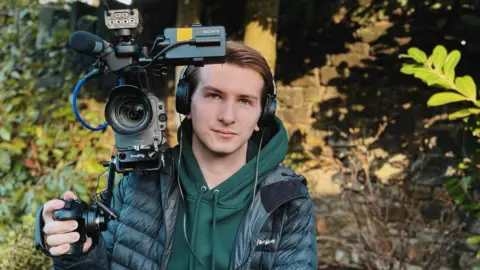 Luke Jones
Sam Tullen said his production Generation Lonely had shown AI was not a long-term solution to loneliness
Sam said he spoke to a lot of young people while researching the documentary who were trying to use AI for support.
"I think in Paisley's case he tried talking to AI to sort of fill that void. And he found it didn't work.
"And I think that a lot of young people are trying it, but then kind of sometimes it can take them a while to realise that it isn't something that's sustainable.
"I mean, we've built a world where it's easier to talk to a chatbot than a human."
He found those he spoke to were asking chatbots the same thing they would ask a friend, like 'what do you think of my outfit, or what should I do today'.
"Using an AI chatbot to replace friends is, yeah, one way that you could put it."
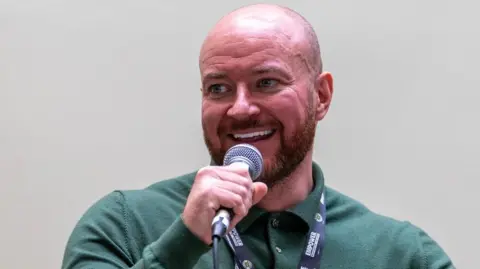 Empower Youth Zones
Adam Farricker said AI could not replace the role of 'trusted adults'
Youth groups give thousands of young people across Greater Manchester somewhere safe to go, and access to "someone trusted to talk to," said Adam Farricker.
He runs youth work charity Empower Youth Zones, which runs two sites in Manchester and Salford for more than 15,000 children aged between eight and 19.
Chatbots are popular with young people because they are "just fast and easily accessible", especially for those who are isolated, he said.
"I think a lot of the young people are aware of some of the risks.
"But then there's a lot of the young people that we speak to who genuinely think that the information that they're getting from these resources are factual and that's the concern that we've got."
The job of his team is to point people in the direction of services that can help with issues around mental health, wellbeing, anxiety and depression.
AI "hasn't got that emotional intelligence that a human's got," he said.
"A lot of children, young people are still developing emotionally and intelligently, so they can't always conceptualise the information that they're receiving.
"And that's where the trusted adult and that human interaction, whether that's through friends, family, youth workers, and teachers, is critically important."
But he said there is "just not enough" support available to manage these increasing risks due to pressure on health services.
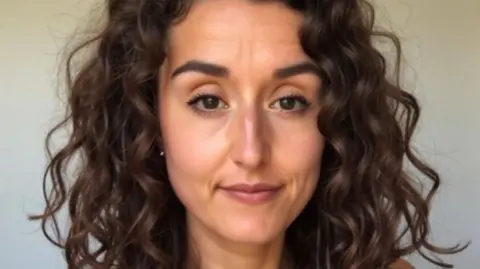 Jennifer Cearns
Dr Jennifer Cearns said chatbots do not push back which can harm a teenager's development
Part of the draw of AI chatbots is "they're compelling, personable, and never irritable or jealous or manipulative, at least in theory", Dr Jennifer Cearns said.
She is a lecturer in AI Trust in the Department of Social Anthropology, University of Manchester who looks at relationships between AI and humans.
"If you want to speak to one of them at three in the morning, you know, they won't be grumpy or tell you to stop texting them."
But some groups like teenagers lack critical awareness of the use of AI and may not be able to distinguish relationship with a chatbot with human interaction.
"Most people will at some point say, 'well, actually, I don't like that, or actually, I don't want to talk about that', or I disagree with you.
"AI chatbots very rarely do that unless you really tell them to. And so there's a sort of sycophantic element of basically sort of talking to yourself in a way, like to a mirror. It mirrors back what it thinks you want to hear."
She said she is worried about a generation of teenagers used to speaking to AI chatbots "that don't push back on harmful practises like, you know, misogyny or various types of hate speech and so on".
"If they don't get that push back at a very critical moment in their development when they're young, if that will then potentially spill over into the way that they interact with other humans a bit later on in life," she added.
In making the documentary, Sam said those who he spoke to for research told him they felt "no one was understanding what was going on, especially their parents".
"They were like, you know, 'get out, sort of have this social life that, you know, we had when we were kids'
"But they do not understand how different it is."


