1 month ago
27
1 month ago
27

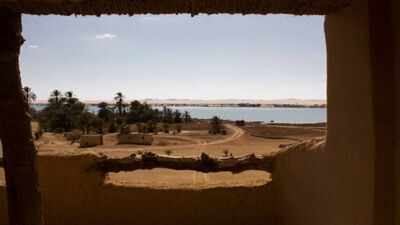
For more than a century, a vast empty basin in Egypt’s Western Desert was considered the site of one of the world’s most unusual engineering proposals. The Qattara Depression, a sunken stretch of land below sea level, was imagined as a place where seawater from the Mediterranean could be used to generate electricity.
Engineers, geographers and governments repeatedly returned to the idea, each time hoping that new technology might make it possible. But after decades of studies and changing energy priorities, Egypt has decided that the project no longer makes economic or environmental sense.The landscape that inspired the proposal remains almost exactly as nature left it: a dry, remote depression carved into the desert, with no permanent rivers feeding it and no natural outlet for water.
How Egypt’s barren desert hollow inspired a century-old electricity plan
The Qattara Depression lies in northwestern Egypt, around 200 kilometres from the Mediterranean coast. It covers roughly 20,000 square kilometres and reaches far below sea level, with parts of its floor sitting more than 100 metres beneath the surrounding land.Unlike river valleys or coastal plains, the depression has no major water source flowing into it. Rainfall is extremely limited, and evaporation quickly removes the small amounts of water that do arrive.
For much of the year, it remains a vast expanse of salt marshes, sand and barren terrain.Its unusual geography was what caught the attention of engineers in the early 20th century. If seawater could somehow be brought into the basin, gravity would do much of the work. Water rushing downhill from the Mediterranean could pass through turbines, creating electricity before collecting in the low-lying desert.
The first vision of a hydroelectric desert project
According to the journal published in ScienceDirect, titled ‘Environmental assessment for major development projects: A case study “Qattara Depression”’, German geographer Albrecht Penck is credited with first suggesting the concept around 1912.
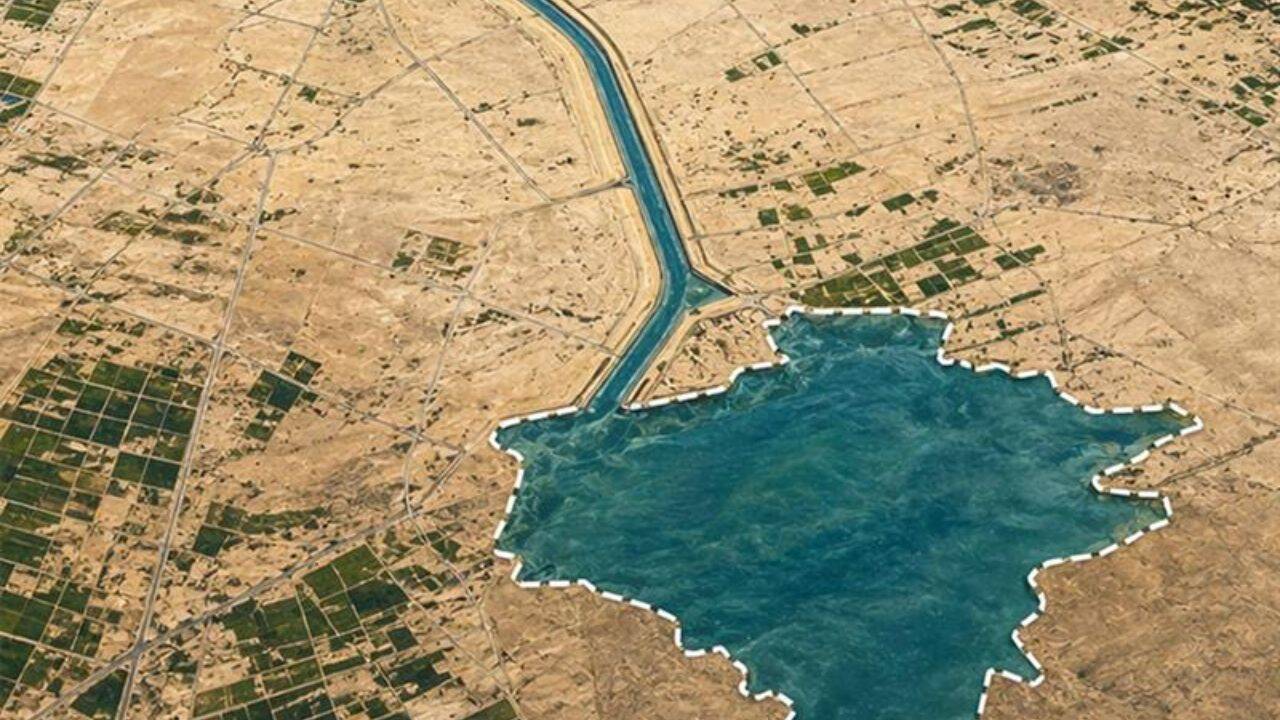
At the time, the idea was less about a specific construction plan and more about recognising the possibility hidden in the landscape.The proposal gained more serious attention after British surveyor John Ball studied and mapped the region during his work with the Survey of Egypt. In the late 1920s, his surveys provided some of the first detailed calculations of the depression’s depth, size and potential for electricity production.The basic concept remained unchanged over the years. A canal or tunnel would connect the Mediterranean to the depression. Seawater would flow into the lower basin, driving turbines along the way. Once inside the hot desert environment, evaporation would remove much of the water, allowing more seawater to enter.The project could theoretically keep producing electricity for a long time, but the water would leave behind increasing amounts of salt.
Over decades, the basin would gradually become more saline, creating a new environmental challenge in an already fragile desert ecosystem.
PC: EgyptToday
The nuclear proposal that pushed the idea into science fiction territory
By the middle of the 20th century, engineers were still struggling with the same obstacle: the cost of cutting a huge water channel across the desert.During the 1960s and 1970s, German engineer Friedrich Bassler investigated the project for Egypt. His team examined different methods of creating the connection between the Mediterranean and the depression but found that conventional excavation would require an enormous financial investment.A more unusual suggestion emerged during that period. Instead of digging the canal using traditional machinery, engineers considered using underground nuclear explosions to carve the route.The proposal involved hundreds of nuclear blasts, with the idea that controlled detonations could create the required channel much faster than conventional methods. It was linked to the wider Cold War-era interest in peaceful nuclear technology, including projects promoted under the “Atoms for Peace” programme.However, the risks were difficult to ignore. Concerns were raised over radioactive contamination, the need to relocate nearby communities and the possibility that underground shock waves could affect distant geological structures, including the Red Sea Rift. The nuclear approach never moved forward, and the canal remained only a concept on paper.
Decades of studies but no construction
The Qattara Depression project continued to appear in discussions long after the nuclear proposal disappeared.
Supporters argued that Egypt could gain a major source of renewable electricity while transforming an unused desert area.Several studies examined possible routes, costs and engineering challenges. Yet each assessment returned to the same difficulties: the distance from the Mediterranean, the scale of excavation required and the environmental consequences of introducing seawater into the desert.The project also faced a changing energy landscape. When the idea first emerged, large-scale hydroelectric schemes were among the most attractive options for producing electricity.
But by the 21st century, solar and wind technologies had become far cheaper and easier to deploy, especially in regions with abundant sunlight and open land.Egypt’s Western Desert, once viewed mainly as a harsh and empty landscape, became increasingly valuable for renewable energy projects that did not require massive water infrastructure.
Why Egypt finally ended the plan
The latest review of the project began after renewed interest from Egyptian authorities, including a new feasibility study agreement signed in 2023.
A government committee had already been examining the proposal for years before the final assessment was completed.According to EgyptToday, Egypt’s Cabinet ruled out the Qattara Depression seawater project in 2026 after a government review found it was not economically viable and carried major environmental and technical risks. Officials warned that flooding the depression with Mediterranean seawater could contaminate groundwater reserves, increase soil salinity, and threaten nearby agricultural areas, freshwater wells and ecosystems such as Siwa Oasis.There was also a modern complication that earlier planners did not face. Parts of the area are now connected to oil and gas activity in Egypt’s Western Desert. Flooding the depression would require relocating existing operations, adding further costs and logistical problems.With solar and wind power becoming more competitive, officials concluded that the electricity produced by the Qattara scheme could be achieved through simpler alternatives.
A forgotten vision from another energy era
The Qattara Depression proposal reflects a time when engineers often looked toward enormous landscape-changing projects as solutions to energy problems. Around the world, rivers were redirected, valleys were flooded and deserts were reshaped in the pursuit of electricity and development.