1 month ago
25
1 month ago
25

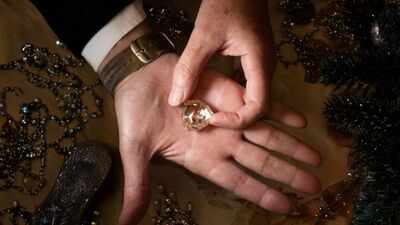
For more than a century, the Florentine Diamond occupied a curious place in the history of famous gemstones. It was discussed in museum catalogues, historical accounts and works of fiction, yet nobody could say with certainty where it had gone.
Some believed it had been stolen during the collapse of the Austro-Hungarian Empire. Others suspected it had been cut into smaller stones to conceal its identity. The uncertainty became part of the diamond's reputation. Now, descendants of the Hapsburg dynasty have offered a very different account, saying the celebrated jewel never vanished at all. Instead, they claim it spent decades quietly locked away in Canada, far from the attention that surrounded one of Europe's most recognisable treasures.
How the Florentine Diamond passed through Europe's ruling families
The Florentine Diamond is remembered as much for its remarkable ownership as for its appearance. GJEPC reported that the pale yellow stone weighs around 137 carats and was fashioned into an unusual pear-like form that made it stand apart from many other historic diamonds.Long before it entered the Hapsburg collection, the gem had been associated with the Medici family, whose influence shaped Florence during the Renaissance.
Through marriage, inheritance and political alliances, the stone eventually became part of the imperial treasures of the Hapsburg rulers, remaining linked to the dynasty for generations.Its long journey across Europe reflected the shifting fortunes of royal houses rather than commercial trade. Unlike many celebrated diamonds that regularly changed owners through auctions or private sales, the Florentine largely remained within aristocratic collections.
The empire's final days
The Gem and Jewellery Export Promotion Council (GJEPC) reported that by the closing months of the First World War, Austria-Hungary was rapidly falling apart. Emperor Charles I recognised that both the monarchy and its possessions faced an uncertain future as political upheaval spread across Europe.Fearing instability and possible seizure of valuable state assets, members of the imperial household arranged for important jewels to be taken out of Vienna.
Switzerland, which remained neutral during the conflict, offered a safer destination while the family prepared for exile.Soon afterwards, Charles and his relatives left Austria. The monarchy ended, the empire dissolved and many royal possessions became scattered across different countries. It was during this chaotic period that the Florentine Diamond slipped from public view.

PC: Euronews
Decades of unanswered questions
Because the diamond was no longer seen after the royal family's departure, its disappearance gradually developed into one of the great mysteries surrounding historic gems.Stories multiplied over the years. Some suggested thieves had intercepted the stone during transport. Others claimed it had been secretly cut into smaller diamonds, making identification impossible. Without reliable records or public confirmation, none of these explanations could be proved.The mystery became deeply rooted in popular culture. Novelists and filmmakers borrowed the unanswered questions surrounding the gem, weaving fictional accounts around its supposed disappearance.
Each new version added another layer to a story already shaped by speculation rather than documented fact.
The truth behind the diamond's century-long disappearance
Members of the Hapsburg family now say those rumours missed the truth entirely.According to descendants of the dynasty, the Florentine Diamond remained in family hands throughout the past century. Rather than disappearing into criminal networks or being altered beyond recognition, they say it was quietly transferred to Canada and placed inside a secure bank vault.The family's decision to keep its location private appears to have been driven by caution rather than secrecy for its own sake. With Europe's political landscape transformed after the First World War and ownership of royal property frequently disputed, limiting public knowledge of the diamond's whereabouts reduced unwanted attention.
Why the discovery matters
Historic jewels often carry stories that stretch well beyond their physical value.
Ownership can reflect changing borders, royal marriages, political upheaval and shifting ideas about wealth and power.The Florentine Diamond represents all of those themes. Its survival suggests that one of Europe's best-known missing treasures remained intact despite revolution, exile and a century of uncertainty. Rather than ending with theft or destruction, its history appears to have continued quietly behind the doors of a Canadian bank.