1 hour ago
2
1 hour ago
2

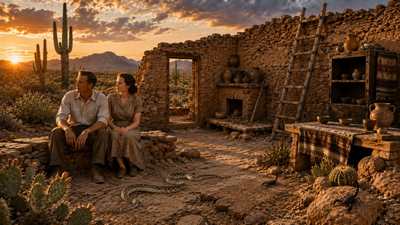
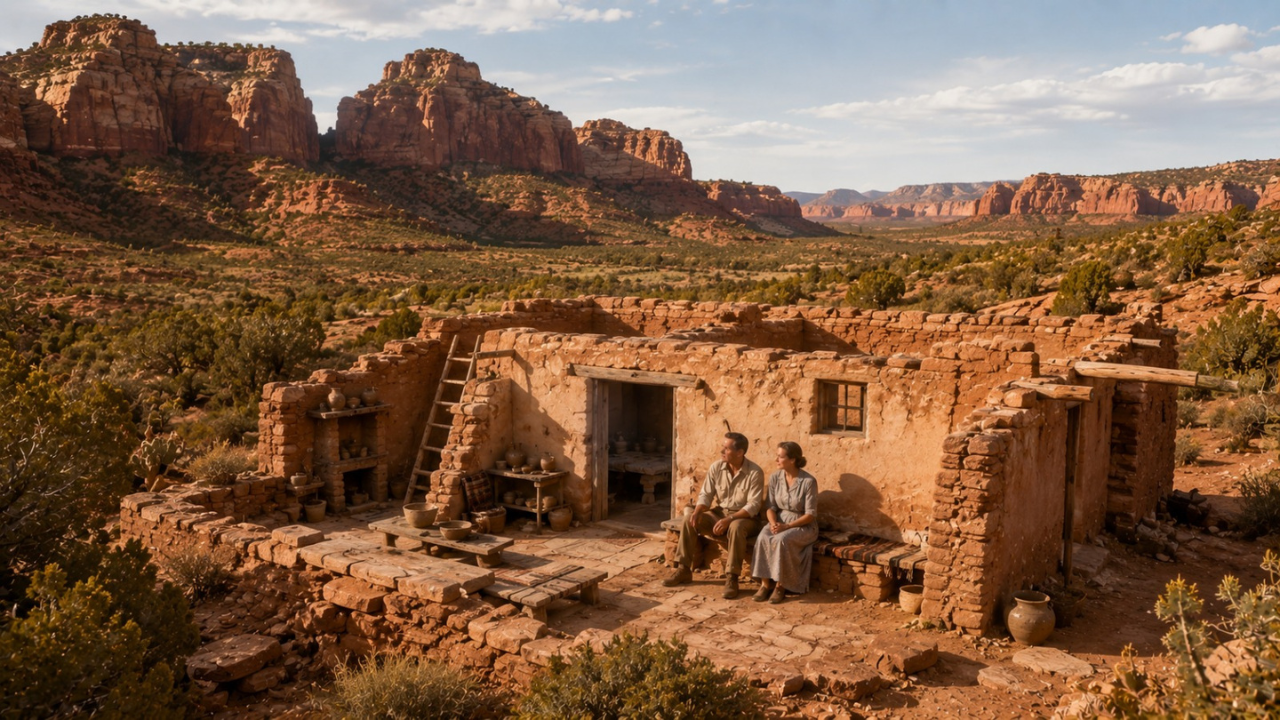
A honeymoon is usually associated with hotels, beaches or at least a room with four walls. For Sallie and Jim Brewer, it was something quite different. In 1934, the newly married Arizona couple arrived at Wupatki National Monument, where their temporary home was part of an ancient pueblo.
The building had stood for centuries. Their own quarters, by comparison, were scarcely finished. There were only two walls and no roof, with snakes and scorpions as their neighbours rather than the comforts expected.It was an unusual beginning to a marriage that would become closely tied to the early National Park Service. Over the years, the Brewers moved through eight Southwestern national monuments, living in pueblos, tents, cabins and other makeshift quarters while carrying out work that often extended far beyond their official duties.
But their extraordinary life in the monuments would not last forever. In 1945, after more than a decade of marriage, Sallie and Jim divorced, bringing an unexpected end to a partnership that had begun in one of the most unusual homes.
The Brewers’ unusual home in a remote national monument
The Brewers' move to Wupatki came at a time when living and working in the more remote parts of the National Park Service could mean accepting conditions that would seem extraordinary today.
Sallie was an archaeologist and an NPS employee in her own right. Jim was also an archaeologist, and their professional lives soon became intertwined with the scattered monuments of the American Southwest.As reported by the National Park Service (NPS), their first married home at Wupatki was hardly a conventional one. In August 1934, they were preparing to leave temporary quarters in a cook shack for a room in the pueblo itself.
The accommodation had two walls but no roof, while scorpions and snakes were among the unwanted neighbours.The ancient structure had been built centuries before the Brewers arrived. Yet for the young couple it was not simply an archaeological site but it was home. Their circumstances reflected a wider reality for women who accompanied NPS employees into isolated parks and monuments. These women were rarely on the payroll, but they frequently ended up doing work that helped keep the places running.
Life in remote monuments was far from comfortable
The Brewers did not spend their entire careers at Wupatki. Their marriage eventually took them to 8 Southwestern national monuments. Along the way, they experienced a succession of unusual homes and difficult living arrangements.They lived in a pueblo, tents, a Navajo hogan and a log cabin. At one stage, they even slept on the ground while travelling and working from a pickup truck. Only during the final two years of their time together in the monuments did they have what could be described as a traditional house.For park families of the period, inconvenience was only part of the problem. Water and electricity could be unreliable, transport was often essential for obtaining food and other supplies, and medical care could be many miles away. A broken vehicle could turn a routine trip into a serious problem.
AI Generated
Other women who helped keep remote parks running
In the early decades of the NPS, a ranger's wife could find herself taking on a remarkably broad collection of responsibilities.
She might cook for visitors, provide first aid, guide tourists, answer correspondence, keep records or help with educational programmes. Some maintained libraries and museums. Others recorded plants, birds and archaeological discoveries.The service informally recognised some of these women as “honorary custodians without pay” or “honorary rangers without pay”. The titles were unofficial, but they reflected the extent to which wives had become part of everyday operations.According to the NPS, Frank “Boss” Pinkley, who supervised the Southwestern National Monuments, was particularly receptive to the contribution made by park wives. He regarded them as partners in the work rather than simply dependants who happened to live at a monument. When Sallie Brewer married Jim and joined him at Wupatki, Pinkley joked that the service had managed to get two archaeologists for the price of one.The Brewers were not alone. At El Morro National Monument, Betty Budlong endured food shortages when transport failed and later ran a community library, guided visitors and prepared official reports. At Mesa Verde, Aileen Nusbaum faced months of isolation while contributing to archaeology, medical work and public outreach. At Yellowstone, Grace Albright helped establish a school for children living at the park.
Their experiences offer a glimpse of the wider role played by women who helped make remote national monuments function, often without formal NPS positions or pay.
A different kind of honeymoon story
The Brewers' roofless room at Wupatki has an almost comic quality when viewed from a distance. A young couple had just married and their new home had no roof, while snakes and scorpions shared the neighbourhood.But the episode was not simply an eccentric honeymoon anecdote.
It captures the conditions under which a generation of NPS families helped establish a working presence in places where infrastructure was scarce and distances were enormous.Sallie and Jim carried on with their archaeological work. Their time at Wupatki became one part of a career spent moving between eight Southwestern national monuments, adapting repeatedly to new surroundings. By the 1940s, the world around them was changing.
The Second World War drew men away from their usual positions, and women stepped into more formal NPS jobs. Some wives who had already spent years doing the work were well prepared to take over official responsibilities.After the war, the old arrangement gradually faded. The NPS continued to benefit from the skills of employees' wives, but women increasingly established clearer boundaries between their own careers and their husbands' government jobs.The honeymoon at Wupatki belonged to an earlier period, when the line between the two could be almost invisible. For the Brewers, a roofless room in a 900-year-old pueblo was where married life and professional life happened to begin at exactly the same place.