2 hours ago
4
2 hours ago
4

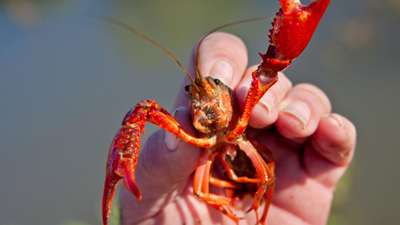
Fifty years ago, American red crayfish were introduced to Spain's Guadalquivir River basin, and they have since established a permanent presence. These aggressive invaders have wreaked havoc on local wildlife and disrupted aquatic ecosystems. Yet, local communities have successfully built an economy around their harvesting and processing. This dependence has sparked legal disputes, resulting in a compromise that permits regulated harvesting, balancing ecological health with economic viability.
Fifty years after two tons of American red crayfish were legally shipped into southern Spain to boost the rural economy, scientists have confirmed that the aggressive invasive species is in the Guadalquivir River basin to stay.In the spring of 1974, aristocrat and cattle rancher Andrés Bores Saavedra imported roughly 4,400 pounds (2,000 kilograms) of Procambarus clarkii, commonly known as the red swamp crayfish, from Louisiana. Bores intended to cultivate a fast-growing species in controlled aquaculture ponds near La Puebla del Río, hoping to stimulate Andalusia’s local economy and introduce a new regional culinary delicacy.Instead, the operation triggered the most destructive biological invasion in Spanish history.
Breach of containment and rapid spread
The species quickly breached its containment. Equipped with the ability to walk across dry land, dig tunnels over three feet deep, and survive severe droughts in low-oxygen conditions, the crayfish spread rapidly. Seasonal flooding across the Guadalquivir basin carried them into nearby irrigation canals, rice paddies, and the shallow wetlands of Doñana National Park.Females producing up to 500 eggs per brood, combined with a lack of natural local predators, allowed the crayfish to establish a permanent foothold across the region.
Early efforts to halt their spread through chemical treatments and physical trapping failed, as surviving populations quickly reproduced to fill the ecological void.The crustaceans proved astonishingly resilient. During hot, dry summer months when Andalusian marshes dry out completely, the animals seal themselves inside deep subterranean mud burrows. They enter a state of reduced metabolic activity, surviving underground for months until seasonal autumn rains flood the marshlands once again.
Decimation of native wildlife and habitat
The ecological impact on Doñana’s delicate ecosystem was swift and severe. The imported crustaceans carried Aphanomyces astaci, a water mould responsible for crayfish plague. While the red swamp crayfish remained largely immune, the disease decimated populations of the native white-clawed crayfish (Austropotamobius pallipes), virtually wiping them out from the Guadalquivir basin.As aggressive omnivores, the invasive crayfish stripped lakebeds of underwater vegetation, depriving native fish, amphibians, and aquatic invertebrates of essential food and shelter.
Studies by the Spanish National Research Council (CSIC) documented rapid declines in native water beetles, dragonflies, and indigenous fish species like the Iberian toothcarp following the invader's rapid expansion.By constantly churning up riverbed sediment while feeding, the crustaceans turned clear lagoons into murky, turbid water. This prevented sunlight from reaching submerged plants, halting photosynthesis and causing widespread microalgae blooms.Their deep burrowing also weakened the structural integrity of levees surrounding local rice fields, causing ongoing water loss throughout regional irrigation networks. In the early years of the invasion, rice farmers reported heavy crop losses as the animals severed young stalks, undermined bank stability, and drained flooded plots.
Adaptation and commercial shift
Yet, the invasion took an unexpected turn over the following decades.Local wildlife adapted to the influx. Birds including the grey heron, Eurasian spoonbill, white stork, and the endangered Spanish imperial eagle began preying heavily on the crayfish, turning the invader into a vital food source during severe droughts.
Carnivorous mammals such as the Eurasian otter and the endangered Iberian lynx also incorporated the abundant crustacean into their daily diets.Simultaneously, nearby human communities built a thriving economy around the pest. The municipality of Isla Mayor, located in Seville province, transformed into Europe’s primary hub for harvesting and processing red swamp crayfish. By the 1980s, a major commercial fishery had developed, processing tens of thousands of tonnes annually.A substantial portion of the catch is exported to Sweden and Finland for traditional summer crayfish parties, filling a deficit caused when European native crayfish stocks collapsed from disease. Local processing factories in Isla Mayor now generate millions of euros annually, employing hundreds of plant workers, boat captains, and trap operators.
Legal battles and permanent balance
This economic reliance sparked a fierce legal battle in 2016 when Spain’s Supreme Court added Procambarus clarkii to the official Catalog of Invasive Alien Species.
The ruling effectively banned the commercial sale, transport, and possession of live specimens, throwing the regional economy into immediate turmoil.Fearing the financial collapse of marshland communities, intense public pushback led lawmakers to amend Spain’s Natural Heritage Law. The legal adjustment permitted continued commercial harvesting and processing under strict industrial and sanitary guidelines, provided the live animals are processed immediately upon capture to prevent further spread into uninfested waterways.Half a century after Bores’s initial import, environmental researchers and management agencies unanimously agree that complete eradication of the species from the Guadalquivir basin is technically impossible. The region now exists in a delicate, permanent balance between environmental mitigation and local economic survival.