4 weeks ago
43
4 weeks ago
43

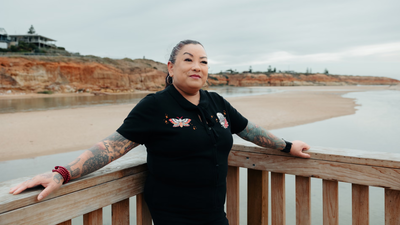
Chantal Doecke at Onkaparinga River in Adelaide
A commercial DNA test has helped an Australian woman discover that she has a twin brother living only a short flight away. Chantal Doecke was evacuated from Saigon as a newborn in 1975 and brought to Australia during Operation Babylift, an international effort to move children out of Vietnam as the war came to an end.
Doecke was taken to Adelaide in April 1975. She was carried onto the evacuation flight in a shoebox, with her umbilical cord still attached. For most of her life, she knew very little about her biological family or where she came from. Forty-nine years later, a DNA match revealed that she had a twin brother named Glenn, who was living in Brisbane. Doecke described the extraordinary discovery in a first-person account published by The Guardian as part of its “Experience” series.
Evacuated in a shoebox
In early 1975, Doecke’s adoptive parents answered an advertisement in an Australian newspaper asking families to adopt orphaned children fleeing the conflict in South Vietnam. When she arrived in South Australia, officials gave her new parents documents that listed her name as Le Thi Ha and her birth date as January. Her adoptive parents quickly realised that the date was probably wrong because she was clearly a newborn when she arrived.
However, the evacuation was happening in great confusion, making it difficult to check the details.Doecke grew up in Adelaide with her adoptive family, including an older adopted sister and three brothers. She described her childhood as happy, but her teenage years were more difficult. She experienced racial abuse and, for a time, tried to distance herself from her Asian background.The birth of her first daughter, Jade, in 1995 changed how she thought about her own identity.“Jade looks like me, but who did I look like?” Doecke recalled.Having a biological child gave her a connection to her own family history for the first time and made her more determined to discover where she came from.
Searching for her biological family
Doecke travelled to Vietnam in 2004, hoping to find more information about her past. She later attended a 2015 gathering of people who had been evacuated during Operation Babylift. These experiences helped her connect with others who had gone through similar events, but they did not provide many answers about her biological family.
She also took an early commercial DNA test in 2015. The results identified 12 biological cousins, but none of the matches developed into a close relationship or provided the information she was looking for.
The biggest breakthrough came almost a decade later.
A forgotten DNA account reveals a twin
In 2024, Doecke tried to take part in a television programme that helped people investigate family mysteries. The programme eventually lost its funding and did not go ahead, but the DNA sample she had submitted had already been tested.In July 2024, Doecke asked her daughter Brooklyn to log into the online account because she had almost forgotten about it.The results contained an extraordinary discovery: a very close biological match identified as a brother named Glenn.Doecke and her daughter then searched for Glenn on social media. His profile showed that he had an April birthday, which matched the month Doecke had arrived in Australia as a newborn.The discovery left Doecke struggling to understand how such a close relative could have remained unknown to her for nearly five decades.“How was it possible to be 49 and discover I had a twin who lived a 2.5-hour flight away in Brisbane?” she wrote.A producer connected to the abandoned television project helped the pair make contact.In November 2024, Doecke and Glenn spoke on the phone for two and a half hours. During the conversation, she told him that they were not simply brother and sister.
They were twins.
Meeting her twin for the first time
Two months later, Doecke travelled to Brisbane to meet Glenn in person. The meeting was deeply emotional. After almost 50 years without knowing that he existed, she suddenly found herself sitting face-to-face with her twin.“I could barely tear my eyes away from Glenn, constantly reaching out to touch him and remind myself he was real,” she wrote.The siblings spent two days together. For Doecke, the meeting provided a powerful sense of connection, but it also brought difficult emotions.Reuniting with a biological relative after nearly five decades does not automatically create an easy relationship. In the months after their first meeting, regular communication between the twins gradually became less frequent as both tried to deal with the enormous change in their lives.Doecke has said that the experience showed her that family reunions do not always result in a simple or perfect ending.
The unanswered questions of Operation Babylift
Doecke’s story also raises wider questions about Operation Babylift and the children who were removed from Vietnam during the final stages of the war.
More than 3,000 children were taken from Vietnam and sent to Western countries through the evacuation effort, including about 300 who were brought to Australia. The operation took place under extreme pressure, and records were sometimes incomplete or inaccurate.
Lost paperwork and rushed decisions meant that some children were separated from their biological families without reliable information about their origins.For adoptees such as Doecke, the consequences have lasted for decades.Her discovery has also left her asking how she and her twin could have been separated from their biological parents and then placed into different adoption systems without anyone later taking responsibility for what happened.Doecke has spoken publicly about her experience, including at official events such as a Refugee Week forum at the Australian Department of Home Affairs.She has continued to call for greater recognition of what happened to children affected by the evacuation.“I’m angry that no one has taken responsibility for our separation from our parents,” Doecke said.Her story is both a remarkable family discovery and a reminder of the lasting effects of decisions made during a time of war.After decades of uncertainty, Doecke finally found a biological relative who had been close by for much of her life. But the discovery has not answered every question. She still does not know what the future holds for her relationship with Glenn or whether she will ever learn more about their biological parents.“I don’t know what the future holds,” she wrote. “I’ve learned that reunions don’t always lead to a neat happy ever after. But I’ve also discovered how strong and persistent I am.”