55 minutes ago
2
55 minutes ago
2

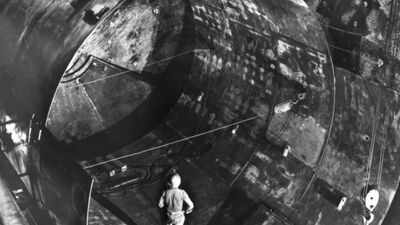
Solar Neutrino Experiment 1 used a tank filled with chlorine-based perchloroethylene to detect neutrinos from the Sun.
A gold mine in South Dakota once produced millions of ounces of precious metal. Today, the same site is being used to study some of the biggest mysteries in the universe.The Homestake Gold Mine in Lead, South Dakota, operated for 125 years before it closed in 2001.
According to Sanford lab, during its lifetime, the mine produced about 41 million ounces of gold and 9 million ounces of silver, making it the largest and deepest gold mine in North America at the time.The mine later took on a completely different when in 2006, businessman T Denny Sanford pledged $70 million to help revive plans for an underground research laboratory. Barrick Gold Corporation, which owned the Homestake property, donated land, while South Dakota committed more than $40 million to the project.
The efforts led to the creation of the Deep Underground Science and Engineering Laboratory, now known as the Sanford Underground Research Facility (SURF), in 2007.Today, SURF is the deepest underground laboratory in the United States, reaching 4,850 feet below the surface. Scientists from dozens of countries work there to study questions about the universe and Earth.
How mine became lab
The idea of using the mine for science was not new at that time.
Research had already begun there decades before mining even ended.In the mid-1960s, physicist Raymond Davis Jr built the Brookhaven Solar Neutrino Experiment deep inside the Homestake Mine. His experiment used a 100,000-gallon tank filled with perchloroethylene, a chlorine-containing dry-cleaning fluid, to detect neutrinos coming from the Sun. He later recieved the Nobel Prize in Physics in 2022 for detecting cosmic neutrinos.Neutrinos are extremely difficult to detect because they interact very weakly with matter. The experiment therefore needed protection from unwanted signals that could interfere with the measurements. The mine's great depth provided an environment suited to this type of research.Davis continued his work for nearly three decades in an underground area that later became known as the Davis Cavern. Scientists then began pushing for the site to be converted into a permanent underground research laboratory.
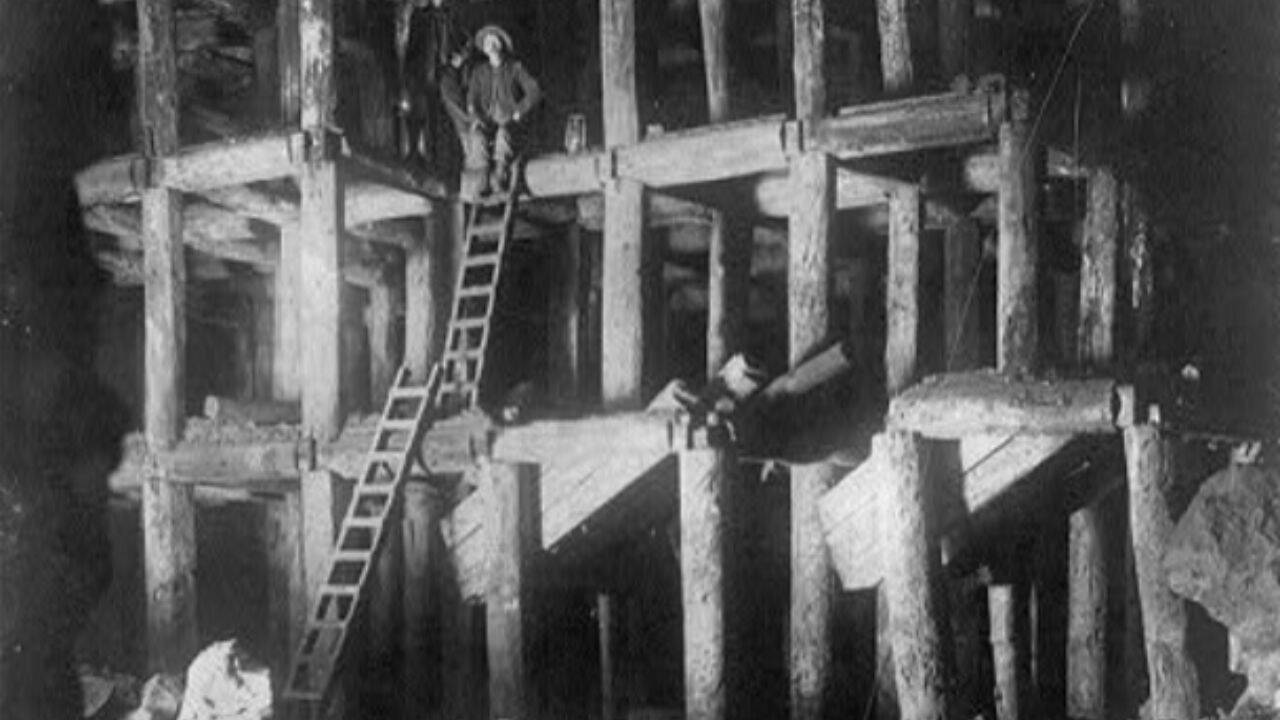
The historic Homestake gold mine (Photo: Library of Congress)
Search for dark matter
Once the site was developed as a modern research facility, scientists began installing major physics experiments deep underground. One of the first was the Large Underground Xenon, or LUX, experiment. It was installed on the 4,850-foot level and was designed to search for dark matter.Dark matter is a mysterious form of matter that scientists believe exists, but it has not been directly detected. It does not interact with light in the way ordinary matter does, making it difficult to study.In October 2013, after an initial 80-day run, LUX was found to be the most sensitive dark matter detector in the world. Further analysis confirmed its sensitivity in 2016, the same year the experiment was decommissioned.LUX was later followed by a second-generation experiment, LUX-ZEPLIN, or LZ. It began operating in 2021 and was announced as the world's most sensitive dark matter detector when its first results were released on July 7, 2022.The underground setting remains central to these experiments. SURF's deep location allows scientists to conduct highly sensitive searches in an environment protected by thousands of feet of rock.
Looking for rare radioactive decay
Another major experiment at SURF has been searching for something even more elusive. The Majorana Demonstrator operating from 2015 to 2021, was used to search for neutrinoless double-beta decay, a rare type of radioactive decay that has never been observed.Finding this decay could help explain why matter exists in our Universe. The experiment's final results, published in early 2023, showed that the techniques used by the collaboration could be applied to a much larger experiment.The collaboration is now working with another germanium experiment to develop the Large Enriched Ge Experiment for Neutrinoless ββ Decay, or LEGEND.

The same year Davis received the Nobel Prize, the Homestake Mine closed.
Research beyond physics
The extreme conditions underground have also opened the door to research outside particle physics.Scientists have studied microbial lifeforms living in the underground environment.
Some of this research has been linked to questions about medicines, biofuels and carbon sequestration. SURF says research carried out there has also helped inform the search for life on Mars.Geologists are also studying how hot fluids move through fractures in underground rock. The research could contribute to understanding geothermal energy and its potential for clean energy generation.The underground spaces are also used for engineering research and training. SURF supports some commercial research and development, including Caterpillar's MineStar tracking technology. Its underground areas are also used for civil and mining engineering training and mine rescue operations.