1 hour ago
2
1 hour ago
2

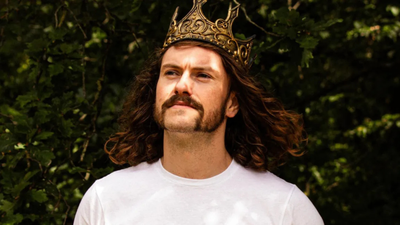
A medical trial that Iain Ward joined in 2019 led to an unexpected discovery that changed his life. An MRI scan revealed a brain tumour, although doctors initially believed it was benign.
Around six months later, further scans showed that the tumour was growing. Ward underwent brain surgery and was diagnosed with glioblastoma in 2020, according to reporting based on his account. He later became known online as “The King of Chemo” while sharing his experience of cancer treatment, running and fundraising. Rather than repeatedly asking followers for donations, he has built an online audience and worked with sponsors who contribute directly to charities.
Ward has completed numerous endurance challenges and said he had raised more than £350,000 by 2025. His long-term goal is to surpass the marathon fundraising record of £2,330,159.38.
A medical trial unexpectedly revealed the brain tumour
Ward's cancer was discovered while he was taking part in medical trials to earn extra money. Before one trial in 2019, he underwent an MRI scan of his brain even though he had no symptoms or warning signs. Doctors initially believed the tumour was benign, meaning Ward did not immediately face a cancer diagnosis.
About six months later, however, another scan showed that the tumour had grown. Ward said doctors then believed it was likely to be an aggressive brain cancer.
The discovery was particularly unusual because he had not sought medical attention for headaches or other symptoms. The Independent reported that Ward was diagnosed with glioblastoma in 2020 after the tumour was found to be growing.
He underwent awake brain surgery
Ward underwent awake brain surgery as part of his treatment.
He has described being conscious during the procedure and communicating with medical staff while surgeons worked on his brain. Awake brain surgery can allow doctors to monitor important functions during an operation, with patients asked to speak or perform certain tasks depending on the area being treated. Marie Curie's 2026 interview with Ward records his description of being fully conscious during the operation and actively speaking or engaging with doctors.
The surgery was followed by his diagnosis of glioblastoma, an aggressive brain tumour. Brain Research UK also identifies Ward's condition as glioblastoma and describes the tumour as aggressive and invasive.
How Iain Ward became ‘The King of Chemo’
Ward began sharing his experience of cancer treatment and everyday life online, eventually becoming known as “The King of Chemo”. His content combines cancer awareness with fitness, running, humour and fundraising rather than focusing exclusively on his illness.
Ward has said that he wants to discuss his condition openly but does not want every aspect of his life to revolve around cancer. His social-media presence grew substantially as he documented his challenges and treatment.
By 2025, reporting said he had built a following of more than 14 million people across social-media platforms. The online identity has since become closely associated with his fundraising work and his efforts to raise awareness about living with a terminal illness.
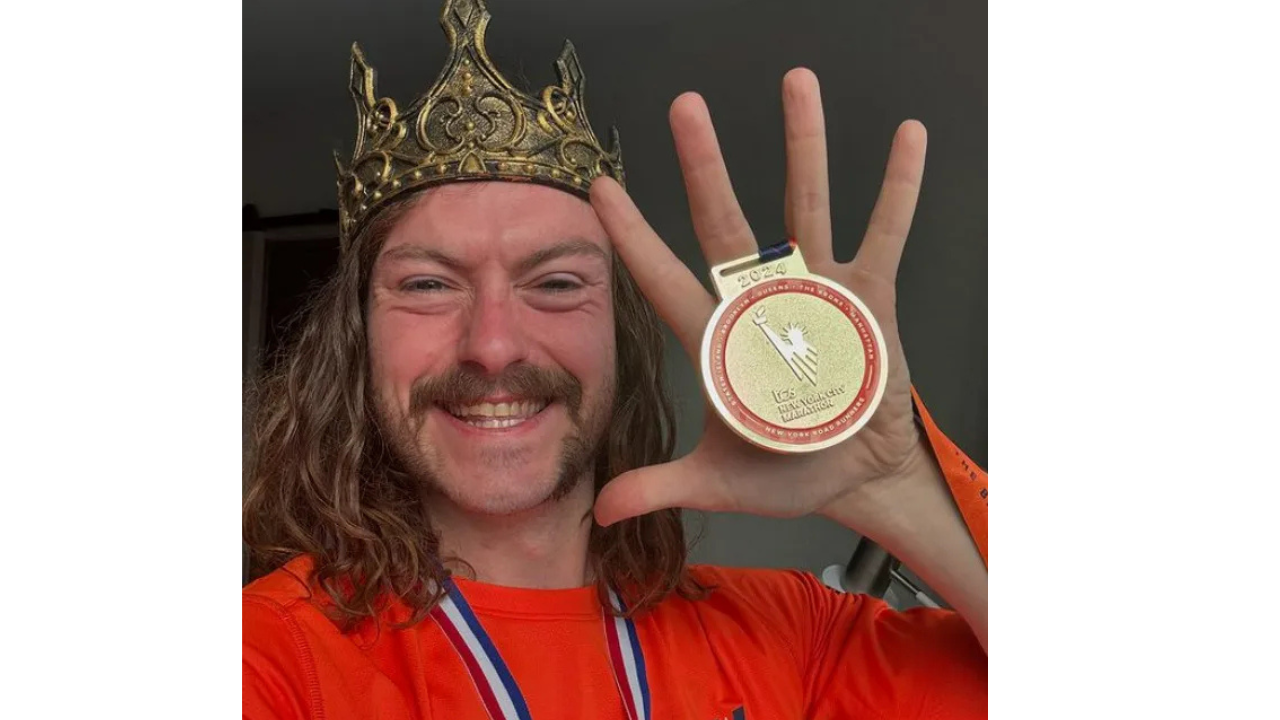
The marathon fundraising record he wants to break
Ward's ambition to break the marathon fundraising record began shortly after his brain surgery. He told Marie Curie that within two days of the operation he searched for the world record for the most money raised through a marathon and decided that it would become his life goal. The target is not a record for speed or distance. It concerns the amount of money raised for charity by an individual marathon runner. The current benchmark is held by Reverend Steve Chalke, who raised £2,330,159.38 for charity through the 2011 London Marathon.
Ward has said he wants to surpass that amount through his own fundraising campaign.
His fundraising model puts sponsors at the centre
Ward has developed a fundraising approach based largely on sponsorship rather than asking individual followers to donate money. He encourages people to follow and engage with his social-media accounts while sponsors provide the financial contributions. He has said sponsors donate directly to charities instead of giving the money to him.
This model allows an online action, such as gaining new followers or completing a challenge, to become linked to a charitable contribution.
Ward has described the approach as an attempt to raise money without repeatedly asking people for donations. It has become a central part of his long-term effort to break the marathon fundraising record.
He had raised more than £350,000 by 2025
Ward's fundraising had already generated more than £350,000 by 2025, according to figures he gave to PA Real Life.
The money came from numerous charitable campaigns and endurance challenges carried out since his diagnosis. That figure represented a substantial amount of money raised for charities, but it was still considerably below the £2.33 million record he was pursuing. Ward's fundraising has therefore developed as a long-term campaign involving different events, sponsorships and charitable partnerships rather than one attempt to collect a large amount through a single race.
His previous fundraising provides the foundation for his much larger ambition of eventually surpassing the existing marathon record.
He completed a 52-mile treadmill challenge during chemotherapy
One of Ward's early endurance challenges involved running 52 miles on a treadmill over 12 hours, which he described as a “double marathon”. He completed the challenge in 2021 while receiving chemotherapy. Ward told PA Real Life that he had been becoming sick roughly every 15 minutes around the time of the challenge, although he said he was able to complete the run on the day itself.
The event raised more than £1,000 and became one of the early examples of Ward combining extreme endurance activities with his fundraising work.
The challenge also demonstrated how he continued running while undergoing cancer treatment.
He took on 32 half-marathons in 32 days
In August 2025, Ward completed a particularly demanding challenge involving 32 half-marathons on 32 consecutive days across all 32 counties of Ireland. He also wore a 32lb weighted vest during the challenge.
Ward said the challenge raised £7,000 and counting. The project combined endurance running with a clear numerical theme and gave him a daily event around which he could create social-media content. Unlike a single marathon, the 32-day format kept the fundraising campaign active for more than a month.
It also demonstrated the scale of the physical challenges Ward was prepared to undertake while continuing to live with and document his illness.
Six major marathons formed part of his 2024 campaign
Ward's 2024 running programme included six major marathons: Boston, London, Austin, Berlin, Chicago and New York City. According to PA Real Life reporting, he raised around £100,000 through the six-race campaign. Taking part in multiple major marathons in one year gave Ward several opportunities to combine competitive running with fundraising and online content. The races also formed part of a broader period in which endurance running became increasingly central to his public profile.
Rather than treating one marathon as the only important event, Ward used a series of races and challenges to maintain attention around his charitable work throughout the year.
A Brain Research UK campaign reached £20,000
A later campaign demonstrated how Ward's online following could be converted into a direct charitable contribution through sponsorship. Brain Research UK partnered with Ward for a two-week campaign in which an anonymous sponsor pledged £2 to the charity for every new subscriber to Ward's YouTube channel, up to a maximum of £20,000.
The charity confirmed that the full £20,000 target was reached. The money was intended to support neurological research, including work relating to brain tumours.
The campaign was consistent with Ward's broader fundraising model because his followers were not individually asked to donate money. Instead, their participation in growing his YouTube audience triggered a contribution from the sponsor.
His memoir documents his experience
Ward has also documented his story in his memoir, Terminally Optimistic.
The book covers his life, cancer experience and the challenges that followed his diagnosis. Ward told Marie Curie that he is donating the money from the book that comes to him, apart from what he needs for expenses such as rent, to charity. The memoir therefore forms another part of his fundraising approach. Instead of relying on direct appeals to readers for donations, Ward has linked the commercial proceeds he receives from his own story to charitable giving.
The book also gives him a longer format in which to describe experiences that are presented in shorter form through his social-media accounts.
His online audience has become part of the campaign
Social media has played a central role in Ward's fundraising strategy. His accounts allow him to document training, endurance challenges, cancer treatment and charitable campaigns for a large audience. That audience can then attract sponsors who want to connect their contributions to specific campaigns.
The Brain Research UK subscriber challenge is one example of this system, with audience growth directly linked to a sponsor-funded donation.
Ward's approach means the fundraising activity can continue between major marathons rather than being limited to race day. His online presence has consequently become both a way of sharing his experience and a mechanism for connecting sponsors and charities with a large public audience.
The record is £2,330,159.38
The marathon fundraising benchmark Ward is pursuing is £2,330,159.38. Reverend Steve Chalke raised that amount through the 2011 London Marathon, where he ran for Oasis UK. London Marathon Events currently identifies Chalke as the person who has raised the highest amount through an individual London Marathon entry, and describes the figure as the record for the most money raised for charity at the London Marathon and, indeed, at any marathon worldwide.
Ward has said he has met Chalke and received advice from him about attempting to break the record. Surpassing the figure would therefore require Ward to raise more than £2.33 million through his marathon fundraising campaign.
His campaign has developed over several years
Ward's record attempt is the result of several years of endurance challenges, fundraising campaigns and social-media work rather than a single event. His activities have included major international marathons, the 52-mile treadmill challenge and the 32-day Ireland challenge.
Each project has provided an opportunity to generate charitable funding while also producing content for his online audience. This longer approach is important because the record he is targeting is substantially higher than the amount he had raised by 2025.
Ward has continued to describe breaking the record as his long-term purpose, using sponsorships and audience growth as the main mechanisms for moving towards the target.
He continues to live with a terminal brain tumour
Ward continues to live with glioblastoma and has spoken publicly about the uncertainty surrounding his condition. The Independent reported in 2025 that he was having regular MRI scans to monitor the tumour. He has also discussed the possibility of further treatment if scans show changes, although individual treatment decisions depend on medical circumstances. Brain Research UK describes glioblastoma as an aggressive and invasive brain tumour and notes that it remains incurable.
Ward has continued to run, create content and raise money while living with the condition. His public account therefore combines the realities of a serious illness with his decision to continue pursuing demanding personal and charitable goals.
A marathon fundraising record remains his long-term target
Ward's journey has taken him from an unexpected tumour discovery during a medical trial to brain surgery, cancer treatment, endurance running and large-scale charitable fundraising.
He had reported raising more than £350,000 by 2025, while later campaigns such as the Brain Research UK partnership generated additional funds for neurological research. The larger goal remains the marathon fundraising record of £2,330,159.38 set by Steve Chalke in 2011.
Ward's strategy is built around sponsors, social-media engagement and endurance challenges rather than repeatedly asking individual followers for donations. Marie Curie's 2026 interview confirms that breaking the marathon fundraising record remains his stated life goal.