
 5 months ago
35
5 months ago
35

8 minutes ago
Daniel De SimoneJerusalem

 Getty Images
Missiles launched by Iran and Hezbollah in Lebanon have killed 23 people in Israel during the war
When Israel's Prime Minister Benjamin Netanyahu announced the start of the Israeli-US military campaign against Iran at the end of February, he was bullish.
But the tone of the statement from his office acknowledging the ceasefire announced overnight was far more muted and made clear the decision was made by President Donald Trump.
There was also a marked contrast with the triumphal statements from the US and Iran, both of which claimed major victories after five weeks of war.
In remarks broadcast on Wednesday night, Netanyahu said the ceasefire was not the end and that Israel had more goals to achieve, either by agreement or renewing the fighting.
Where does the war leave Israel and its prime minister?
At the start of the war, Netanyahu said the "goal of the operation is to put an end to the threat from the Ayatollah regime in Iran" and that "this operation will continue as long as necessary".
But these goals have not been achieved: Iran's armed forces have still been fighting and the governing clerical establishment remains in place, although Supreme Leader Ayatollah Ali Khamenei and other senior figures have been killed in US-Israeli strikes.
The status of Iran's nuclear programme and stockpile of enriched uranium also remain unresolved. And while Iran's arsenal of ballistic missiles has been degraded, it has continued to launch barrages of them towards Israel throughout the war.
There were missile alerts and the sound of explosions here in Jerusalem overnight, even after Trump announced the deal, with the Israel Defense Forces (IDF) saying multiple missiles were fired from Iran.
Netanyahu appears to have overestimated the ability of Israel and the US to defeat Iran's forces and bring about a change of its ruling system.
Anshel Pfeffer, a veteran Israeli journalist and biographer of Netanyahu, said the prime minister had only referred to a "suspension" of hostilities, ahead of talks between the US and Iran, but that he had not publicly accepted the war was over.
He said Netanyahu's failure to achieve his stated objectives was "not good" for him, and that another issue could be "some kind of rift opening up with the Americans" if the ceasefire was being agreed without Israel having much of a say.
Until now, there were public displays of unity between Netanyahu and Trump, but their goals might not now fully align.
A full end to the war, if it is based on the "10-point proposal from Iran" that Trump has referenced, will be widely seen as a strategic success for Tehran, given that is constitutes a list of demands by its leadership.
Yair Lapid, leader of the opposition in Israel, said there had "never been such a political disaster in our entire history" and that "Israel was not even at the table when decisions were made concerning the core of our national security".
He added: "The army did everything they asked of it, the public displayed incredible resilience, but Netanyahu failed politically, failed strategically, and did not meet any of the goals he himself set."
It is an election year in Israel, meaning Netanyahu could potentially lose power within months.
 Reuters
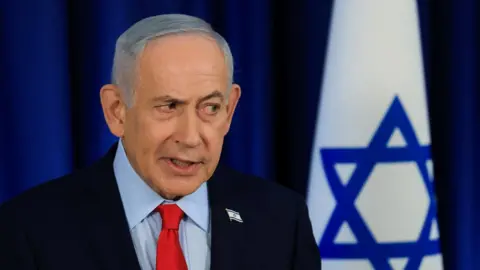
Benjamin Netanyahu said the goal of the Israeli-US operation was to "put an end to the threat" from Iran
Shira Efron, the Israel policy chair at the US-based RAND corporation, said that Netanyahu "promised Israelis that this campaign would lead to the end of the Islamic regime, that by cutting the head of the snake, this war would remove an existential threat from Israel."
"Yet, the snake turned into a hydra."
She said the war was a "hard" sell to the Israeli public because there had been no regime change in Iran, the Iranians still had enriched uranium, and the Iranian missile threat remained.
"The missile programme still exists and, for Israelis, whether 70 or 80 per cent of capabilities have been degraded, there hasn't been a discernible difference for those sheltering [from missiles] over the last five weeks."
But Yossi Kuperwasser, who worked in Israeli military intelligence and is now director of the Jerusalem Institute for Strategy and Security (JISS), said Israelis should differentiate between "practical achievable goals" and "all kinds of wishful goals that we all wanted to see happening, but we couldn't guarantee".
He said the "achievable goals were all completely achieved" because Iran's nuclear and ballistic missiles production facilities were hit, and its military capabilities and leadership were "decimated".
He said the "wishful goals", which had not occurred, were causing regime change by triggering a popular uprising, removing highly enriched uranium from Iran by military force, and putting an end to Iran's capacity to launch missiles.
It is possible that far-right members of Netanyahu's coalition government will reject any ceasefire agreement or an end to the war, creating a political challenge for him.
Wednesday is a public holiday in Israel for the end of Passover, which will mean a slower reaction to the ceasefire from some members of the government.
 Reuters
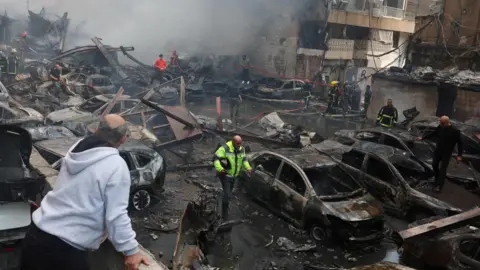
Israel carried out a wave of air strikes across Lebanon following the US-Iran ceasefire announcement
A stark conflict over whether the ceasefire deal covers Lebanon has also emerged, which is putting the entire ceasefire at risk.
Iran and Pakistan's Prime Minister Shehbaz Sharif, who helped negotiate the ceasefire, both said the deal covered Lebanon, where Israel has been fighting the Iranian-backed armed group Hezbollah.
But Netanyahu's office said the ceasefire "does not include Lebanon", and the IDF carried out on Wednesday what it called the "biggest strikes" in Lebanon since the recent conflict began in March.
Lebanon's government said the strikes have killed at least 112 people and wounded over 830 others across the country, including in the capital Beirut.
Later, Trump also told a PBS journalist that Lebanon was not part of the ceasefire agreement "because of Hezbollah". When asked about the Israeli strikes, he replied: "It's part of the deal - everyone knows that. That's a separate skirmish."
But Iran's Revolutionary Guards issued a "stern warning" to the US and Israel, saying they would respond if Israel did not immediately end "aggressions against dear Lebanon".
In recent weeks, Israel has sent ground forces into southern Lebanon and has said it will keep control over the area south of the Litani river to create what it has called a "security buffer zone".
Israeli forces have been destroying homes and villages in the area, where it the IDF says Hezbollah fighters are active, and hundreds of thousands of people have been displaced. Israel has said they will not be allowed to return until Hezbollah has been removed.
Hezbollah fired rockets into Israel on the third day of the conflict in retaliation for the killing of Khamenei and has continued to do so over the past few weeks.
The Lebanese government, and countries including the UK, France, Italy, Germany, and Canada, have all called for the ceasefire to apply in Lebanon.
Lebanon's President, Joseph Aoun, said Israel had repeatedly demonstrated contempt for "all international laws and norms".
How Netanyahu responds, and whether Trump backs him, will be key to the fate of the ceasefire.


