49 minutes ago
2
49 minutes ago
2

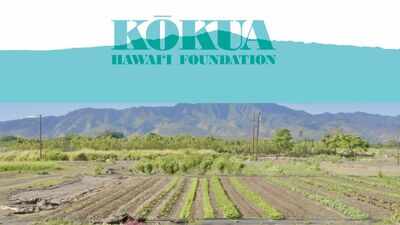
Photo credit: Kōkua Learning Farm
In 2019, musician Jack Johnson’s Kōkua Hawaiʻi Foundation acquired neglected farmland on Oʻahu with a plan to turn it into a place for education, food production and community involvement.
Six years later, the Kōkua Learning Farm had reported harvesting more than 40,000 pounds of produce and welcoming over 2,200 students on educational field trips. The figures were included in a document submitted to the City and County of Honolulu, while the foundation’s Kōkua Learning Farm website describes the site’s wider work in farming, composting, agroforestry and food education. What began as a neglected agricultural property has gradually become a working classroom where children, teachers, volunteers and young farmers can learn how food is grown.
From neglected land to a working farm
The Kōkua Learning Farm was created on land that had not been fully used for many years. Rather than treating the property simply as a place to grow crops, the foundation imagined a broader community resource that could connect people with Hawaiʻi’s food systems.The farm’s work reflects the Kōkua Hawaiʻi Foundation’s focus on environmental education and sustainable living. Its programmes encourage students to understand where food comes from, how soil is maintained and why healthy ecosystems are important to farms and communities.
Turning neglected land into productive farmland required more than planting seeds. The property needed preparation, infrastructure, soil care and a long-term plan for managing water, crops, pathways and educational spaces. The gradual transformation allowed the organisation to build the farm around practical learning instead of creating a purely decorative garden.By the sixth year, the site had become a functioning agricultural operation.
More than 40,000 pounds of produce had been harvested, showing how much food can emerge when land is restored with consistent care and community support.
A place where students learn by doing
One of the farm’s most important roles is educational. More than 2,200 students had visited the property on field trips during the six years covered in the city document.The visits are designed to help students experience the food system directly. Instead of learning only from textbooks or classroom diagrams, children can see crops growing, examine soil, observe insects and discuss what happens to food scraps after meals.The foundation says field trips can include lessons on food production, compost, agroforestry and pollinators. Activities are adapted according to the age of the students, the size of the group and what is happening on the farm during the visit.That flexibility is important because farming is seasonal. A group visiting during planting will have a different experience from one arriving during harvest. Students may encounter seedlings, mature crops, composting projects, fruit trees or pollinator habitats, depending on the time of year.
Hawaiian knowledge and ecological learning
The farm’s educational approach is also connected to Hawaiʻi’s relationship with the ʻāina, or land. The Kōkua Learning Farm website describes a Hawaiian Garden as the final piece of the farm’s development. The garden was designed through a collaborative process involving experts and community organisations.Such spaces can help students understand that agriculture is not only about producing food. It is also about caring for soil, water, plants, animals and the cultural knowledge connected to a place.The farm’s work includes agroforestry, a method that brings trees and crops together in a managed system. It also includes lessons about compost and pollinators, two parts of agriculture that are often overlooked when people focus only on the food found in markets.By bringing these subjects together, the farm gives visitors a more complete picture of how food is produced. A tomato or leafy green is not just the result of a seed and sunlight.
It depends on soil health, water, pollinating insects, farm workers and careful management of the surrounding environment.
Volunteers help keep the farm growing
The transformation of the property has also depended on public participation. The foundation hosts monthly community workdays, generally on the first Saturday of the month.Volunteers may help with mulching, weeding, collecting ʻōpala, or waste, working in the nursery, planting and harvesting.
These tasks are ordinary parts of farm work, but they also give community members a direct role in maintaining the property.Private workdays are available for schools, businesses, churches, clubs, military groups and other organisations. These gatherings allow groups to work together outdoors while learning how much regular labour is needed to care for productive land.The farm also provides opportunities for individual volunteers during weekdays.
This creates a connection between the property and the wider community, ensuring that the site is supported by more than a small staff.
A training ground for young farmers
The Kōkua Learning Farm is not limited to younger children. It also runs a youth internship programme for students in grades nine through twelve.High school students from public schools, private schools and homeschool programmes can apply to become part of the cohort. Participants meet weekly and receive practical training as mahiʻai, or farmers.The programme covers agroecology, crop cultivation, fruit and vegetable production, soil health maintenance and culinary exploration. Students are able to see how farm decisions affect the food that eventually reaches a kitchen or table.The experience can also introduce young people to careers and forms of work they may not encounter in a conventional classroom. Farming, food education, environmental management and community organising all require scientific knowledge, physical effort and cooperation.
More than a production site
The 40,000 pounds of produce represent the farm’s visible output, but its impact is not limited to the weight of its harvest. The field trips, volunteer days, educator trainings and youth internships create a network of learning around the land.The foundation offers educator training connected to its ʻĀINA In Schools curriculum for kindergarten through sixth-grade students. These sessions give teachers hands-on opportunities to explore lessons that can later be used with students.That approach allows the farm’s influence to extend beyond visitors. A teacher who learns about composting, soil health or food production can take those ideas back to a school and introduce them to a much larger group of children.The site also hosts community events, farm workdays and farm-to-table activities. These programmes help connect food production with cooking, culture and shared community experiences.
A long-term vision for the land
Six years after the foundation acquired the neglected farmland, the Kōkua Learning Farm had become an example of what long-term restoration can achieve. The property was producing food, receiving school groups and giving volunteers a place to work with the land.Its progress also shows that restoring farmland is not an overnight project. The results depend on repeated tasks such as planting, harvesting, mulching, composting, repairing infrastructure and teaching visitors how the system works.Jack Johnson’s connection to the foundation has helped bring public attention to the project, but the farm’s development has relied on educators, farmers, students, volunteers and community partners. Their combined work has turned an underused property into a living classroom.For the children who visit, the most lasting lesson may be simple. Food does not begin on a supermarket shelf. It begins with land, water, seeds, people and the patient work of caring for all of them.