4 weeks ago
30
4 weeks ago
30

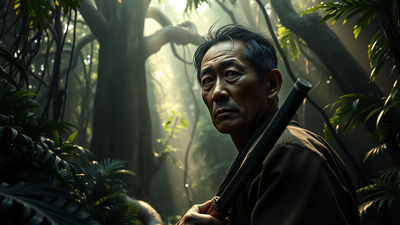
In March 1974, a gaunt, uniformed figure walked out of the jungle on Lubang Island in the Philippines and handed over his sword, ending a war that had, for him, never actually stopped.
Hiroo Onoda was a Japanese army lieutenant who had been sent to Lubang late in the Second World War with orders never to surrender under any circumstances. Nearly three decades after Japan's formal surrender in 1945, Onoda was still there, convinced the war was ongoing, and he refused to lay down his weapons until the one thing his orders required actually happened, a superior officer arriving in person to formally release him from duty.
Why Onoda refused to believe that World War II had ended
According to the United States National Archives, Onoda was a Japanese army lieutenant sent to Lubang Island late in the war to help resist General Douglas MacArthur's anticipated return to the Philippines, and he had been given explicit orders to continue resistance under no circumstances. When leaflets and messages announcing Japan's surrender were dropped over the area in the years that followed, Onoda and the small group of soldiers with him dismissed them as enemy propaganda designed to lure them out of hiding.
He continued his guerrilla campaign on the island for decades, surviving off the jungle and preying on the resources of local islanders in order to stay alive.
How Onoda finally came to be found
Onoda's long standing refusal to surrender might have continued indefinitely had it not been for a chance meeting with a young Japanese traveller. According to Nippon. com's account of the events, Onoda was discovered on Lubang Island by the adventurer Norio Suzuki in February 1974, but he still would not accept that Japan had lost the war, insisting he would only stand down once his actual commanding officer arrived to relieve him of his post directly.
This was not simple stubbornness on Onoda's part but a rigid adherence to the specific chain of command he had been given decades earlier, a system that required him to receive orders only from that particular officer rather than from any government announcement, leaflet or stranger claiming the war was over.
The moment Onoda's original orders were finally rescinded
Word of Suzuki's encounter eventually reached Japanese authorities, who tracked down Onoda's former commanding officer, Yoshimi Taniguchi, who had since left military life behind entirely and become a bookseller.
According to Nippon. com, Taniguchi travelled to Lubang Island in March 1974 and persuaded Onoda to finally surrender, formally relieving him of the standing orders that had kept him fighting for nearly thirty years.
Onoda handed over his sword, his rifle and his remaining ammunition, bringing to a close what remains one of the longest individual continuations of wartime combat activity following any officially ended conflict in modern history.
Why this case reveals so much about how orders actually worked
What makes Onoda's story genuinely striking is not simply how long he survived in the jungle, but how precisely his conduct followed the strict military logic he had been given at the outset of his deployment. He was not simply lost or unaware of world events in any general sense, he had received leaflets and messages announcing the war's end over the years and consistently judged them, based on his training, to be enemy attempts at deception.
Only a direct order delivered through what he considered his legitimate chain of command, arriving in the specific person of his former superior officer, was sufficient to override the original instruction he had carried with him since 1944, illustrating just how absolutely and literally that original command had been internalised.
A return marked by both celebration and controversy
Onoda's surrender and return to Japan drew enormous public attention at the time, and he was formally pardoned for his wartime actions on Lubang by the Philippine government of the day.
That pardon, however, was not universally welcomed, since Onoda's decades long guerrilla campaign on the island had resulted in genuine harm to local Filipino residents over the years, and accounts of his return note that this history left some in the local community angered by the decision to grant him a pardon rather than hold him accountable for actions carried out long after the war had actually concluded.
What Onoda's story reveals about the aftermath of war
Onoda was not the only so called Japanese holdout to continue fighting years after the war's official end, but he became by far the most widely known example of the phenomenon. His story has since been documented extensively, including through contemporaneous American diplomatic records held by the National Archives, and it continues to serve as a striking illustration of how deeply military obedience and a rigid chain of command could shape an individual's actions long after the broader conflict they were fighting in had already been resolved everywhere else in the world.