5 months ago
30
5 months ago
30

Koh Ewe, Shaimaa Khalil,Tokyo correspondentand Peter Hoskins,Business reporter

 AFP via Getty Images
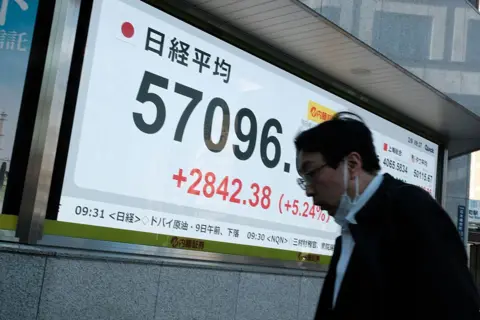
The Nikkei index rallied by more than 5% in early trade on Monday, briefly crossing the 57,000 mark for the first time ever
Japanese stocks surged to a record high as markets opened on Monday morning, as Prime Minister Sanae Takaichi's Liberal Democratic Party (LDP) basked in a historic election victory.
The LDP secured 316 out of 465 seats in Sunday's election, the first time a single party has won a two-thirds lower house majority since Japan's parliament was established in its current form in 1947.
The Japan Innovation Party, the LDP's coalition partner, won in 36 more constituencies, taking their combined total to 352 seats.
The resounding mandate is a gamble that paid off for Takaichi, who now faces the challenge of reviving Japan's moribund economy and tackling cost-of-living woes.
The Nikkei index rallied by more than 5% in early trade on Monday, briefly crossing the 57,000 mark for the first time.
The LDP's decisive win will help Takaichi advance her pro-business policies without having to negotiate extensively with opposition parties.
Takaichi told reporters on Sunday that she would pursue a "responsible yet aggressive" fiscal policy and would not reshuffle the Cabinet, which was formed less than four months ago.
Japan's first female prime minister called the snap election last month, just a few months after taking office in October. Her success is in marked contrast to her two predecessors, under whom the party lost its parliamentary majority due to corruption scandals and rising costs.
Markets commentators say Takaichi's policies could boost the Japanese economy.
The election outcome and upcoming moves like "stimulus, tax tweaks, and deregulation" will be "additional fuel for an existing bull trend", investment analyst Yuka Marosek told the BBC.
Historically low inflation in the country has made it very sensitive to the rising cost of living over recent years.
At this election, voters at polling stations told the BBC that they were worried about the increasing costs of groceries and rent.
The economy is also under pressure from the country's ageing population, which has seen a shrinking workforce and ballooning social care costs.
Takaichi has pledged to cut taxes and boost the Japanese economy through more spending - though where that money will come from is another big concern, given Japan's high government debt. Critics warn this could deepen instability in Japan's already fragile economy.
"We bear an extremely heavy responsibility to focus on steadily delivering on the campaign pledges we have made," Takaichi said on Sunday as her party's victory became clear, Kyodo reported.
The LDP had lost its parliamentary majority under Takaichi's predecessor Shigeru Ishiba. And Takaichi banked on her personal appeal to turn the LDP's lost fortunes around.
She has consolidated support among the LDP's conservative base by reviving long-dormant goals like revision to Japan's pacifist constitution and emphasising traditional values.
But she has also connected with younger voters in a way not seen before: her handbags and pink pens have become unlikely zeitgeist items.
US President Donald Trump congratulated Takaichi on her victory, writing on Truth social that it was an "Honor" to endorse her ahead of the election.
"The wonderful people of Japan, who voted with such enthusiasm, will always have my strong support," Trump said.
Just one week after Takaichi took office in October last year, Tokyo rolled out the red carpet for Trump when he visited Japan. It was her diplomatic debut, and the optics were striking: fists pumping as the US president praised her in front of thousands of US soldiers.
Takaichi is due to travel to Washington in March for a second meeting with Trump.
Additional reporting by Osmond Chia and Adam Hancock