3 months ago
35
3 months ago
35

9 minutes ago
Asha Pateland Isaac Ashe,East Midlands

 Nottinghamshire Police
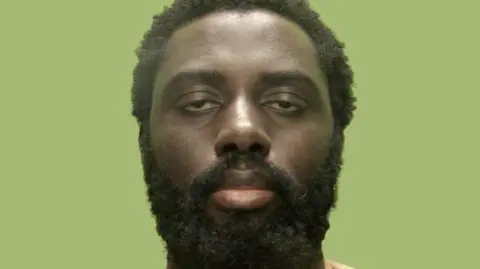
Valdo Calocane is currently serving an indefinite hospital order in a high-security facility
A mentally ill man who carried out fatal attacks in Nottingham "deceived" and "out-manoeuvred" medical staff, a former nurse has told a public inquiry.
Valdo Calocane, who was diagnosed with paranoid schizophrenia, stabbed to death Barnaby Webber, Grace O'Malley-Kumar and Ian Coates, and tried to kill three others, in Nottingham on 13 June 2023.
The killer had a known history of non-compliance to taking his medication while he was under the care of Nottinghamshire Healthcare NHS Foundation Trust in the years before the attacks.
Gary Carter, who resigned from the trust in 2025, told the Nottingham Inquiry trust services "failed" to deal with Calocane and manage his care.
Carter, who the inquiry heard "faces disciplinary action", was made Calocane's care co-ordinator (CCO) in April 2022 until September 2022, when Calocane was discharged due to a lack of engagement.
He was part of the Early Intervention in Psychosis (EIP) team which Calocane was referred to following his first of four admissions to hospital throughout his care.
Asked what went wrong with Calocane's care in the community, he said he had learned 95% of what he knew about Calocane since the fatal attacks in June 2023.
"Basically, this man in a nutshell, he lied, he deceived, he out-manoeuvred medical staff in particular, on the ward and in the community. He wasn't honest," he said.
 Supplied
Barnaby Webber, Grace O'Malley-Kumar and Ian Coates, were all killed by Calocane on 13 June 2023
Carter added: "I think it's very easy to see this now, where at the time, without the benefit of hindsight, he out-manoeuvred medical and nursing services within the trust."
He also said the team was "never quite sure where he was at any given time", adding he moved from one address to the other.
Before becoming Calocane's CCO, Carter had a number of interactions with Calocane as part of the team but said he only saw him twice as his CCO, and on both occasions for "less than five minutes".
When Carter did become Calocane's CCO, he claimed the handover process was "inadequate".
However, he admitted he did not read all of Calocane's background notes, saying he would not have had time.
 The Nottingham Inquiry
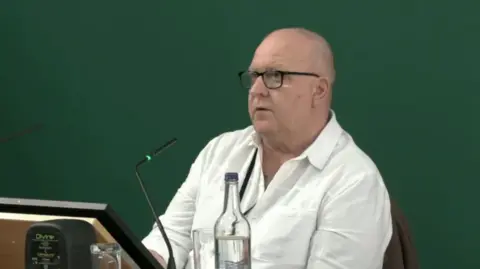
Former nurse, Gary Carter, gave evidence to the Nottingham Inquiry on Thursday
As Calocane began to disengage from the NHS trust, the inquiry heard he missed a number of calls and appointments between June and August 2022.
In August, Carter made a cold call to visit Calocane at an address where he no longer lived.
In fact, that was accommodation Calocane was no longer allowed to live at or visit following an assault on a housemate, the inquiry heard.
Carter said that was the address Calocane had given him, but he did not take any further steps to find out where he lived.
Challenged on the lack of steps he took to find Calocane, Carter said: "Well, ultimately after the failed visit on the 4th, as I look at it, we just had one more card left and that was contact the police.
"The alternative was discharge him and I didn't think that was a good idea."
Calocane was discharged in September.
Carter disputed being involved in Calocane's discharge, saying he was not part of any such discussion.
"Basically, the team, if you want to call it that, had done everything they could to try and deal with this man, manage him in the community, and had failed.
"The inpatient services had failed. And basically, people ran out of ideas.
"People had just run out of ideas as to how to manage this man, when it was blatantly obvious what needed to happen to him," he said.
Langdale KC asked: "Which was what?"
Carter replied: "He needed to be admitted to hospital for a lengthy period of time and treated. It really is that simple."
Challenged on whether he took responsibility, Carter said: "I played my part, I'm not avoiding nothing.
"Everybody who has attended this inquiry over the last two months has come out bruised. Some people have come out looking broken.
"I have played my part, there's no two ways about it."
Carter said he resigned from the trust after being told there was "no way" the attacks could have been prevented.
He said: "I felt like if I didn't resign from the trust, I would just be forced to toe the line about what happened and wouldn't be able to express my own feelings about the tragedy."
Carter said he was no longer a nurse and had "no intention of practising again".
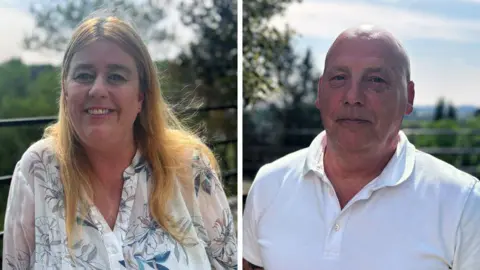
Sharon Miller and Wayne Birkett were left with life-changing injuries after Calocane struck them with a van on the day of the attacks
The inquiry has heard that Calocane had a history of non-concordance with his medication throughout his care in the community.
It was known weeks after his admission and subsequent discharge that Calocane had admitted to not taking medication.
Carter said it was well-known he did not take his tablets as he should and said: "Throughout his time with the EIP, I cannot understand how this man has avoided a depot.
"But this man negotiated his care and for God knows what reason, the medical nursing staff went with his wishes."
Despite his non-concordance, Carter admitted he did not challenge Calocane, or ask why, on one occasion, he had medication left over that should have been taken previously.
 Supplied
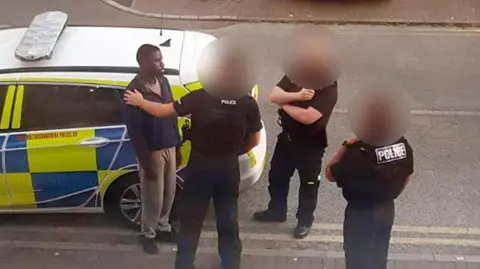
Calocane was involved with a number of violent incidents, including breaking into neighbours' homes, while under the care of the NHS Trust
Calocane was a student at the University of Nottingham between 2017 and 2022, however concerns about his mental health were not shared with the university, the inquiry heard.
Asked why, Carter said "we do not want to stigmatise the patient".
He said: "We do not want the whole world to know that he's got a diagnosis of paranoid schizophrenia."
Carter added the team tried to encourage patients to be "fully integrated in society".
He added Calocane's race may have been a factor too, in deciding what information to share.
However, he said race was never discussed in any meeting or mentioned by colleagues.
Carter also said Calocane was a "different person completely" when he was unwell and initially defended a description of him being "polite" and "personable" in his records.
Counsel to the inquiry Rachel Langdale KC, suggested the description of Calocane in the records "obscured" his risk for anyone else reading them.
Carter said: "Yes, I would probably agree with that, the wording there is not good."