2 months ago
21
2 months ago
21

50 minutes ago
Giancarlo RinaldiSouth Scotland reporter

 Getty Images
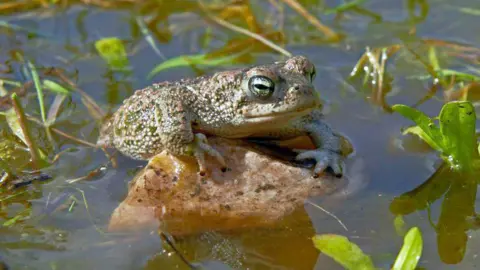
The study found toad survival and size was affected by the salt levels in the water
Salty water could be preventing the recovery of one of the UK's rarest amphibians by making former breeding sites unsuitable for their survival, a study has concluded.
The natterjack toad is found in just a handful of locations.
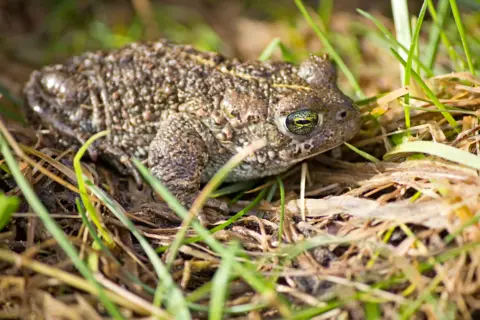
In Scotland, its only remaining homes are along the Solway Coast, including the RSPB's Mersehead Reserve near Southerness.
Scientists have found that the salt level in water from former breeding sites in south-west Scotland was linked to failed hatching, smaller growth and altered development.
 Getty Images
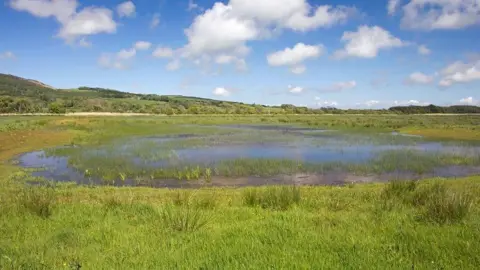
The study took samples at various sites to check their salt levels
The project was led by Dr Frances Orton, an environmental biologist at Edinburgh's Heriot-Watt University.
"Natterjack toads have declined across the UK, not just in Scotland," she said.
"We wanted to find out why these tiny toads were surviving in the nature reserve in Dumfries and Galloway, but had disappeared from sites along that coast.
"We used anecdotal reports from farmers and local wildlife groups to identify former breeding ponds in Caerlaverock, Southerness and several farms."
The team analysed water samples from Mersehead, where the natterjack toad survives, and other sites.
They measured temperature, pH and salinity and exposed natterjack spawn to water from each of the sites.
 Getty Images
Scotland's only remaining natterjack toad colonies are along the Solway Coast
Orton said: "Some of the former breeding sites had such a high level of salinity that no embryos survived to hatching.
"Some weren't as lethally salty, but what we saw there was that the toads were much smaller.
"That doesn't sound like a big deal, but when you're a frog, size really does matter. 95% of tadpoles are eaten by predators.
"For the 5% that make it to the next stage of development, they need to be as big as possible for a chance at survival."
She said the findings could help improve work to revive numbers.
"Until now, a lot of natterjack toad restoration efforts have focused on improving terrestrial habitat, like clearing scrub or controlling vegetation," she said.
"That's still important, but now we know that unless the salinity of the water is tackled, the tiny toads will have no chance of survival."
The biologist added that action needed to be taken soon.
"Amphibians are the fastest-declining vertebrate group globally," she said.
"They've been around for 350 million years, but now species like the natterjack toad are disappearing, quickly.
"They play a huge ecological role as both predators and prey - they feed lots of animal species and, as gardeners will tell you, they eat lots of slugs and midges.
"Natterjack toads are on the verge of extinction and it's vital we understand ways to protect and boost the populations that remain."
Orton and her team conducted the research - supported by the Carnegie Trust and NatureScot - across seven sites in Dumfries and Galloway.