1 hour ago
3
1 hour ago
3

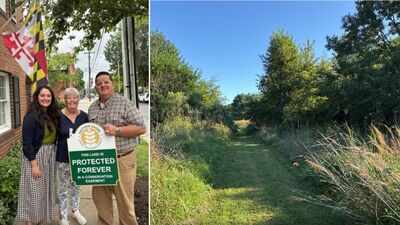
Photo Credit: ESLC via easternshoreundercover.com
When Louise and John Durocher bought 116 acres in Kent County, Maryland, the property was intended primarily as a hunting retreat. Over the next two decades, however, the couple gradually changed its purpose.
They stopped growing crops and began restoring the fields with native grasses, wildflowers, shrubs and trees. They planted river birch, tulip poplar, sycamore, white oak, loblolly pine, black walnut and pawpaw, creating a mosaic of meadows, woodland, wetlands and hedgerows. Now known as Tavern Creek Farm, the property has been placed under a permanent conservation easement through the Eastern Shore Land Conservancy and the Durocher family. Eastern Shore Undercover reports that the agreement will protect the land from future development and preserve its value as wildlife habitat, while safeguarding water quality in Tavern Creek and the Chesapeake Bay. Read on to know more:
A hunting property with a different future
When Louise and John Durocher purchased the 116-acre farm, they imagined using it as a hunting property.The land still contained fields that had been used for growing crops. It was productive farmland, but the couple gradually began to see possibilities beyond cultivation.About 20 years ago, they stopped farming crops on the property and started converting the fields into habitat. Instead of leaving the land bare or allowing it to become dominated by invasive plants, they planted native grasses, wildflowers, shrubs and trees.
The change was gradual. A field does not become mature habitat in one season. Grasses need time to establish, trees must grow and wildlife begins using the land at different stages of recovery.The Durochers continued the process over many years, creating a landscape that combined open meadows, forest, wetlands, hedgerows and water. Their original hunting property became a long-term restoration project.Today, Tavern Creek Farm is protected from future development through a permanent conservation easement.
The first field of wildflowers
One of the couple’s earliest signs of success came after they planted wildflowers.Louise Durocher recalled that coreopsis covered about five acres in gold during the first year the wildflower planting bloomed.That image captures the appeal of habitat restoration. A field that once supported crops can become a living display of native colour and seasonal change.Wildflowers provide nectar and pollen for bees, butterflies and other insects.
Their seeds can feed birds and small mammals, while their roots help hold soil in place and improve its structure.Unlike a uniform crop field, a meadow can contain many plant species with different heights, flowering periods and root systems. That diversity creates more shelter and food for wildlife throughout the year.The golden coreopsis also offered a visible sign that the Durochers’ choices were working. The property was not simply being left alone.
It was developing into a more varied and biologically active landscape.
Planting a native woodland
The family planted a wide range of trees across the farm.The restoration included river birch, tulip poplar, sycamore, white oak, loblolly pine, black walnut and pawpaw. Each species contributes different qualities to the developing woodland.River birch can thrive near water, while white oaks provide acorns that support wildlife. Tulip poplars grow tall and can eventually form part of the forest canopy.
Pawpaws produce fruit, and black walnuts contribute both habitat and food value.Planting different species reduces reliance on a single type of tree. A diverse woodland is generally better able to withstand pests, disease, storms and changing environmental conditions.The trees also create a transition between open fields and older forest. As they mature, they provide nesting sites, shade and cover while connecting separate habitats.The work will continue beyond the Durochers’ lifetime. Trees planted today may reach their greatest ecological value decades from now, which is one reason permanent protection is so important.
Meadows connected by hedgerows
Tavern Creek Farm contains open meadows of warm-season and cool-season grasses. These meadows are connected to woodland through long hedgerows.Hedgerows can act as wildlife corridors. They provide shelter for animals moving between fields, forest and water, while offering nesting sites and food for birds and insects.A continuous hedgerow can be especially valuable in a rural landscape where open fields might otherwise leave animals exposed. Small mammals can travel under cover, birds can forage along the edge and pollinators can move between flowering plants.The contrast between meadow and forest also increases habitat diversity. Some species prefer open grassland, while others depend on dense shrubs or mature trees.The farm’s restoration created several habitat types close together.
That arrangement makes the property more useful to wildlife than a single uniform landscape.It also gives the land a more natural appearance. Instead of large fields separated only by fences or roads, the property now contains layers of vegetation that follow its watercourses and contours.
Wetlands that hold water
The farm includes approximately 26 acres of wetlands.Wetlands are among the most valuable natural features on the property because they can retain stormwater, support wildlife and help cycle nutrients.
Eastern Shore Land Conservancy President and CEO Steve Kline said the wetlands provide stormwater retention and nutrient cycling benefits, as per the report.During heavy rainfall, wetlands can temporarily hold water and reduce the speed at which it moves across the landscape. This can help limit erosion and reduce the amount of sediment reaching streams.Wetland plants can also absorb or process nutrients. That function is important in the Chesapeake Bay watershed, where excess nitrogen and phosphorus can contribute to algae growth and oxygen depletion.Wetlands provide breeding and feeding habitat for amphibians, insects, birds and other animals. They also create conditions that differ from dry meadows and upland woodland.Protecting the wetlands therefore benefits both local wildlife and downstream water quality. The value of the farm extends beyond its boundaries because water leaving the property eventually reaches larger waterways.
Protecting Tavern Creek and the Chesapeake Bay
The Durochers hoped to conserve the property partly because of its connection to the Chesapeake Bay.Louise said she had a long association with the Chesapeake and had always hoped to protect the farm in a way that would help safeguard the Bay.Tavern Creek is an important part of that connection. The property contains woodland along the creek and includes more than 9,000 feet of creek frontage.The farm also has about 24 acres of woodland running along its length. Along with tree plantings and more than 18 acres of conservation cover, the woodland helps protect water quality in Tavern Creek and the farm’s ponds.Trees and vegetation along streams can reduce runoff, stabilise stream banks and filter sediment before it enters the water. Their roots hold soil in place, while fallen leaves and woody debris contribute to aquatic ecosystems.These functions make the farm part of a wider watershed protection effort. Conservation on one property may not solve all Chesapeake Bay problems, but many protected properties together can improve the health of the entire system.
Wildlife already using the land
The restored habitats support a variety of wildlife.The conservation report mentions beavers, otters, opossums and muskrats, along with many types of birds. These animals use different parts of the property, including wetlands, waterways, grasslands, hedgerows and woodland.Beavers can alter water flow and create wet habitat, while otters depend on healthy waterways and sufficient prey. Opossums and muskrats use vegetation and wetland edges for food and shelter.Birds benefit from the range of habitat types. Grassland birds can use the meadows, woodland species can nest in trees and shrubs can provide cover for migrating birds.The property also includes an osprey stand, which has become part of the family’s experience of the land. Ospreys depend on open water and suitable nesting structures, making their presence a sign of the importance of the creek and surrounding habitat.As restoration continues, wildlife use may increase or change. Some species will benefit from young vegetation, while others may arrive as trees mature and wetlands develop.
More than a decade of conservation practices
More than 31 acres of the farm, including nearly all of its shoreline, have been enrolled in Farm Bill conservation practices for more than a decade.The federal conservation programmes encourage landowners to establish or maintain habitat, protect wetlands and reduce environmental impacts from agriculture.Those practices provided a foundation for the broader restoration. The family was not starting from zero when the conservation easement was created. Much of the land had already been managed with wildlife and water quality in mind.The permanent easement now adds another layer of protection. Conservation practices can be changed or renewed over time, while an easement creates a lasting legal limit on development.Together, the two approaches help ensure that Tavern Creek Farm remains a connected natural landscape. The property can continue to be managed, but its core conservation values cannot be replaced by houses, commercial buildings or intensive development.
What a conservation easement does
A conservation easement is a legal agreement that permanently restricts certain uses of private land.The land remains privately owned, but development rights are limited.
The agreement can protect forests, wetlands, streams, open fields and wildlife habitat even if ownership changes in the future.In Tavern Creek Farm’s case, the easement was created through a partnership between the Eastern Shore Land Conservancy and the Durocher family. Funding came from the United States Department of Agriculture and Maryland’s Conservation Reserve Enhancement Permanent Easement Program, also known as CREP.The agreement means the 116 acres will remain wild and natural rather than being converted to developed uses.That does not necessarily mean the family cannot visit, fish, kayak, pick fruit or maintain parts of the property. The family hopes future generations can continue enjoying the land while caring for its woodlands, wetlands and grasslands.Conservation easements are designed to balance private ownership with long-term public benefits.
They keep land in family hands while protecting ecological features that benefit the broader community.
A family legacy continues
The property is now cared for by Sarah Starman, the granddaughter of Louise and John Durocher.Starman said it was rewarding to see the farm become more beautiful and biodiverse because of her grandparents’ work and the family’s continued efforts. She added that knowing the land would always be protected gave her security and motivation to continue caring for it.Her comments show how conservation can pass from one generation to another.The Durochers began the restoration by changing the land’s use. Starman now has the responsibility of maintaining and building on that work.The permanent easement provides reassurance that future owners will not be able to undo the entire project through development. It also creates a clear framework for stewardship.Over time, the property may become even more diverse. Trees will mature, meadow plants will spread and wildlife populations may change with the seasons.The family’s role is not finished when the easement is signed. Permanent protection ensures the opportunity to continue caring for the land.
A place for family life
Tavern Creek Farm is not only a conservation project. It is also a place where the family lives and spends time.Starman hopes future generations will enjoy kayaking and fishing in Tavern Creek, watching ospreys, picking blueberries in spring, gathering figs in summer and having barbecues near the house.These activities connect conservation with everyday life.A protected landscape does not have to be separated from human enjoyment. People can experience nature while respecting wildlife and maintaining the habitats that make those experiences possible.Fishing and kayaking can help family members understand the creek as a living system. Picking fruit and walking through meadows can make seasonal changes more visible.
Caring for the woods and wetlands turns conservation into a shared responsibility rather than an abstract goal.The family’s vision is for future residents to enjoy the same peace while continuing to maintain the property as wildlife habitat.
A quiet transformation
The story of Tavern Creek Farm is not about a sudden rewilding project.It is about decisions made over 20 years. The Durochers stopped farming crops, planted native species, maintained conservation practices and allowed the land to develop into a more complex habitat.The transformation happened gradually. A meadow that once looked like an ordinary field became a place for wildflowers and grasses. Tree plantings became hedgerows and woodland. Wetlands and creek edges gained greater protection.The result is a landscape where agriculture, family life and wildlife conservation overlap.The permanent easement now ensures that this transformation will not be reversed by future development.
The 116 acres will remain connected to Tavern Creek, its wetlands and the wildlife that depends on them.Tavern Creek Farm shows how private landowners can improve a landscape without waiting for a large public project. A decision made for a hunting property became a long-term commitment to biodiversity and clean water.For the Durocher family, protecting the farm means preserving both a place they love and a natural legacy that can continue for generations.