5 months ago
14
5 months ago
14

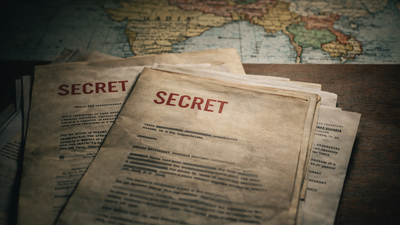
Charles Radford was not a master spy or a shadowy intelligence chief. He was a young US Navy yeoman with an unremarkable rank and extraordinary access. Yet during the early 1970s, Radford quietly became the conduit for one of the most serious internal spying scandals in American history.
Working inside the National Security Council, he secretly copied highly classified documents linked to US foreign policy, including material handled by Henry Kissinger during the 1971 India–Pakistan war. The revelations, buried for decades and only recently brought to light, show how a junior sailor ended up at the centre of a Cold War power struggle between civilian leaders and the US military.
Who was Charles Radford
Charles Radford was a Navy yeoman first class assigned to clerical duties at the National Security Council in the early 1970s.
His role involved typing, filing and couriering documents for senior officials. That position gave him routine access to some of the most sensitive papers in the US government.Radford was described by investigators as diligent, personable and highly trusted. That trust allowed him to move freely through offices, briefcases and document bags without arousing suspicion.
Spying from inside the White House system
Between 1970 and 1974, Radford secretly copied thousands of classified documents.
He passed them to senior officers in the Joint Chiefs of Staff, including Chairman Thomas Moorer.This was not foreign espionage. It was internal spying. The US military was monitoring the civilian leadership of its own government.Radford did not act for money. Investigators later concluded that he believed he was serving the interests of the armed forces, which felt increasingly sidelined by White House decision-making.
The India–Pakistan war connection
The Indo-Pakistani War of 1971 erupted in December 1971, unfolding in the middle of Charles Radford’s intelligence activities inside the US military communications system. At the time, Henry Kissinger was managing an extremely volatile diplomatic situation involving India, Pakistan, China and the Soviet Union, with the crisis in East Pakistan intersecting directly with Cold War geopolitics and US strategic ambitions in Asia.
Publicly, the United States declared that it was neutral in the India–Pakistan conflict. Privately, however, Richard Nixon and Kissinger were tilting toward Pakistan, which was playing a critical role as a secret diplomatic back channel to China ahead of Nixon’s planned opening to Beijing. This covert alignment meant that US public statements did not reflect internal decision-making during the war.Radford, a Navy yeoman on the White House National Security Council staff, had access to highly classified diplomatic and military traffic related to South Asia.
He copied Kissinger’s memoranda, National Security Council meeting notes, and sensitive policy assessments that detailed how Washington was handling the crisis. While Radford was not spying because of the war itself, his actions captured Kissinger’s management of one of the most delicate and morally fraught crises of the Cold War, including US tolerance of Pakistan’s actions in East Pakistan.The documents Radford leaked showed that Nixon and Kissinger were secretly backing Pakistan diplomatically, sending military signals intended to pressure India, and prioritising Pakistan’s strategic value as a conduit to China over humanitarian concerns.
These actions directly contradicted US claims of neutrality and reinforced suspicions that Washington was acting in bad faith during the conflict.Radford passed the classified material to Jack Anderson, who published the information in his nationally syndicated column. Anderson’s reporting exposed the gap between public US policy and private actions during a war that involved mass atrocities in East Pakistan, the flight of around ten million refugees into India, and direct Indian military intervention that ultimately led to the creation of Bangladesh.The leaks deeply embarrassed the Nixon administration and intensified internal conflict between the White House and the US military leadership. Radford’s role did not affect battlefield outcomes, but it played a significant part in revealing how US power was exercised behind closed doors during one of South Asia’s most consequential wars.
Why the military supported Radford
Senior military leaders were deeply unhappy with Nixon and Kissinger’s foreign policy.
They opposed détente with China and the Soviet Union. They resented being cut out of key decisions, especially during wartime.Radford’s spying allowed the Joint Chiefs to track civilian policy in real time. According to later testimony, some officers viewed this as a necessary corrective rather than a crime.This belief created a dangerous precedent: military leaders acting independently of elected authority.
Why Radford was never prosecuted
Radford was eventually caught after a separate leak investigation. He admitted copying documents. Polygraph tests indicated deception. Yet he was never charged.Nixon later testified that prosecuting Radford would have risked exposing:
- US back-channel diplomacy with China
- Secret positions taken during the India–Pakistan war
- Illegal surveillance inside the US government
Instead, Radford was quietly removed from his post, reassigned and pushed out of service. The affair was buried under layers of classification.
Why the truth stayed hidden for decades
When Nixon testified under oath in 1975, parts of his testimony about the Radford affair were deemed too sensitive to release.
Seven pages were sealed even from the grand jury and locked away by senior officials.Those pages remained hidden for nearly 50 years. Their release now reveals how close the US came to a constitutional crisis during Watergate, one that went far beyond political burglary.Radford’s story reshapes the Watergate narrative. It shows that Nixon was not only abusing power but was also confronting a national security apparatus that had begun operating independently of civilian control.The sailor himself was not the mastermind. He was the mechanism. The real story was the struggle over who controlled US foreign policy at the height of the Cold War.Charles Radford may have been a junior figure. But his actions exposed one of the deepest fault lines in American democracy.