4 hours ago
5
4 hours ago
5

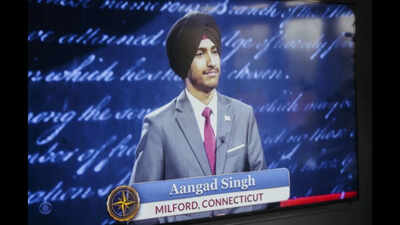
Aangad Singh did not make it to the top 3 at the contest. His parents think it was because of his turban. (Photo: Notus)
The Donald Trump administration set a Presidential 1776 Award competition on the occasion of America's 250th birthday which was meant to be a civic contest for high school students.
Connecticut's Aangad Singh entered the competition in February, reached the final eight but did not get the award. His family thinks it is because of his turban and Sikh background, Notus reported. Aangad was not in the top three, while other competitors said they thought Aangad was the winner. The Singhs did not immediately cry foul, though they had confidence in Aangad. They waited for the live telecast of the contest and now they claim that they were shocked to find that some of Aangad's correct answers were labeled wrong.One question was: give four examples where federal courts have jurisdiction, as outlined in Article 3 of the Constitution.Two of his answers were 'Parties of state and citizens of another state,” and “Case with state and foreign nation. They were marked wrong.Another question was: Which amendment ended slavery? Aangad said Thirteenth, but it was marked as incorrect. Aangas said he pronounced Thirteenth like an ‘F’ sound but the auto-generated subtitles showed Thirtheeth only.
The winners were from Michigan, Washington and Wyoming -- all white.The award was a $250,000 scholarship, meeting with President Donald Trump but Singh's mother said it was not the money that they were eyeing; they wanted Aangad to get the recognition but he was a brown kid with a turban.Singh's father approached the Department of Education seeking clarification on how Aangad's score was calculated and why his correct answers were marked wrong. Chase Forrester, the deputy chief of staff for the Education Secretary, said the competition rules said that judges would “exercise independent good faith judgement” in selecting finalists and winners. The rules also said that, by participating, contestants “agree that the decision of the judges is final and binding.
”