1 hour ago
3
1 hour ago
3

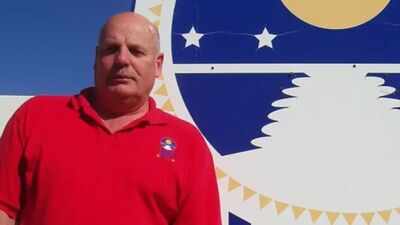
For centuries, owning land has meant having a place that can be measured, divided and legally transferred. Dennis Hope thought he had found an exception. In the late 20th century, while considering how to make money from property, the unemployed American turned his attention away from land on Earth and towards the moon.
He had read the 1967 United Nations Outer Space Treaty, which prevents countries from claiming celestial bodies as their territory. Hope believed the wording left an opening for a private individual. He declared the moon his property, divided it into parcels and began selling certificates to customers around the world. The idea attracted buyers, but it also raised a basic legal question: can anyone actually own a piece of the moon?
How an unemployed man turned the moon into a property idea
Hope's story started when he was out of work and thinking about how he might make money from property.
Real estate seemed familiar enough, but there was a problem: conventional land was already owned, divided and priced by somebody else. The moon presented a rather different possibility.During his university years, Hope had encountered the 1967 United Nations Outer Space Treaty. The agreement established that nations could not claim sovereignty over celestial bodies such as the moon. Hope interpreted the wording as leaving room for a private individual to make a claim.
He eventually sent a declaration to the United Nations stating that he intended to claim the moon, divide it into parcels and sell them. He expected that the organisation might respond with a legal objection. According to Hope, no answer arrived.
The legal challenge behind Hope’s claim to the moonz
The Outer Space Treaty does not simply say that governments cannot own the moon while leaving private citizens free to do so. Its provisions are concerned with national activities in outer space, and legal scholars have argued that the restrictions on appropriation extend beyond governments acting in their own name.As reported by National Geographic, Tanja Masson-Zwaan, then president of the International Institute of Space Law, explained the issue in comments cited by National Geographic. In her view, the treaty's restrictions could not be bypassed simply by putting the claim in the hands of a private individual.That distinction matters because buying a document from Hope does not establish internationally recognised ownership of lunar land.
His business has nevertheless continued for decades.The unusual legal argument became part of the appeal. Customers were not being offered a conventional piece of real estate in the sense recognised by terrestrial property law. They were buying certificates based on Hope's claimed ownership system.
The surprisingly low price of owning an acre on the moon
Hope's prices were designed to make lunar ownership accessible to ordinary customers. An individual acre was advertised at $19.95, with the total rising once additional charges, including shipping and what was described as a lunar tax, were included.
Larger purchases came with discounts. As reported by US News & World Report, at one stage, Hope reportedly sold a parcel of about 2.66 million acres for $250,000.The numbers were difficult to compare with ordinary property markets because the underlying ownership itself was not recognised in the conventional legal sense. Reportedly, Hope said he had sold more than 611 million acres of lunar land. Among the people he counted as owners were former US presidents George H.W.
Bush, Jimmy Carter and Ronald Reagan.The certificates offered something that ordinary property could not: a tangible connection to a place that most people could only ever experience from a distance.
Hope's property empire went far beyond the moon
Hope claimed rights over several other celestial bodies, including Mars, Venus, Mercury, Jupiter's moon Io and Pluto. Customers could even purchase what was described as the entirety of Pluto for $250,000.He also established what he called the Galactic Government, presenting it as a democratic government representing lunar landowners and people connected with his other claimed properties.The organisation was more than a name on a website. Hope treated the idea seriously and sought recognition and engagement from established institutions.Among his ambitions was getting the International Monetary Fund to recognise the Galactic Government's currency, known as the Delta, so that it could be exchanged more easily for conventional currencies. That effort did not turn Hope's fictional or private system into a recognised state.
Why Hope claimed rights to the moon’s valuable resources
He argued that the moon contained vast quantities of helium-3, an isotope that has attracted interest because of its possible role in future nuclear fusion technologies. He estimated the potential value of lunar reserves at more than $6 quadrillion and maintained that his property owners had rights to them. That raised a much larger question than who owned an acre of dusty ground.If lunar mining ever became commercially viable, who would have the authority to grant permission? Could a private person sell rights to resources on a celestial body? And would a certificate issued by a private company have any standing against a government or international organisation?Hope's position was clear. He regarded mining and permanent construction on land he had sold as activities requiring permission from his organisation.
International space law does not recognise that arrangement simply because Hope says it exists.
Why Hope said some lunar areas should be protected
There was also a conservation element to Hope's lunar plans. He said he had established 23 so-called celestial reserves, including locations associated with the Apollo missions and the moon's polar regions. The latter have attracted particular scientific interest because permanently shadowed areas near the poles contain water ice.Hope said he regarded these locations as historically or scientifically important and did not want them treated simply as ordinary property.In 2011, according to Hope, a group offered $50 million for the moon's north pole. He said he verified that the prospective buyers had the money but rejected the proposal. His stated reasoning was that lunar land should remain available at a relatively low cost for people who might eventually need it for habitation.
The man behind the moon certificates became a documentary subject
He appeared in Lunarcy!, a documentary about people whose lives had become closely connected with the moon. The film also followed Alan Bean, the Apollo astronaut who later became an artist, and Christopher Carson, a young man who dreamed of permanently moving away from Earth.
The business kept growing despite the legal uncertainty
By the time of the 2013 report, Hope said sales of lunar plots had risen by roughly 30% following the completion of the documentary.The appeal was not necessarily based on the expectation that customers would one day stand on their purchased acres.
For many buyers, the certificate itself was the point. It represented a small, unusual connection to one of the most recognisable objects in the night sky.There was also the possibility, however remote, that the moon could eventually become a place where people lived and worked.Hope believed that the future was approaching. He imagined a lunar settlement built around a large pyramid-shaped city, with a base measuring roughly two miles by two miles. As president of his self-declared Galactic Government, he regarded the construction of such a settlement as one of his responsibilities.