7 hours ago
3
7 hours ago
3

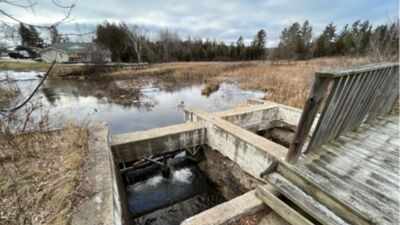
A century-old dam that no longer serves a purpose will be removed in Michigan in order to restore natural ecosystems of the region. The Sanback Dam on Beechwood Creek in Rose City was constructed in 1920 to power a flour mill and later a lumber mill.
Today, it stands as a crumbling concrete structure and has transformed into a safety hazard for both people and wildlife.Currently, it blocks fish and other aquatic animals from moving through the creek and warms the water, threatening the cold water habitats of Beechwood and Houghton creeks, important parts of the Saginaw Bay watershed. Thus, the US Fish and Wildlife Service Midwest Coastal Program is working with partners to remove the dam.
This will help reopen a half-mile upstream habitat that had been cut off for over a century.According to surveys, Beechwood Creek supports many native and naturalised fishes, including brook, brown and rainbow trout; slimy sculpin; blacknose dace; creek chub; brook stickleback; brassy minnow; fathead minnow; and white sucker.Moreover, if the dam fails, it could send large amounts of sand, silt and organic material downstream.
Sediment behind the dam contains arsenic at levels above residential safety standards. A sudden release of this contaminated sediment could kill fish, bury sensitive habitats for miles, and impact the Rifle River, a popular trout fishing destination, before eventually reaching Saginaw Bay and its valuable coastal wetlands.
A collaborative project
Due to all such concerns, Rose City, which owns Sanback Dam and nearby Metcalf Park asked Huron Pines Resource Conservation and Development Council (Huron Pines) for help.
Local and state partners strongly support the removal of the dam and the plan to restore the stream channel and surrounding wetlands once the dam is gone. This work will improve safety and enhance important wildlife habitats.To help support the project, the Midwest Coastal Program and Huron Pines established a cooperative agreement in August 2024, funded in part by the Great Lakes Restoration Initiative (GLRI).
Additional financial and technical assistance will be provided by the Michigan Department of Environment, Great Lakes, and Energy (EGLE); the Michigan Department of Natural Resources (DNR); the Saginaw Bay Watershed Initiative Network (WIN); the Mershon-Neumann Chapter of Trout Unlimited; and the Walters Family Foundation.
Most of the project cost is being covered by the EGLE Dam Risk Reduction Grant Program and the DNR Fisheries Habitat Grant Program.
Before the Coastal Program joined the effort, Huron Pines, EGLE, and other partners completed project design and permitting.
Plan of action
The removal plan includes carefully controlled dewatering and a detailed sediment management approach to ensure contaminated sediments stay contained and don't travel downstream to the Rifle River or Saginaw Bay. Wetland restoration will include removing invasive vegetation and planting native plants, such as milkweed—to support monarch butterflies and other pollinators.Once complete, the project will reconnect a half mile of cold water stream, allowing fish and other aquatic organisms to move freely, improve 14 acres of wetland habitat, and protect more than 70 miles of downstream cold water habitat in Houghton Creek, the Rifle River, and Saginaw Bay. The project is expected to engage at least 50 Rose City residents through community events, volunteer opportunities, and project updates.