
 6 months ago
36
6 months ago
36

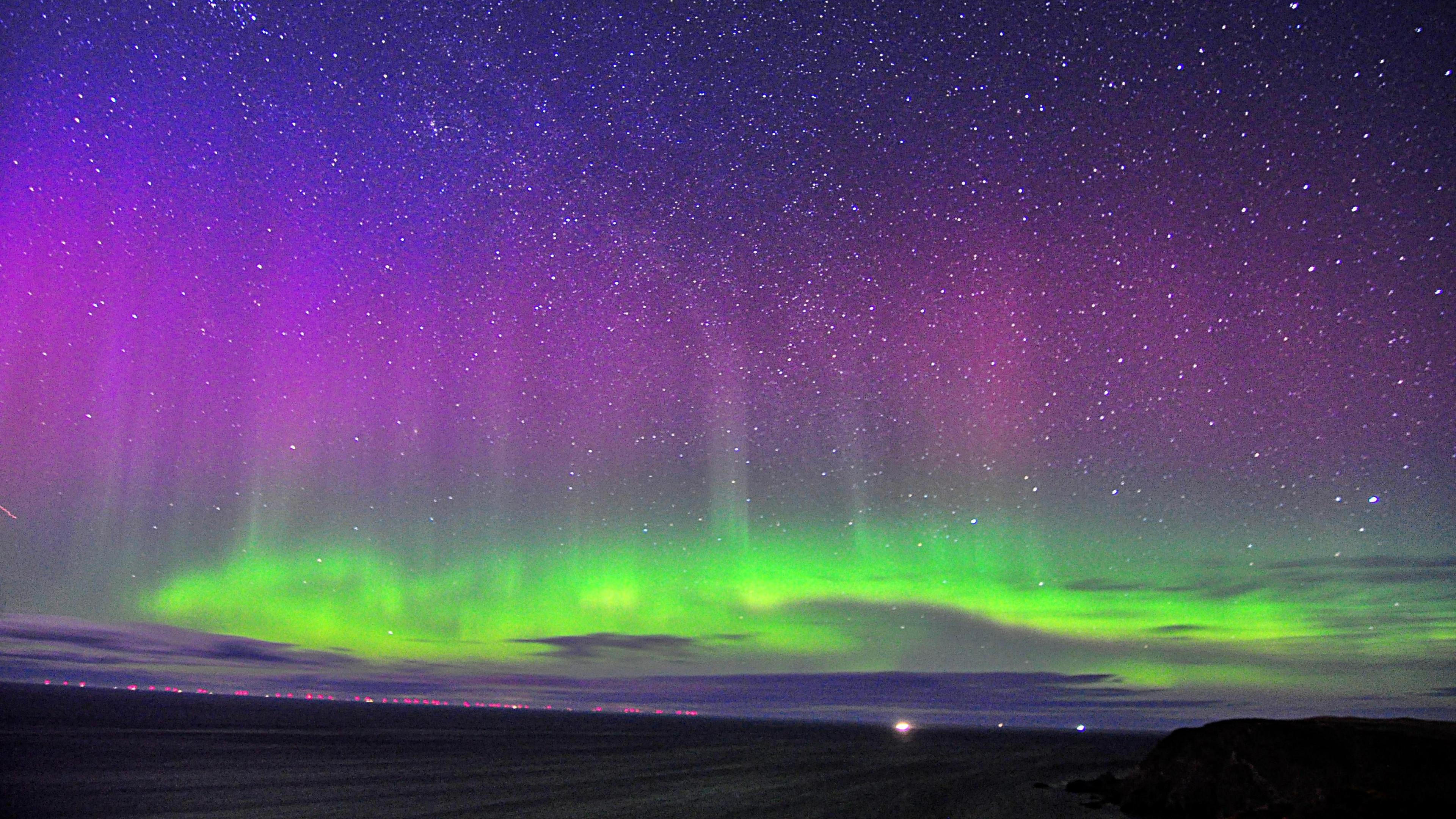 Image source, BBC Weather Watchers / Saf37y
The Northern Lights seen on Monday night in Aberdeenshire
ByJo WadeBBC Weather and Simon King Lead Weather Presenter
The Northern Lights were seen in the UK again on Monday night following an increase in solar activity over the last few days.
Since Friday night, there have been some spectacular displays as far south as southern England.
Eruptions from the Sun's surface sending energy towards Earth are now starting to decline, meaning fewer potential sightings of the aurora borealis.
However, the Met Office Space Weather Prediction Centre suggests there is a low chance of a "glancing blow" of energy on Tuesday night where the aurora could reappear in northern Scotland.
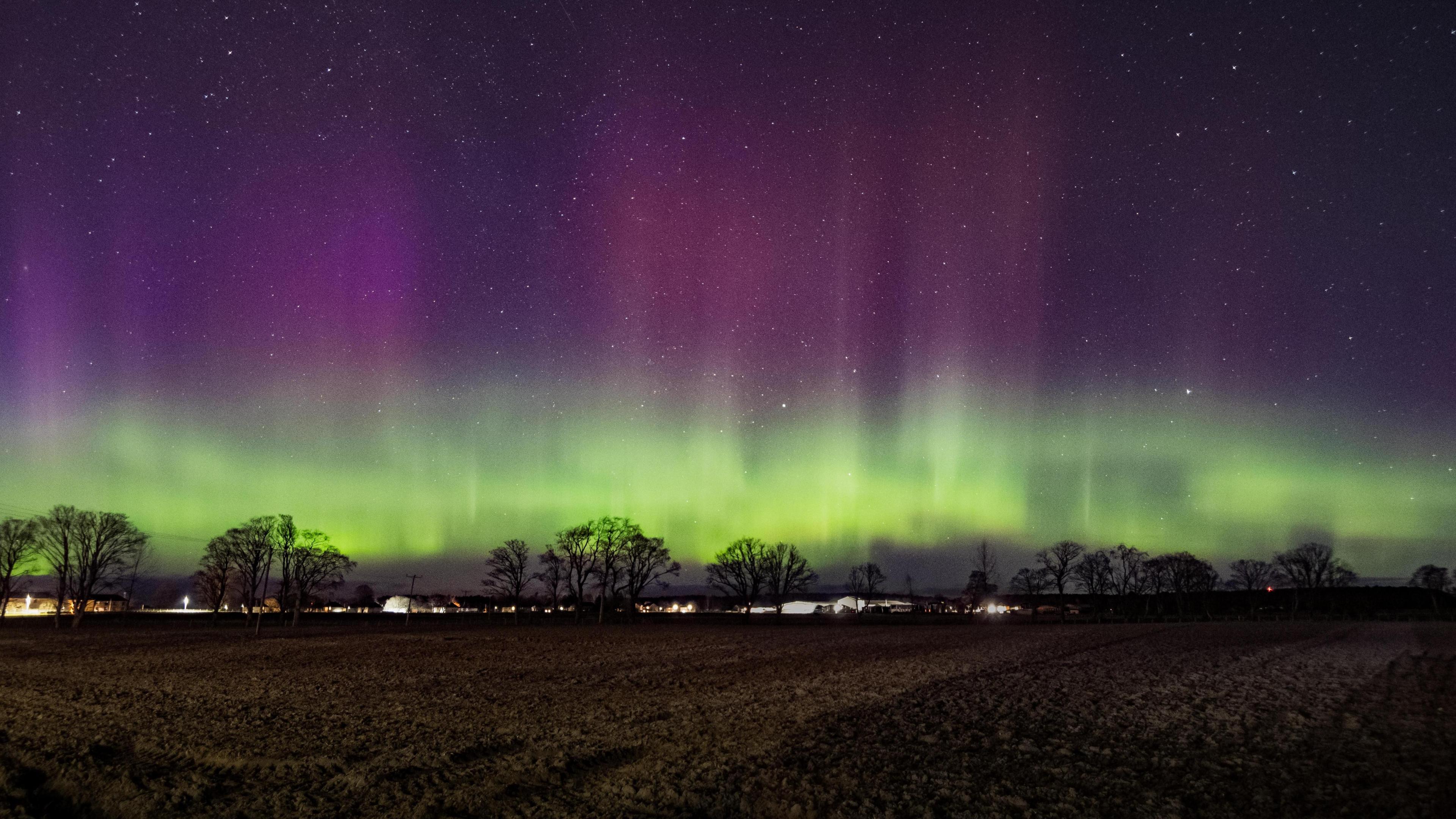 Image source, BBC Weather Watchers / scotty
Stunning colours of the Northern Lights in Moray on Monday night
What does each colour tell us?
When charged particles from the Sun are guided by Earth's magnetic field towards the poles, they collide with gases high in the atmosphere.
Each colour tells its own story, and on a clear night, the sky above becomes a window into the science of our atmosphere.
As they do, they release energy as light. The colour that appears depends on two things: which gas is hit and how high up the collision happens.
From the familiar greens of oxygen collisions to the exceptionally rare blues of nitrogen far below, every aurora is a unique display shaped by the Sun, Earth's magnetic field and the gases that surround our planet.
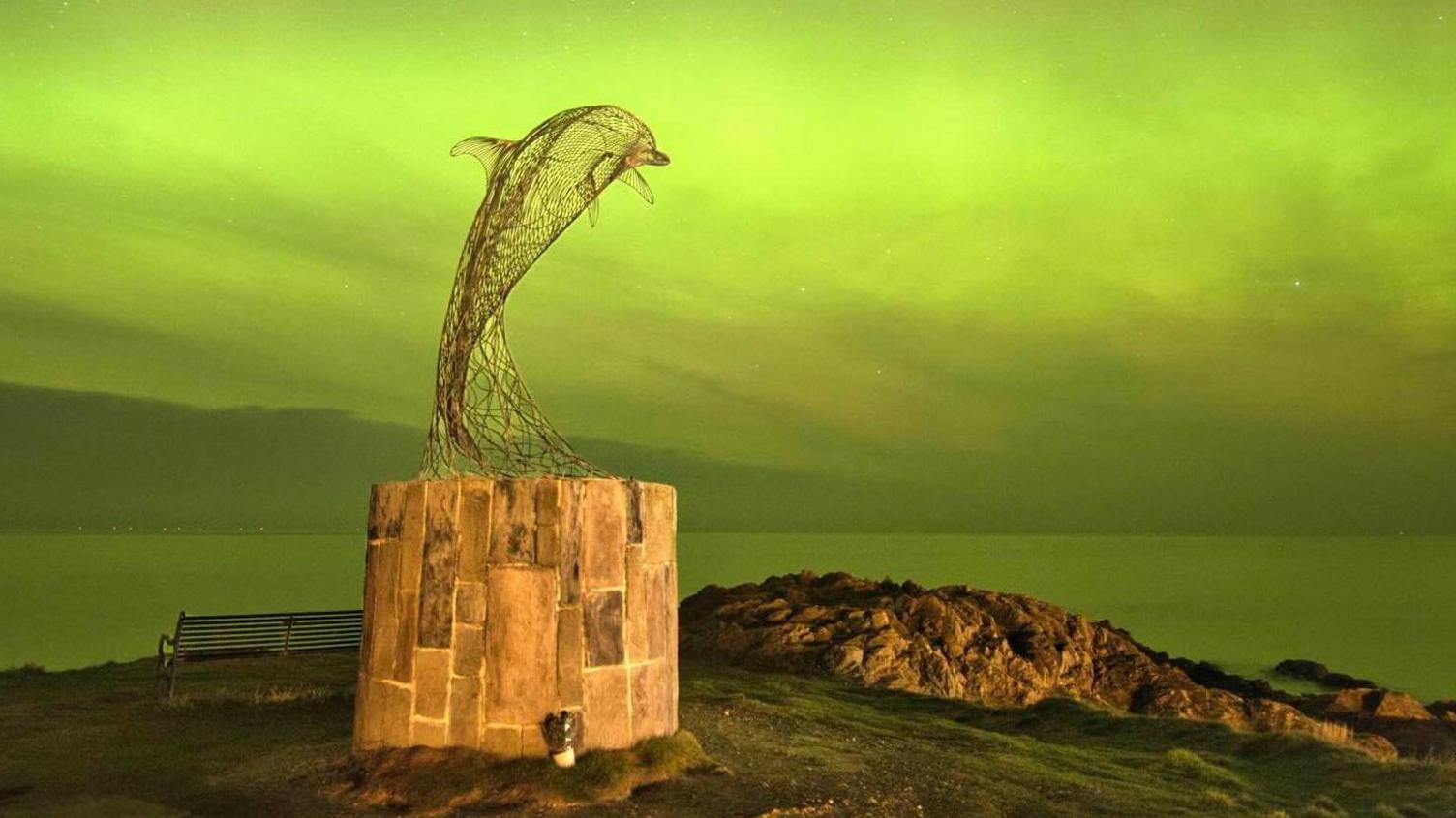 Image source, BBC Weather watchers / ROCKYSMAT
Green is the most common Northern Lights colour. This photo was taken in Portsoy, Aberdeenshire.
The most common aurora colour, and the one most people picture when they think of the Northern Lights.
Green occurs between 60 and 120 miles (100 and 190km) above Earth, when solar energy collides with oxygen.
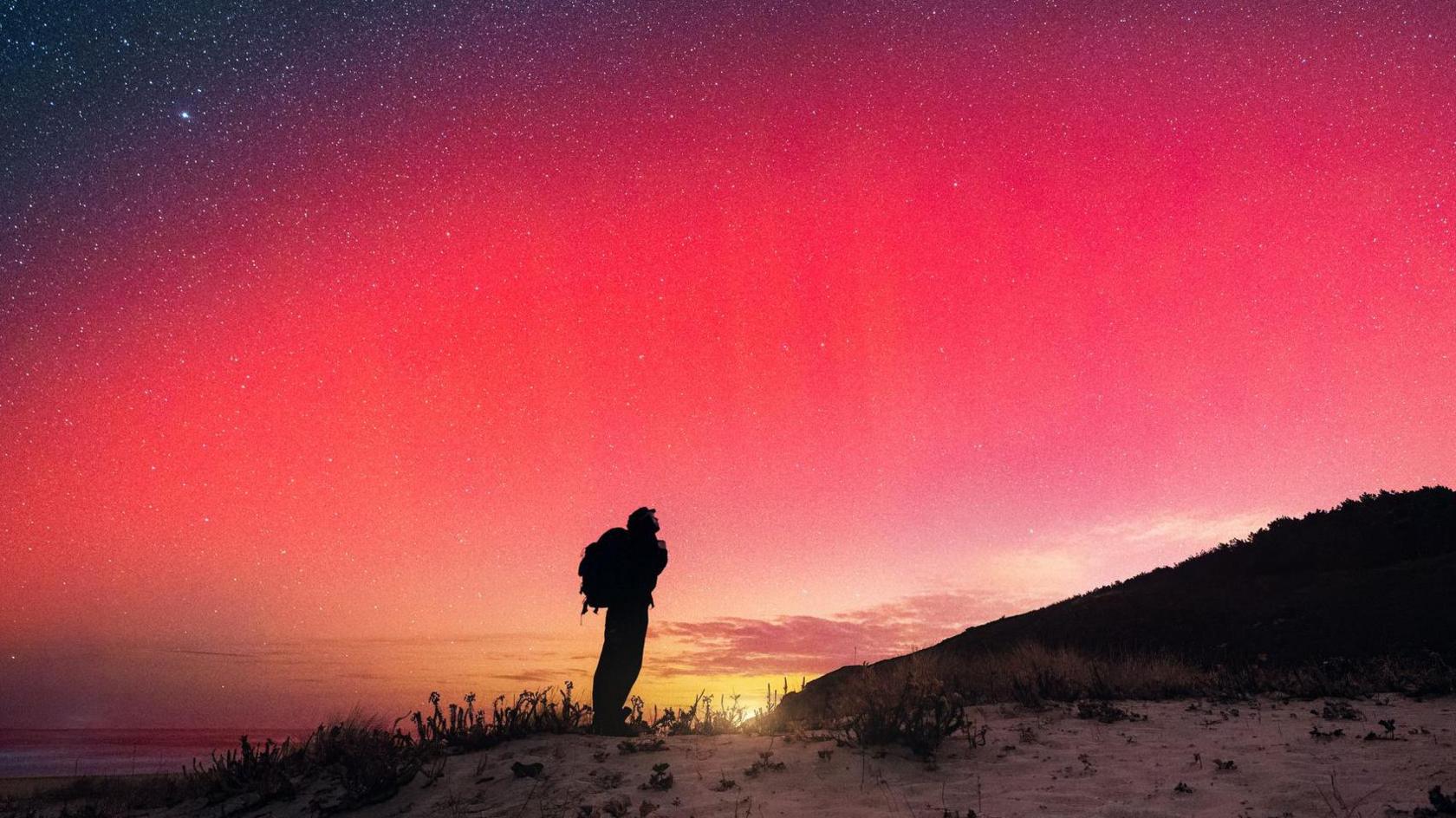 Image source, Getty Images
Red aurora tends to appear during particularly powerful geomagnetic storms, when the solar wind is strong enough to push particles to extreme heights.
Red hues are a sign of a very strong geomagnetic storm.
They appear above 150 miles (240km), where solar particles hit oxygen at much higher altitudes.
A red aurora is rarer and harder to catch than green, but spectacular when it appears.
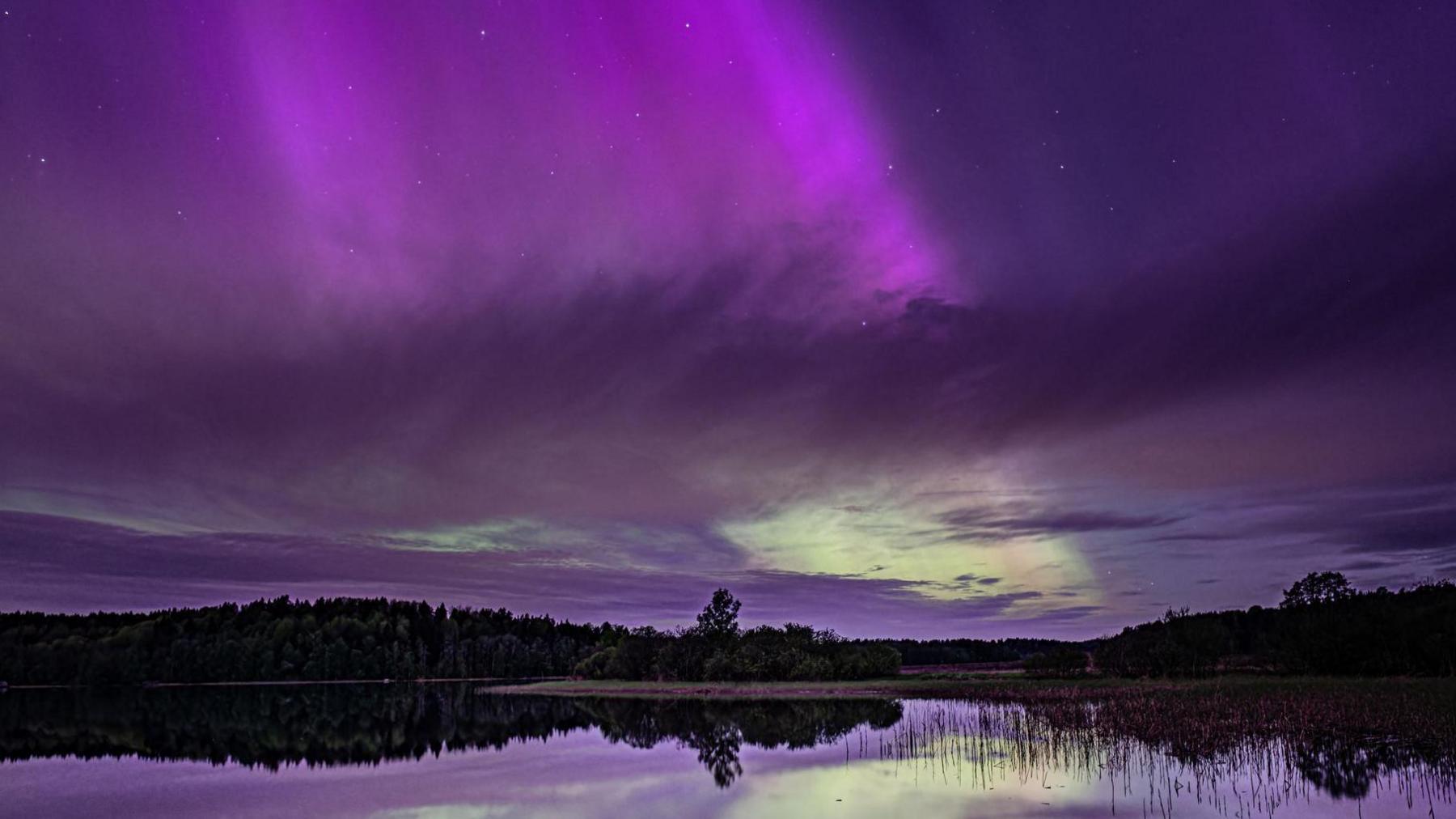 Image source, Getty Images
Rays of purple aurora light in the night's sky
This colour is associated with fast, active nights of aurora activity.
Purple occurs between 60 and 100 miles (100 and 160km) up, when solar energy hits nitrogen rather than oxygen.
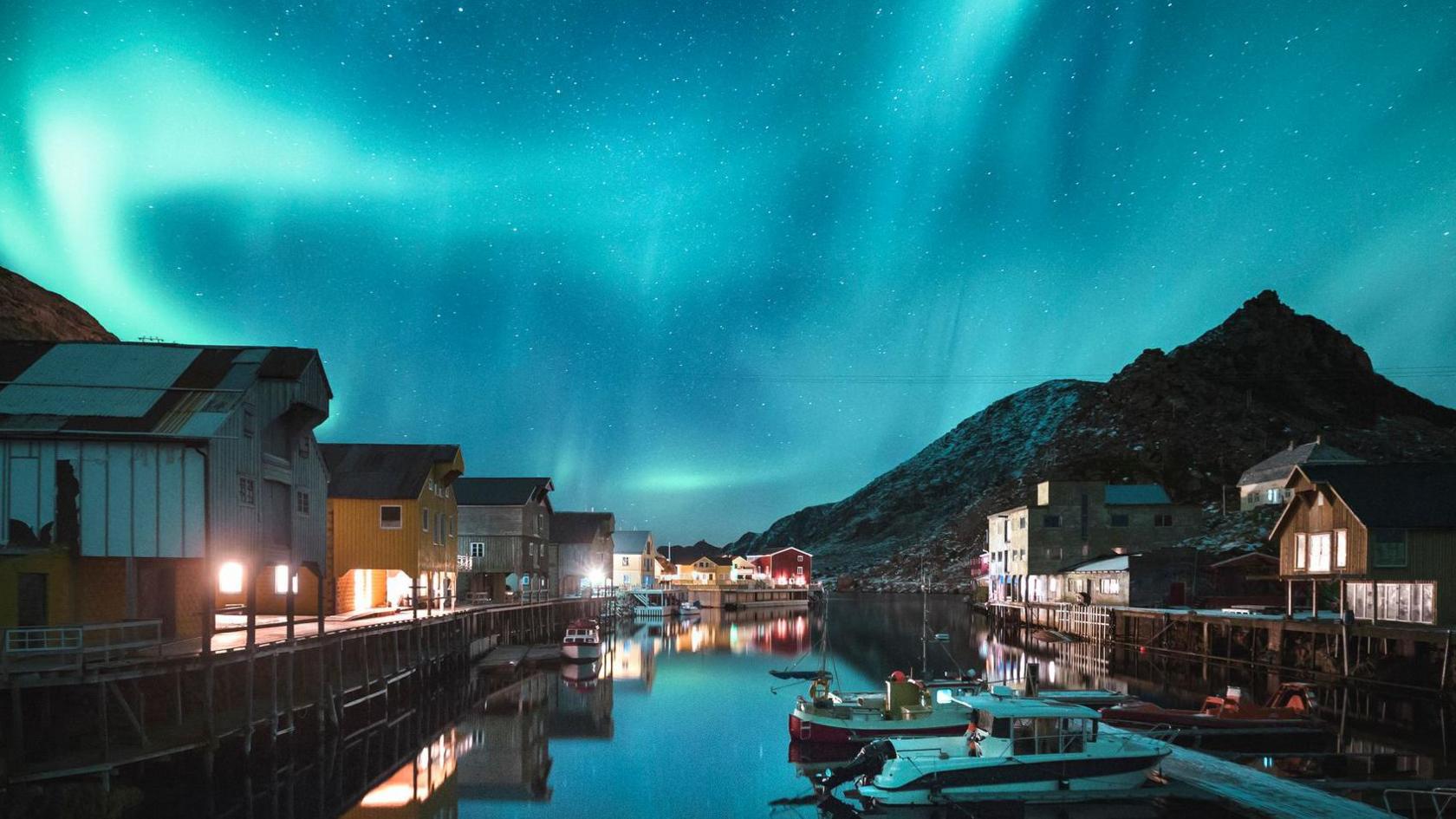 Image source, Getty Images
Blue Northern Lights dance in the sky above a fishing village in Norway.
Blue is the rarest of all.
It appears below 60 miles (100km) and is the lowest of the aurora colours.
It is caused by solar energy hitting nitrogen.
If you ever see blue in the sky, you are witnessing something truly exceptional.
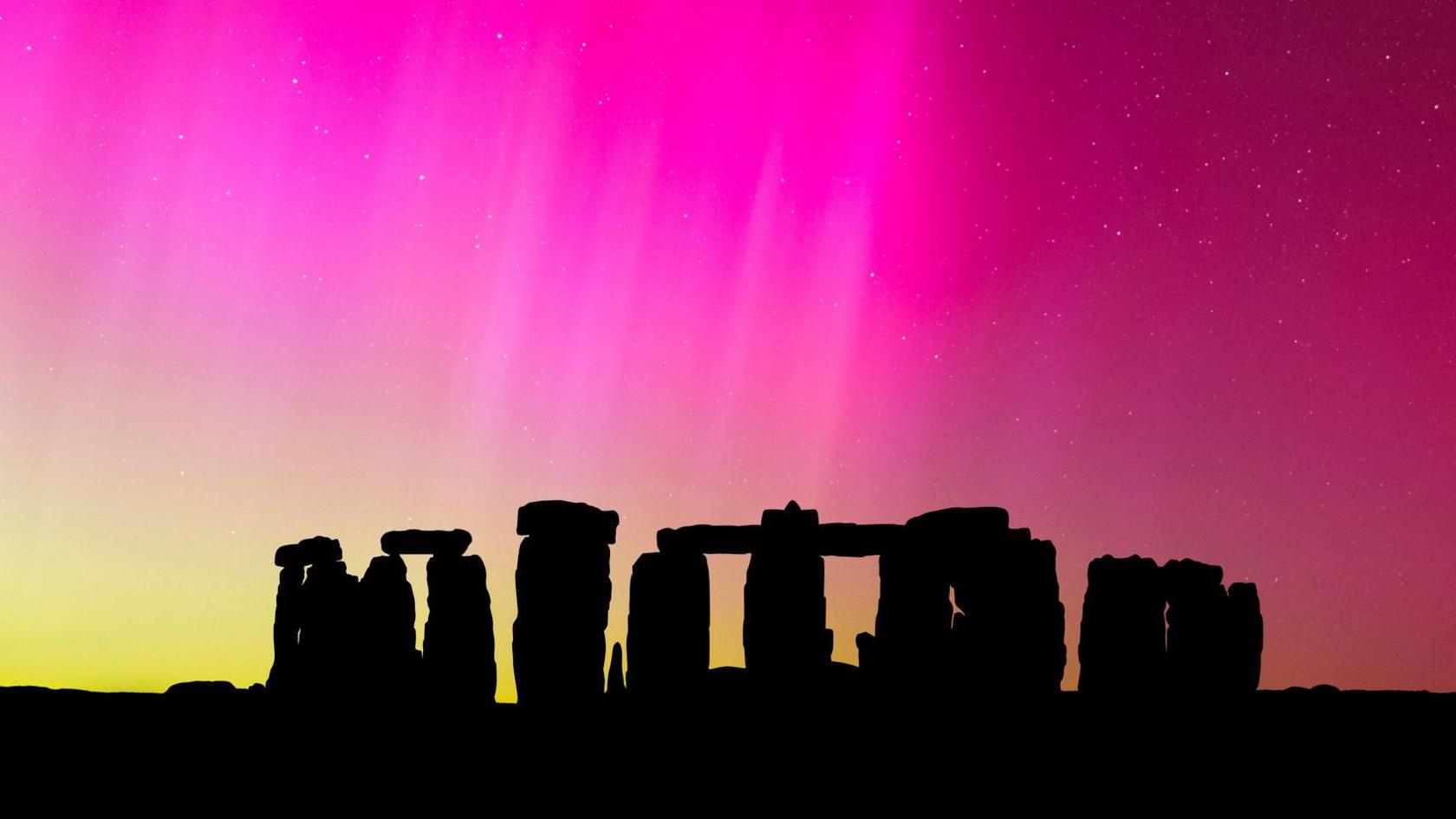 Image source, Getty Images
Stonehenge set against a backdrop of wonderful pink and yellow Northern Lights.
Each colour tells its own story, and on a clear night, the sky above becomes a window into the science of our atmosphere. From the familiar greens of oxygen collisions to the exceptionally rare blues of nitrogen far below, every aurora is a unique display shaped by the Sun, Earth's magnetic field and the gases that surround our planet.


